Piano Movers in Los Angeles
Piano Movers in Los Angeles Who Plan the Route First
Piano Movers in Los Angeles Who Plan the Route First
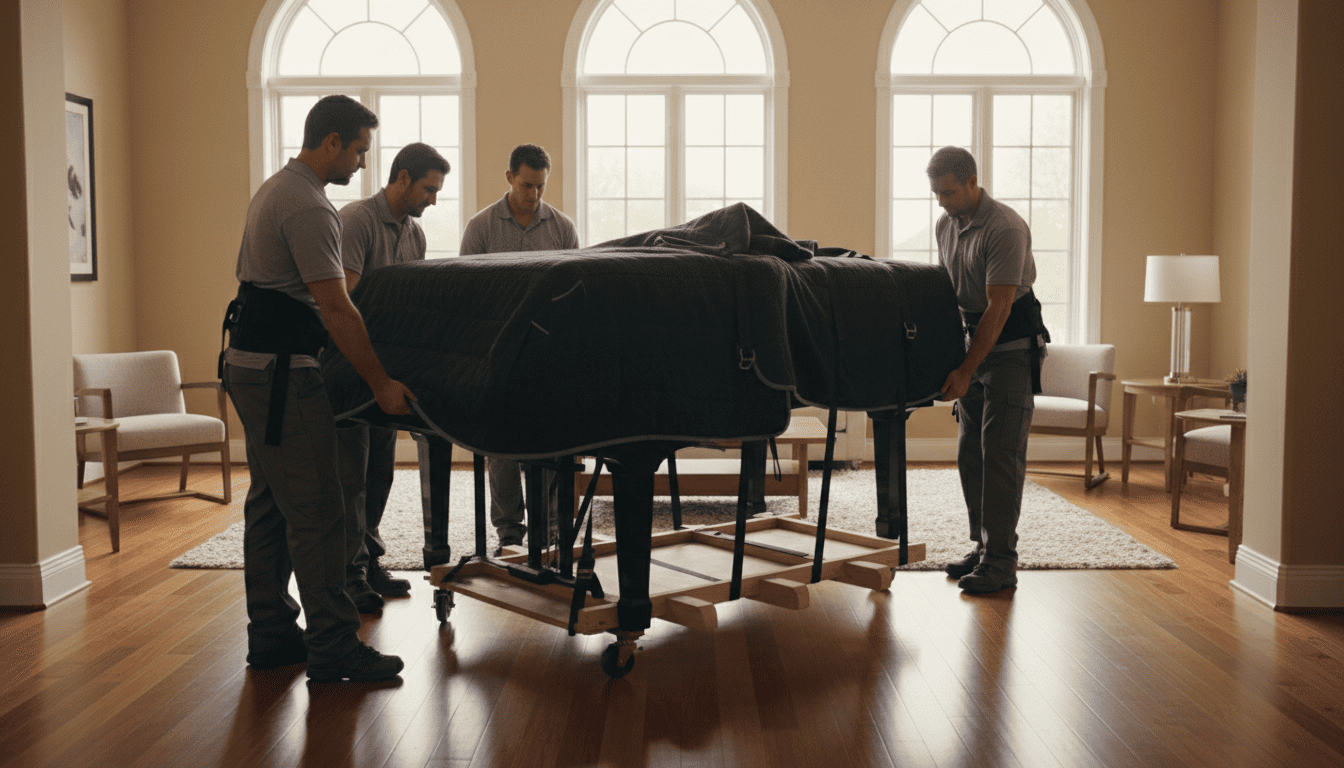
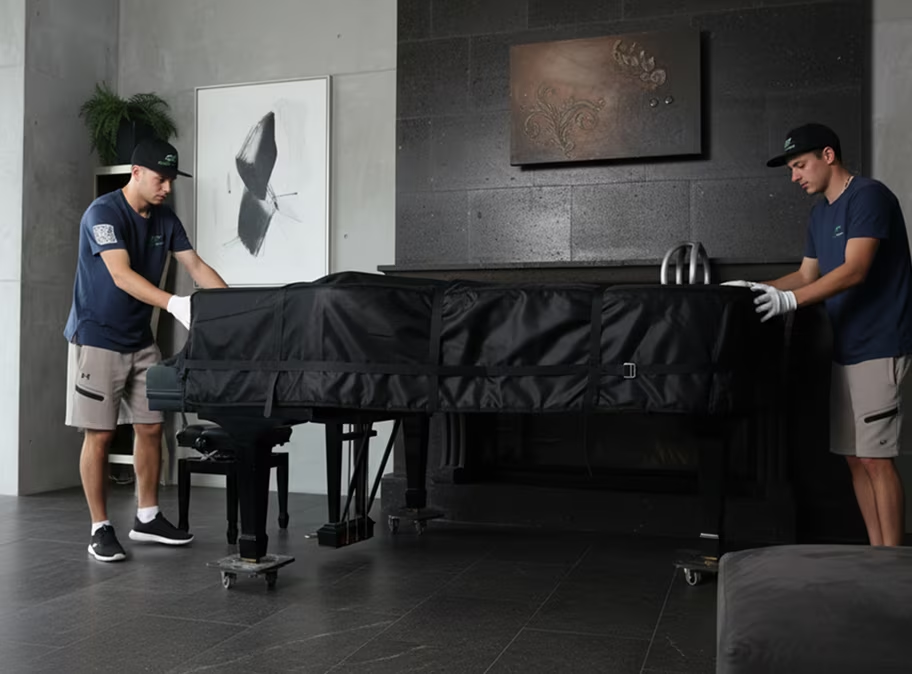
Good piano movers in Los Angeles spend more time planning than lifting, and that is how our crews work. A piano job at Green Moving is part of our white glove moving service: four movers, one instrument, and a clear plan for every step, turn and doorway between the old spot and the new one.
We move spinets, consoles, full-size uprights, baby grands and grands in houses, duplexes, condos and hillside homes across the county. Before the day is booked, we ask what kind of piano it is, how many steps lead to the door, and whether an elevator, a gate or a tight landing sits on the route. Those answers decide how long the crew will be on the clock.
That clock is how a piano move is billed: the hourly rate for four movers with a truck, plus a $200 piano charge, with no stair fee on top. The full breakdown is further down this page and on our pricing page.
Specialty jobs such as pianos and safes are overseen by Marcus Rivera, our Head of Operations, who has more than 12 years in the moving industry. You can meet him and the people behind the crews on our team page.
What Happens When You Book Movers for a Piano

Describe the piano and the route

Lock in the day and the parking plan

Protect, wrap and carry

Strap it in and drive

Set it in place
What Piano Movers Plan Around in Los Angeles County
What Piano Movers Plan Around in Los Angeles County
Parking and Red Flag Days
Some hillside streets in the City of Los Angeles carry Red Flag No Parking signs. LADOT put them up on narrow roads, sharp curves, hairpin turns and key intersections inside Very High Fire Hazard Severity Zones, in areas LAFD picked. Once LAFD declares a Red Flag Day, parking on those posted stretches is prohibited and illegally parked vehicles are towed.
The declaration comes when winds reach 25 mph or more and humidity falls to 15% or less; on December 18, 2024 and January 7, 2025, the parking restrictions took effect at 8:00 a.m. Residents can sign up for text, phone or email alerts from the LAFD Red Flag Notification System. When your street is posted, we check for a declaration the day before, keep a legal backup spot for the truck, and tell you which stretch of curb to keep clear.
Gated streets, HOAs and condo buildings
Laughlin Park in Los Feliz is a private, guard-gated enclave, and its private streets, De Mille Drive and Laughlin Park Drive among them, are reached through a guarded gate off Los Feliz Boulevard. For a piano behind a gate like that, we ask you to put the crew on the guest list and pass the arrival window to the guard, so the truck isn't idling at the entrance.
Condo and apartment buildings set their own rules. Many want a certificate of insurance before anything rolls through the lobby, and we provide one for $50 per building. Reserve the service elevator for the whole arrival window and ask management which entrance and hours they allow; the crew lines the elevator walls with blankets before the piano goes in.
Silver Lake stairs and hillside streets
In Silver Lake, a public stairway off North Vendome Street near Del Monte Drive is known as the Music Box Steps. Laurel and Hardy hauled a piano up those steps in The Music Box, the 1932 short that won an Academy Award, and a plaque marks the spot. When a house sits above the street behind outdoor steps, the crew walks them first and picks the landings where four movers can stop and reset their grip.
Los Angeles hillside rules separate standard streets from Substandard Hillside Limited Streets, and the Bureau of Engineering decides which class a hillside street falls into. Whatever the class out front, we plan where the truck can stop without blocking the road and how far the piano travels from there. The steps add time, never a stair fee.
Freeways, traffic and the clock
Metro calls the I-405 through the Sepulveda Pass, between the I-10 and the US-101, one of the most congested corridors in the country, and the ExpressLanes project there is still in planning, with completion estimated for 2035. For piano movers across Los Angeles County, the drive is part of the job. When a piano crosses the pass, we set the start time with that traffic in mind, because the move is billed by the hour and a slow crossing makes for a longer day.
The minimum is 3 hours, or 4 hours when the move is 30 or more miles from our service area. A household leaving California altogether is a different job, handled by our long-distance movers with a binding estimate instead of an hourly bill.
| Piano | What changes for the crew | What to tell us |
|---|---|---|
| Spinet or console | The shortest uprights. Moved standing, with the keyboard and back padded; the low case turns more easily on tight stairs and in narrow halls. | Stairs inside or outside. |
| Studio or full-size upright | A tall case that wants to tip on a slope, so it stays upright the whole way and is steadied on every side. | Number of outdoor steps and landings. |
| Baby grand | Can't pass a door on its legs. Legs and pedal lyre come off, the lid is secured, and the body travels wrapped on its straight side. | The narrowest door or elevator. |
| Grand | Handled like a baby grand, but the longer case needs more room to swing at landings, so the crew sets the angle of the carry before lifting. | The tightest corner, any gate, the parking distance. |
What a Green Moving Piano Crew Brings



What Our Clients say



Los Angeles Piano Movers: Answers Before You Book
Piano Moving in Los Angeles, From Wrapping to Final Placement
Piano Moving in Los Angeles, From Wrapping to Final Placement
How the Crew Moves a Piano Through Your Home
Most of a piano move happens before anyone lifts. The crew walks the route from the piano to the truck, notes the narrowest door and the sharpest turn, and moves aside any furniture in the way. Floors, thresholds and door frames along the path get covered with blankets.
Next the piano is closed up. The keyboard lid is shut and padded, loose parts such as the music desk are secured, and the case is wrapped in moving blankets and stretch wrap so nothing rubs the finish. A grand loses its legs and pedal lyre at this point, while an upright stays in one piece. Four movers carry it out, and inside the truck it is strapped so it can't slide or tip.
At the new address the same sequence runs in reverse: in through the protected path, parts back on, the piano set exactly where you want it, wrapping gone. It is the same careful handling we give art and antiques on white glove jobs, applied to an instrument that is both very heavy and easy to scratch.
Upright, Spinet, Console or Grand: Which Piano Do You Have?
The type of piano shapes the plan, so it is the first thing we ask about. Uprights stand against a wall with the strings running up and down. The shortest are spinets, consoles are a little taller, and studio and full-size uprights are taller still; the taller the case, the more carefully it has to be steadied on stairs.
Grands lie flat with the strings running away from the keyboard, and length sets the category: the baby grand is the shortest, while parlor and concert grands run longer. If you're not sure what you have, measure a grand from the front of the keys to the far curve of the tail, or send us the maker's name printed on the fallboard, the lid over the keys. Either detail helps us plan the crew's day.
Experienced Los Angeles piano movers ask these questions up front. A console headed down a split-level staircase and a grand going up to a hillside living room are two very different days, even inside the same county.
Getting the Route Ready: Stairs, Doorways and Condo Elevators
Most delays on a piano job happen between the room and the curb. A few things on your side shorten them:
- Clear the path from the piano to the front door, including loose rugs that can slide underfoot.
- Take frames, lamps, plants and sheet music off the piano, and empty the bench.
- In a condo or apartment, reserve the service elevator and ask whether the building needs a certificate of insurance.
- Behind a guarded gate, put the crew on the guest list and share the arrival window.
- Keep the curb in front of the door open for the truck, and mention any Red Flag No Parking signs on your street.
- Decide where the piano stands in the new home, clear of the path the rest of the furniture will take.
A tight interior doorway usually changes how the piano is carried rather than whether it fits. A grand on its side is slimmer than people expect, and an upright can often be angled through. If the details you send show a turn that truly won't work, we'll say so before moving day, not halfway up the stairs.
How a Piano Move Is Priced
There is no separate piano price list. A piano travels as part of an hourly move: four movers with a truck at $209 an hour Monday through Thursday, or $225 an hour Friday through Sunday, plus a $200 charge for the piano itself. The clock has a 3-hour minimum, and 4 hours apply to moves 30 or more miles from our service area.
There is no fuel surcharge, no equipment fee and no stair fee, so a house at the top of a long staircase costs more only because the carry takes longer. Current rates and every specialty charge are listed on our rates page.
What Adds Time to a Piano Move
Because the bill follows the clock, it helps to know what moves it. These are the usual factors:
- Steps. Every flight between the street and the piano, inside or out, slows the carry.
- Distance from the truck. A long walk from the nearest legal parking spot adds minutes in both directions.
- The instrument. A grand's legs and lyre come off and go back on; an upright skips that step.
- Waiting. A shared service elevator or a gate that has to call the house can hold the crew at the door.
- The drive. Heavy freeway traffic between the two addresses stretches the day, and the day is billed by the hour.
A spinet going between two ground-floor homes on a Tuesday is a short job. A grand going up a hillside staircase on a Saturday takes longer and falls on the higher Friday-to-Sunday rate. The more we know up front, the closer the day's plan will be to what the crew finds.
A Piano as Part of a Whole-Home Move
Many pianos move along with everything else in the house, and that is usually the simplest way to do it. The same four movers handle the piano and the furniture on one clock, the $200 piano charge is added to that hourly total, and there is no second trip to schedule.
We settle the order with you: the piano can go on the truck early, or wait until the rooms around it are empty and the path is wide open. For everything else in the home, see our apartment and house moving service.
The same crew setup works south of the county line. If the piano is headed to or from Orange County, see piano moving in Orange County, our Irvine piano movers and piano moves in Newport Beach.
What We Don't Do: Tuning, Appraisals, Disposal and Storage
It is better to know the edges of the job before moving day. The crew moves pianos; these four services are outside what we offer:
- Tuning. A move can shift a piano's tuning, and only a piano technician can set it right. Book your tuner for after the move; we don't tune, regulate or repair instruments.
- Appraisals. We don't put a value on a piano for insurance, a sale or an estate. A technician or an independent appraiser can.
- Disposal. We don't haul away pianos you no longer want. An unwanted piano needs a buyer, a new home or a disposal service.
- Storage. We have no warehouse, so the piano goes from one address to the other on the same job instead of waiting somewhere in between.
Moving the piano is the part we do. We would rather do that one job carefully than promise extras we can't back up.
More Moving Services in Los Angeles

Ready to Move a Piano in Los Angeles?