Packing Services in Burbank, CA
Packing Services in Burbank, CA: From One Shelf to the Whole House
Packing Services in Burbank, CA: From One Shelf to the Whole House
Our packing services in Burbank, CA come in three depths: the whole home, only the breakables, or the unpacking at your next address. What each option includes is set out on our packing and unpacking page, and the rest of the move is covered under moving in Burbank with Green Moving.
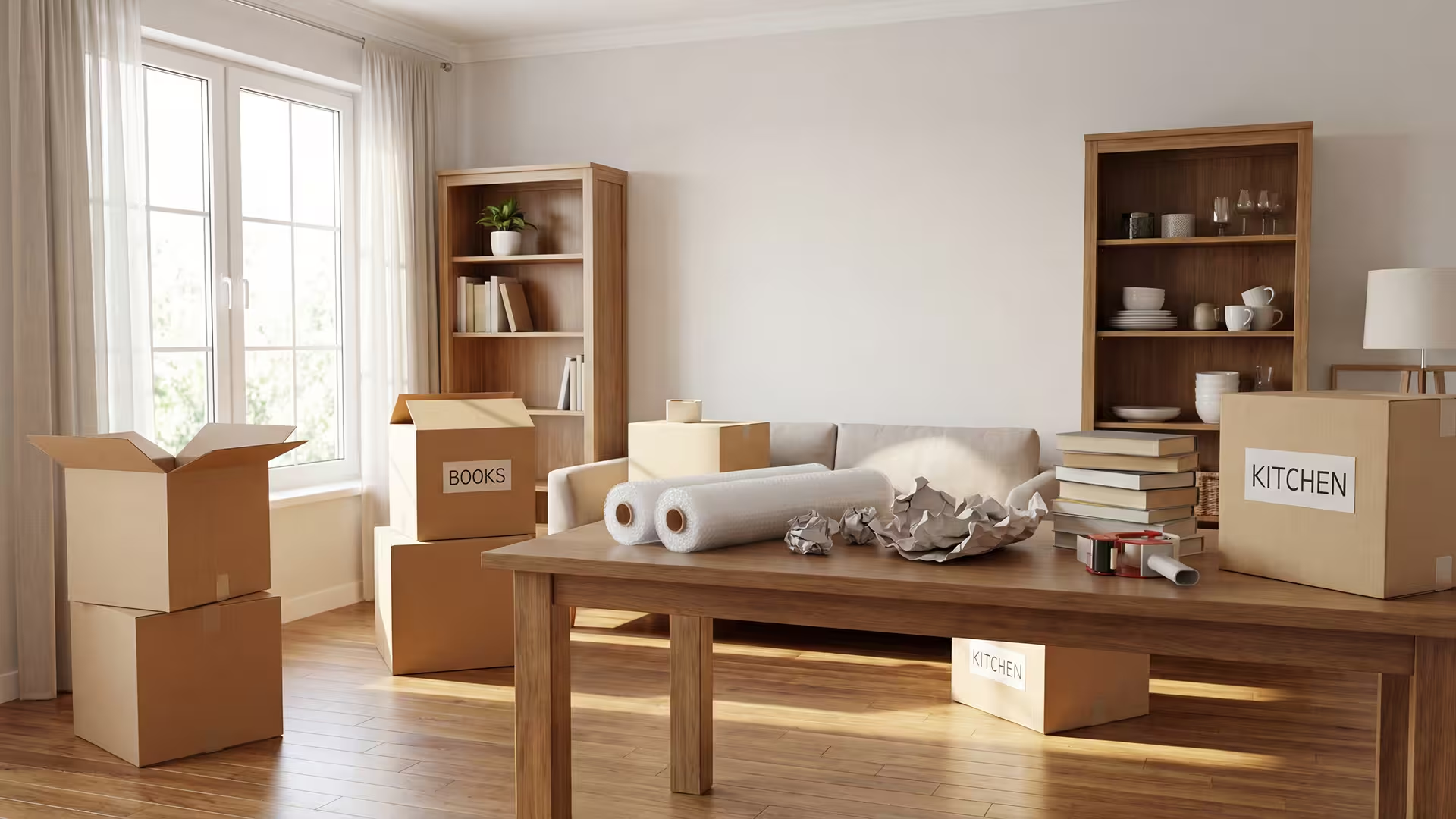
Blankets for the furniture, stretch wrap in whatever amount the job takes, heavy-duty tape and furniture wrapping are covered by the hourly rate, and so is taking beds and tables apart and putting them back together. None of that turns up as a surcharge. Boxes are the one supply you pay for separately, one at a time, at the price posted for each size.
Burbank shapes the job in a few specific ways. Narrow streets can be signed against parking, trucks on slopes need their wheels blocked, most homes are decades old, and a backyard ADU can mean a second unit on the same lot. The sections below show what each of those changes, from the order of rooms to what we ask you to have ready.
Four Steps to a Packed Burbank Home

Choose What We Pack

Settle the Curb and the Building

Garage and Closets First, Kitchen Last

Open the Boxes at the New Address
What Burbank Streets and Houses Change About Packing
What Burbank Streets and Houses Change About Packing
Signed Streets, Slopes and Clear-Out Bins
Burbank's Public Works Director may post no-parking signs on any street with a roadway 20 feet wide or less, and on one side of streets up to 30 feet wide. On a signed block the truck may stand farther away, so we plan the dolly route and a spot inside for finished boxes. On any grade over 3%, city code also wants an unattended vehicle's wheels blocked, and the driver curbs them before loading.
A clear-out bin or portable container on the street comes with Street Use Permit conditions: two Type II barricades with flashers, and wheel stops on grades above 3%. On grades over 8%, cul-de-sacs, narrow or curvy streets and spots near stop signs or driveways, an inspector or the Traffic Engineer reviews the placement before the permit is issued. Tell us where yours will sit so the truck parks clear of it.
Building Rules, COIs and Backyard ADUs
Every apartment and condo building writes its own move rules, so ask the manager for them before packing day. A certificate of insurance, if the rules ask for one, is $50 per building; if they limit move hours or require an elevator booking, packing is timed to finish before that window opens.
Based on 2019–2021 trends, the City's Housing Element reports building permits for an average of 181 ADUs over the most recent three-year period and projects 200 a year, or 1,600 over the eight-year planning period. In a backyard unit, the person to ask is usually the owner of the main house, and we pack around what the two of you agree on.
Post-War Ranch Houses and Older Homes
The City's 2021–2029 Housing Element counts 74.7% of occupied housing units as more than 38 years old (built before 1980) and 76.8% of owner-occupied units as built before 1960, using 2018 ACS data. In houses that age, we ask early which mirrors, shelves and fixtures stay with the house, and pack only what leaves.
The 1999 Historic Preservation Plan says the post-war single-family areas appear to have been built out mainly between 1945 and 1950, largely as variations on the California Ranch house. A ranch plan usually keeps every room on one level, so we start in the farthest bedroom and work toward the front door, staging boxes by the exit.
Carry Distance, Arrival Windows and Billed Hours
All of this lands on the hourly bill. A truck parked half a block away on a signed street, or a bin taking the best stretch of curb, adds minutes to every dolly trip. The arrival window is confirmed 24 to 48 hours before the job, and the crew phones about 30 minutes out.
Jobs carry a 3-hour minimum, or 4 hours when an address is 30 or more miles from our service area, and any hour past the eighth costs 1.5 times the usual rate. For a larger house, the quote says whether packing should move to the day before loading.
Home type sets the order. Here is how it plays out:
| Home in Burbank | What we pack first | What you get ready |
|---|---|---|
| Post-war ranch house on one level | Far bedrooms, closets and garage; kitchen last | A clear path out and a list of what stays |
| Apartment or condo in a pre-1980 building | Books, decor and closets; the kitchen stays usable | The building's move rules, an elevator booking and any COI request |
| Backyard ADU | The whole unit in one pass, boxes kept inside until loading | The owner's OK on where boxes wait and when the driveway is free |
Reasons to Let Our Crew Do the Wrapping

What Our Clients say





Before You Book Packers in Burbank
A Burbank Packing Service, Start to Finish
A Burbank Packing Service, Start to Finish
Where Packing Starts and Where It Stops
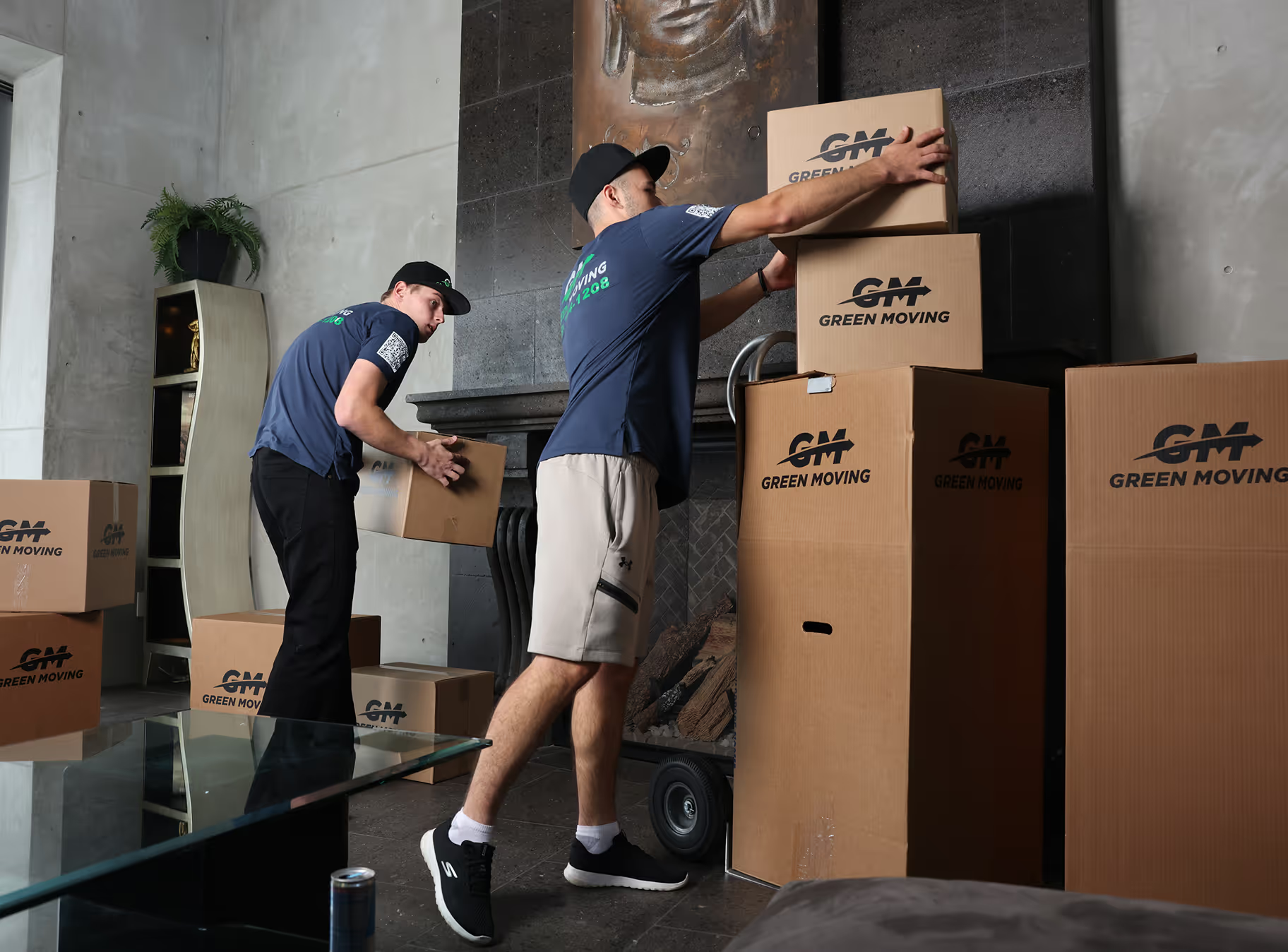
A packing day begins in the rooms you use least: the garage, the spare bedroom, bookshelves and hall closets. Kitchens, bathrooms and the beds you still sleep in come last. If packing runs the day before the truck, we stop short of the beds, the bathroom and one kitchen shelf, and finish those when the crew returns.
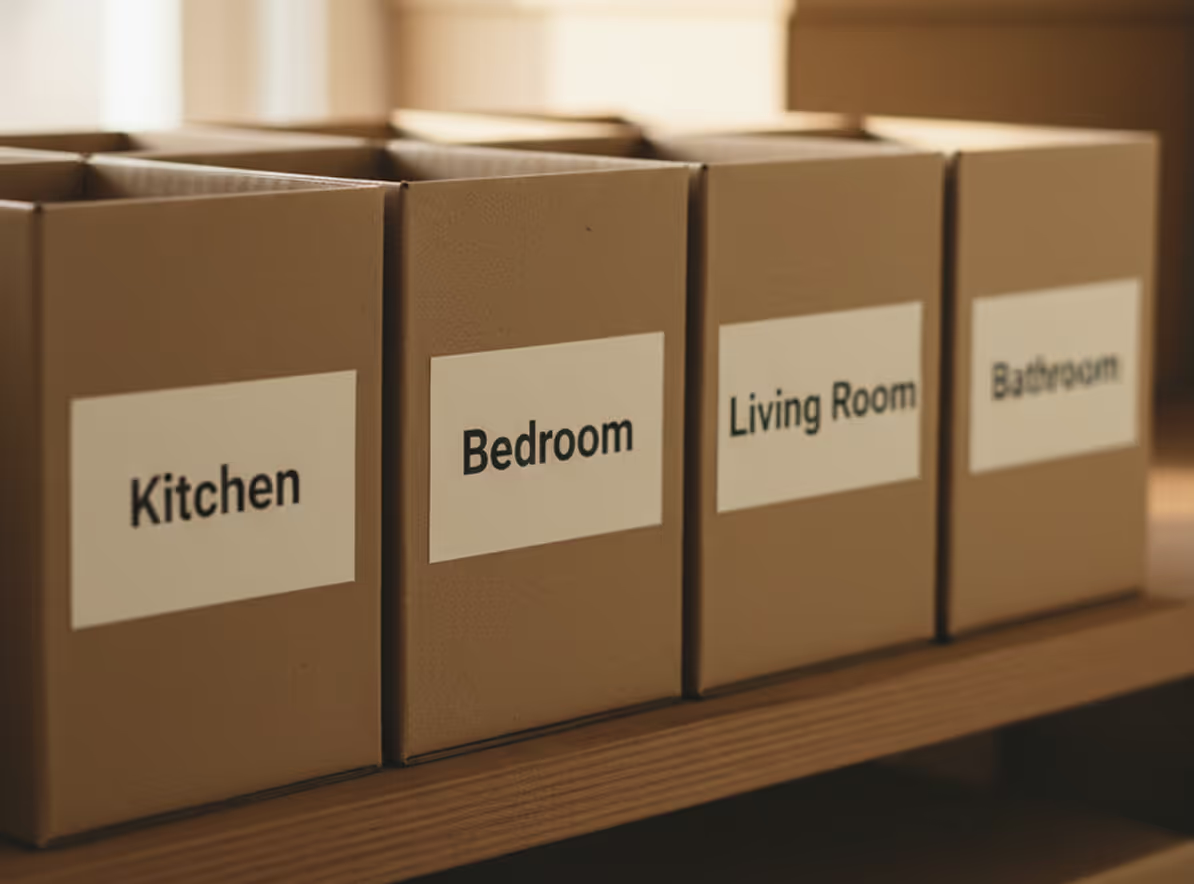
Before the first box is taped, the rooms at the new address get names, such as Bedroom 2 or Office. Every box gets one of those names and a word or two about what's inside. A handful marked Open First, holding bedding, bathroom basics and a few plates, go on the truck last so they come off first.
Timing follows the size of the home. A three-bedroom house usually takes a full day of packing, and the quote spells out how many movers and hours to expect. Boxes you packed yourself are checked for a closed lid and a sensible weight, then stacked with the rest.
Whole Home, Fragile Only, or Unpacking Only
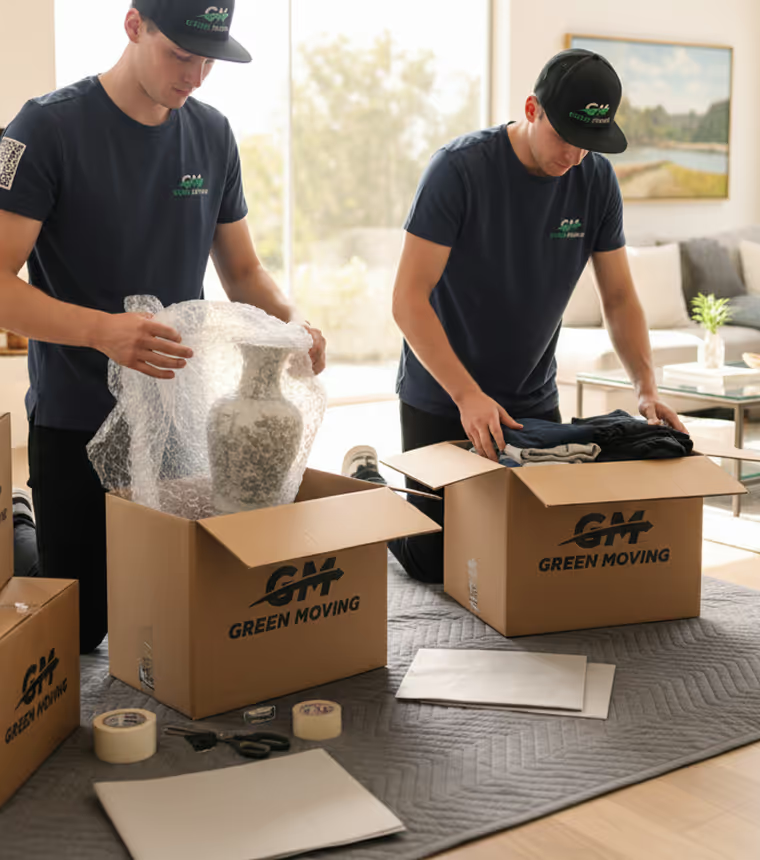
Most calls about a packing service in Burbank start with one question: how much should we do ourselves? Full-service packing settles it, because the crew packs everything that moves, from the garage shelves to the last kitchen drawer.
Partial packing is narrower on purpose. We take only the breakables, meaning glassware, china, framed pieces, lamps and electronics, and you box the books, clothes and everything sturdy. It fits people who can fill boxes on weeknights but don't want to be the one wrapping crystal.
Unpacking can be added to either option or booked on its own. The crew empties boxes into the rooms they're marked for, sets kitchen items where you point, and puts back together the furniture it took apart.
Whichever option you pick, the crew brings the boxes and wrap to the house, so there is no supply run on your side. What helps is a clear surface in each room, such as a table or an emptied counter, where the wrapping can happen.
Matching Each Box to What Goes In It
Box size follows weight. The book box, $1.25, is small because a full one is heavy, which makes it right for books, records, files and canned food. The dish pack, $3.50, is made for plates, bowls and glasses wrapped one by one and set on edge.
The plain cartons go $4, $5 and $6 for small, medium and large. Small ones take tools, toiletries and pantry jars, medium ones take pots, toys and shoes, and large ones carry light, bulky things like pillows, lampshades and linens. Wardrobe boxes cost $20–$25 and let hanging clothes travel on a bar.
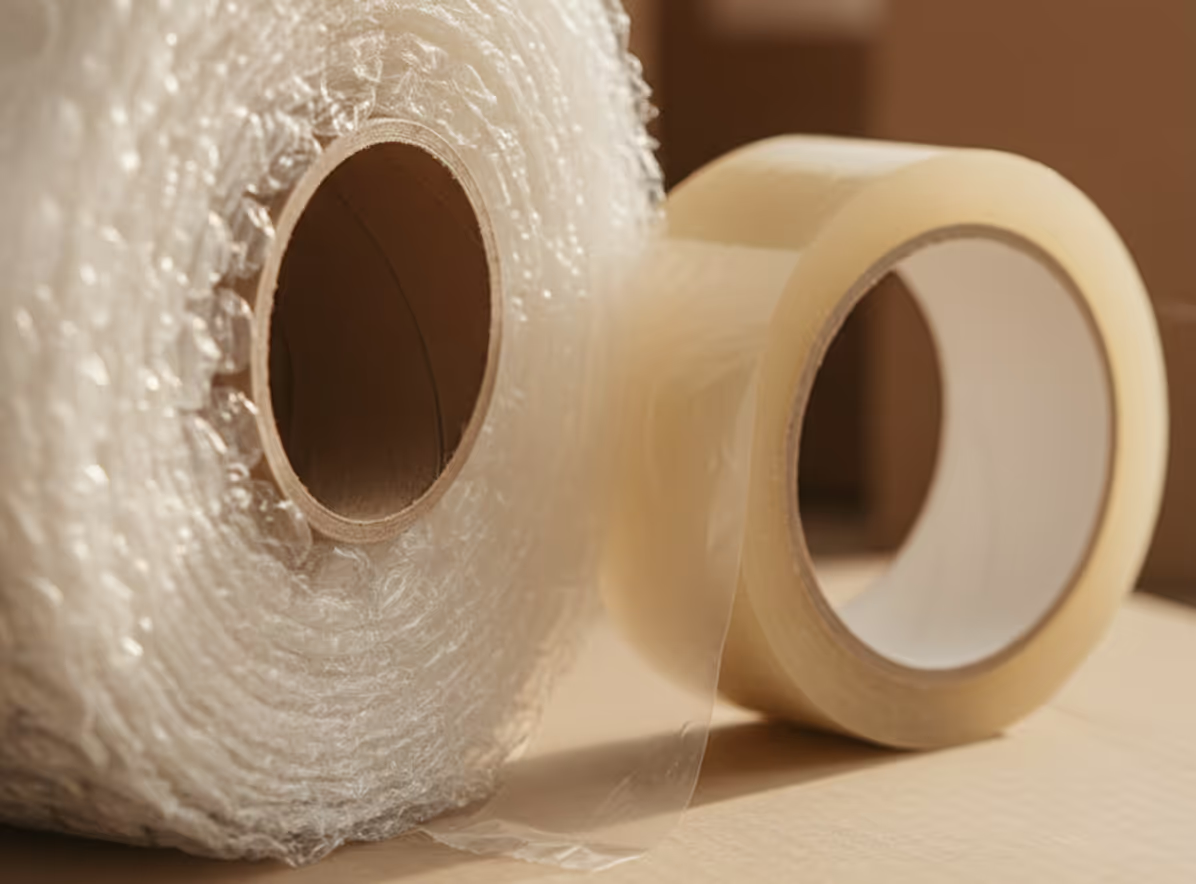
Moving blankets for the ride, unlimited stretch wrap, heavy-duty tape and furniture wrapping are covered by the hourly rate. Paper comes in bundles of 600 sheets and bubble wrap by the roll, and blankets can be bought for $20–$25 if you want to keep a few; everything is on the full price list.
Boxes collected from a store or a friend's move are fine for linens and books if the flaps are intact and the cardboard is dry. Soft or damp ones are not worth the risk for anything heavy.
Glass, Art and Electronics Get Extra Layers
Plates are wrapped one at a time and stood on edge, glasses get paper inside and out, and the gaps in every box are filled so nothing shifts when it tilts on a dolly. A box that rattles gets opened and repacked before it goes on the truck.
Framed art and mirrors are wrapped in paper, then in a blanket or stretch wrap, and ride upright. A glass tabletop travels in a crate, which the price list puts at $75–$200. Lamps lose their shades first: the shade gets a large box of its own and the base is wrapped separately.
Monitors, speakers and camera gear are safest in their original boxes if you still have them. If not, we wrap each piece in a blanket, mark it fragile and keep it upright and off the bottom of the stack. Cords are coiled and taped to the device they belong to, and remotes ride in a labeled bag with their TV or speaker.
Packing for a Long-Distance Move From Burbank
A box that crosses town spends an hour in the truck; one headed to another state spends far longer there and may sit under others the whole way. For long-distance moves, we pack tighter: heavy boxes at the bottom of each stack, no half-empty cartons that can crush, and every gap filled.
Furniture gets more attention for a long haul too. Legs come off tables where they can, glass shelves come out of cabinets and travel in their own wrap, and drawers are emptied or wrapped shut so they can't slide open on the road.
The price is built differently as well. Long-distance work is priced with a binding estimate whose three inputs are how far the load goes, how much it weighs and which services you add, so full or fragile-only packing is one of the choices that moves that number.
The Week Before: What Helps From Your Side
Decide what isn't coming. Anything you sell, donate or give away before packing day is one less thing to wrap and carry, and on an hourly job that shows up in the total.
If you rent in a managed building, get the move rules and the elevator schedule now rather than the day before. Our page on apartment moves in Burbank goes through the building side in more detail.
Photograph the cables behind the TV and the router before anything is unplugged, and put small hardware you remove yourself in a labeled zip bag. The crew does the same with bolts from beds and tables, taping each bag to the piece it came from.
Empty the fridge a day or two ahead, and pull out anything you plan to carry yourself so it doesn't get packed by mistake. Tell us ahead of time about any heirloom, instrument or collection that needs special wrapping.
Unpacking and Taking the Empty Boxes With Us
Unpacking runs in the reverse order of packing: kitchen and bathroom first, then beds, then the rooms that can wait. Furniture the crew took apart goes back together before the boxes around it are opened.
If the new place isn't ready for everything at once, tell us which rooms to leave boxed. The crew stacks those boxes along a wall with the labels facing out, so you can get to them later.
When we unpack, the empty boxes are flattened, the used paper is bagged, and both leave with the crew. The full packing and unpacking service covers homes across Los Angeles and Orange County, and our Burbank moving page has the rest of what a move here involves.
More Moving Services in Burbank

Ready to Hand Off the Packing in Burbank?