Moving to Hollywood / West Hollywood 2026
- West Hollywood: The Fundamental Difference
- Hollywood Neighborhoods: Where You'll Actually Live
- West Hollywood Neighborhoods: The WeHo Map
- Real Moving Costs: Hollywood & West Hollywood
- Parking: The Single Biggest Moving Challenge
- Rent Control: What You Need to Know
- Getting Around: Transit, Bikes, and the Car Question
- Settling In: The First Month
- FAQ
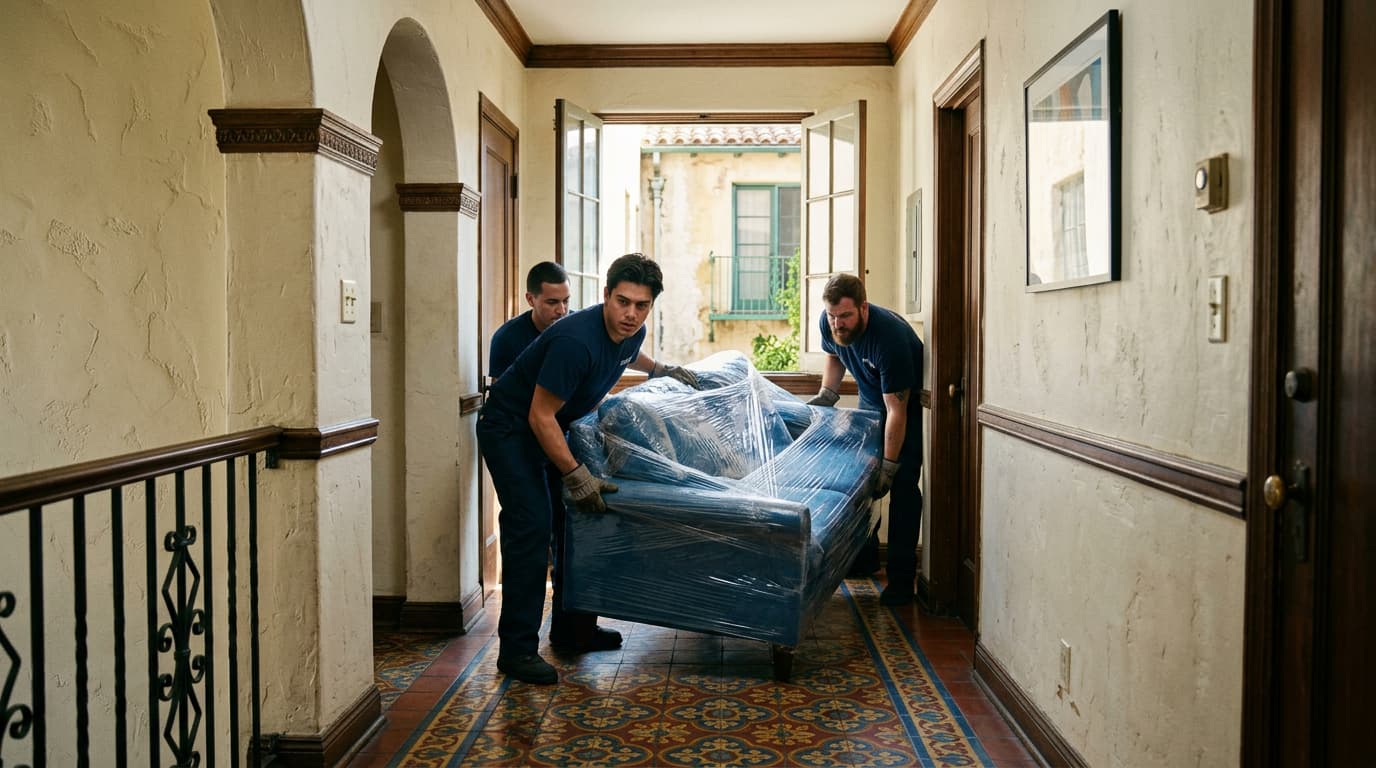
Last December I moved a screenwriter from a garden apartment in Silverlake to a 1-bedroom in a classic 1930s courtyard building on Fountain Avenue in East Hollywood. The same week, I moved an interior designer from DTLA to a modern 2-bedroom on West Knoll Drive in West Hollywood — literally 2 miles west. Two moves, practically neighbors on a map. But the experience couldn't have been more different. The Hollywood move involved a narrow alley loading zone, no elevator, a third-floor walkup with a staircase that turned at 90 degrees on every landing, and a street parking fight with three other residents' moving trucks on the same Saturday. The West Hollywood move had a building loading dock, a freight elevator, a reserved parking zone, and a management company that emailed me a move-in checklist two weeks in advance. Same general area of LA. Completely different infrastructure, different city governance, different moving experience.
I'm Daniel, a Relocation Advisor at Green Moving, and I need to start this guide with the most important thing most newcomers don't know: Hollywood and West Hollywood are not the same place. Hollywood is a neighborhood within the City of Los Angeles. West Hollywood is an independent city with its own government, police, and municipal services. They share a border along La Brea Avenue, they share an aesthetic overlap, and people use the names interchangeably — but the day-to-day reality of living in each one is distinctly different. This guide covers both, side by side, so you can choose with open eyes.
Hollywood vs. West Hollywood: The Fundamental Difference
Hollywood is a neighborhood of the City of Los Angeles, governed by LA City Council District 13, policed by LAPD Hollywood Division, and subject to LA's rent stabilization ordinance (RSO) for buildings built before 1978. It stretches roughly from the 101 freeway south to Melrose, and from Western Avenue west to La Brea. The famous stuff — the Walk of Fame, the Chinese Theatre, the Hollywood Sign — is all here. So is a dense, gritty urban landscape of apartment buildings, strip malls, tourist traps, and genuine cultural diversity. Hollywood is loud, messy, and alive. It's also more affordable than most people expect.
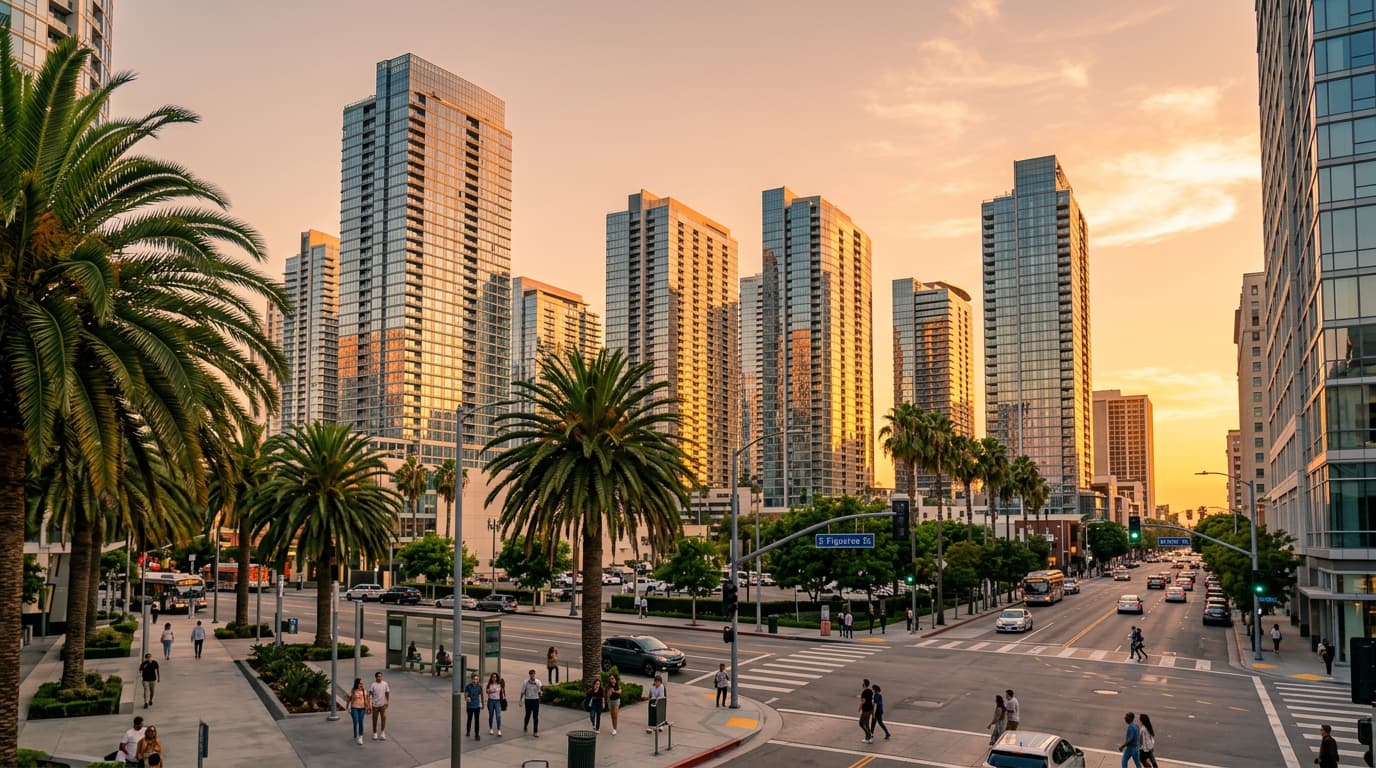
West Hollywood is an independent city of about 36,000 people occupying 1.9 square miles between Hollywood and Beverly Hills. It has its own city hall, its own sheriff's department (LA County Sheriff, not LAPD), its own planning commission, and one of the strongest renter protection ordinances in California. WeHo is known for its LGBTQ+ community, the Sunset Strip, the Design District, and a walkable, curated urban environment that feels polished compared to Hollywood's raw energy. It's smaller, quieter on residential streets, better maintained, and more expensive.
The practical implications for your move: West Hollywood buildings tend to be better managed, with clearer move-in processes and more professional building management. Hollywood buildings — especially older rent-controlled ones — vary wildly. Some are beautifully maintained; others haven't been updated since the 1970s and the "management" is a landlord who answers the phone half the time.
Hollywood Neighborhoods: Where You'll Actually Live
Hollywood is larger than most people realize. The sub-neighborhoods have distinct characters:
East Hollywood / Thai Town / Little Armenia is the eastern stretch along Hollywood and Sunset Boulevards, roughly east of Western Avenue. This is the most diverse and most affordable part of Hollywood. Thai Town (centered on Hollywood Blvd between Western and Normandie) has some of the best Thai food in the country. Little Armenia (around Santa Monica Blvd and Vermont) has bakeries, markets, and restaurants serving the established Armenian community. Studios and 1-bedrooms rent for $1,500–$2,100/month. The housing stock is mostly older apartment buildings — walkups, courtyard apartments, and a few mid-rises. Expect narrow hallways, tight staircases, and limited parking.
Central Hollywood / Hollywood & Vine area is the tourist and entertainment core. The Walk of Fame, the Pantages Theatre, Amoeba Music, and the Hollywood & Highland complex are all here. Living in central Hollywood means constant energy — street performers, tour buses, Friday night crowds, and helicopter flyovers. It's also where the most new apartment construction has happened, including high-rises with modern amenities. New-build 1-bedrooms run $2,400–$3,500/month; older buildings $1,800–$2,400. The Metro B Line stops at Hollywood/Vine and Hollywood/Highland, making this one of the most transit-connected neighborhoods in LA.
Beachwood Canyon / Hollywood Dell is the hillside residential area below the Hollywood Sign. This is a different world from boulevard Hollywood — quiet, winding streets, Craftsman bungalows, mature trees, and canyon ambiance. Beachwood Village at the base has a small-town feel with a coffee shop, market, and local businesses. Homes run $1.0M–$2.5M. Rentals are scarce and premium when available ($2,500–$4,000/month for a small house or duplex unit). Moving logistics here mirror any hillside neighborhood — narrow roads, steep driveways, limited truck access.
Franklin Village / Los Feliz adjacent sits along Franklin Avenue between Beachwood and Vermont, on the border with Los Feliz. A walkable cluster of restaurants, bookshops (Chevalier's is an institution), and bars. The residential blocks are a mix of vintage apartments and small homes. This area feels like a neighborhood, not a tourist attraction. Rents $1,800–$2,600 for a 1-bedroom.
West Hollywood Neighborhoods: The WeHo Map
WeHo is small, but the micro-neighborhoods matter:
The Sunset Strip runs along Sunset Boulevard from Doheny Drive to Crescent Heights. The legendary music venues (the Whisky, the Roxy, the Viper Room) share the boulevard with hotels, restaurants, and nightlife. Living on or near the Strip means noise — especially Thursday through Saturday nights. The apartments on the residential streets immediately north and south of Sunset are quieter but still urban. 1-bedrooms $2,200–$3,200/month.
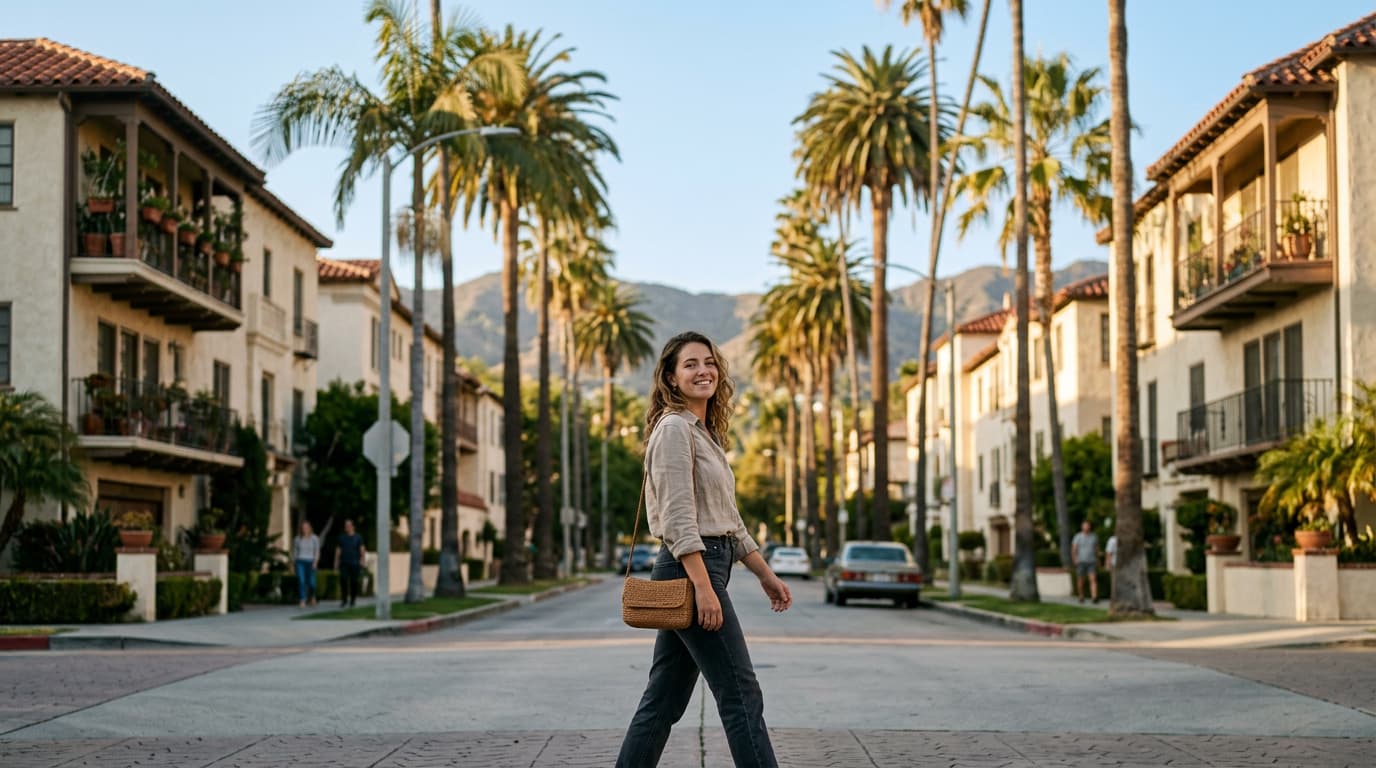
West Hollywood Design District is centered on Melrose Avenue and Beverly Boulevard between La Cienega and Robertson. High-end furniture showrooms, galleries, and boutique shopping define the commercial strip. The residential streets between Melrose and Santa Monica Blvd have some of the most charming apartment buildings in WeHo — 1940s Spanish-style courtyards, Art Deco mid-rises, and well-maintained garden apartments. 1-bedrooms $2,000–$3,000/month.
Boys Town / Santa Monica Boulevard corridor is the cultural heart of WeHo's LGBTQ+ community, centered on Santa Monica Blvd between La Cienega and Robertson. Bars, clubs, restaurants, and community organizations line the boulevard. The residential streets are a mix of apartments and small condos. Vibrant nightlife energy, especially on weekends. 1-bedrooms $1,900–$2,800/month.
West Hollywood West / Norma Triangle borders Beverly Hills and is the quietest, most residential part of WeHo. Tree-lined streets, well-maintained buildings, and a neighborhood feel that's almost suburban. Walking distance to the Beverly Hills commercial district along Robertson. This is where WeHo's families and longer-term residents tend to live. 1-bedrooms $2,200–$3,200; small homes $1.5M–$3M.
🌴 Moving to Hollywood or WeHo? Green Moving handles apartment moves across both cities every week — walkups, high-rises, courtyard buildings, hillside homes. Call (949) 266-9445 or get a free quote. Our local movingcrews know every building type in the area.
Real Moving Costs: Hollywood & West Hollywood
Here's what you'll actually pay based on our recent jobs:
Studio or 1-bedroom apartment within Hollywood or WeHo (local move): Crew: 2 movers + truck. Time: 3–4 hours. Cost: $450–$700. Short distances, but building access and parking challenges can extend the clock. A 3rd-floor walkup adds 30–45 minutes compared to a ground-floor or elevator-accessible unit.
1–2 bedroom from elsewhere in LA to Hollywood/WeHo: Crew: 2–3 movers + truck. Time: 4–6 hours. Cost: $700–$1,100. Most common scenario — people moving from the Valley, Westside, or other LA neighborhoods. The 101 and Sunset/Santa Monica surface routes are the standard approaches.
Hillside home in Beachwood Canyon or Hollywood Dell: Crew: 3 movers + truck. Time: 5–8 hours. Cost: $900–$1,600. Narrow canyon roads, steep driveways, and limited turnaround space add complexity. Shuttle truck operations may be needed for larger homes, adding $200–$400.
The walkup surcharge: Walk-up apartments are the norm in older Hollywood and WeHo buildings. Most moving companies charge $50–$75 per flight of stairs. A 3rd-floor walkup in a building with tight 90-degree staircase turns (extremely common in 1920s–40s Hollywood buildings) adds time because furniture has to be tilted, rotated, and sometimes hoisted over stairwell railings. Budget accordingly.
The parking permit factor: Both Hollywood (LADOT) and West Hollywood (city-issued) require permits for moving trucks on many residential streets. Hollywood permits run $25–$40 through LADOT with 7–10 business days processing. WeHo permits are handled through the city's Public Works Department — slightly faster (5–7 days) and about $30–$50. Apply early. Without a permit, your truck either double-parks (risking a ticket) or parks a block away (adding significant carry time and cost).
Parking: The Single Biggest Moving Challenge
I'm going to be direct: parking is the number one logistical headache for every Hollywood and West Hollywood move. It defines your moving day more than any other factor.
Hollywood street parking is a patchwork of permit zones, metered blocks, time restrictions, and street sweeping schedules. Most residential streets require a Zone A, Zone N, or other permit for overnight parking. Your moving truck doesn't qualify for these permits — it needs a separate commercial/temporary permit.
On move-in day, the nightmare scenario (which I see monthly): your truck arrives, every curb spot within 200 feet of your building is occupied, the double-park blocks traffic and draws honks, and the crew starts carrying furniture an extra half-block because there's literally nowhere closer. The solution is the LADOT temporary no-parking permit — signs go up 72 hours before your move, reserving curb space directly in front of your building. It's $25–$40 and worth every cent.
West Hollywood has its own parking permit system, separate from LA. The city website has a clear application process, and the turnaround is generally faster than LADOT. WeHo also has better-managed loading zones in newer buildings — many post-2000 apartment buildings have dedicated move-in dock access. If your building has one, use it. It eliminates the street parking problem entirely.
Underground garage clearances: Many Hollywood and WeHo apartments have underground garages with 7-foot clearance. Standard moving trucks are 12–13 feet tall. Don't assume the truck fits underground — confirm clearance in advance and plan for street-level loading. Our apartment moving checklist covers this and every other building-specific detail.
Rent Control: What You Need to Know
Both Hollywood and West Hollywood have strong renter protections, but they operate under different systems:
Hollywood falls under LA's Rent Stabilization Ordinance (RSO). Buildings built before October 1, 1978, with certain exceptions, are covered. Rent increases are limited to an annual percentage set by the Rent Adjustment Commission (typically 3–8%). Landlords cannot evict without just cause. If you're moving into an RSO unit, know your rights — LAHD (Los Angeles Housing Department) has a tenant rights hotline and online unit lookup tool.
West Hollywood has its own rent stabilization ordinance that covers virtually all rental housing in the city, including some buildings that would be exempt under LA's RSO. WeHo's protections are among the strongest in California — annual allowable increases are typically lower than LA's, and the eviction protections are broader. The West Hollywood Rent Stabilization and Housing Division is the governing body. If you're apartment-hunting in WeHo and find a rent-stabilized unit, it's worth understanding the specific protections.
Why this matters for moving: In both areas, landlords of rent-controlled buildings sometimes offer "cash for keys" — money to vacate voluntarily. If you're moving out and your landlord is offering this, understand the legal landscape before accepting. If you're moving in, know that rent-controlled units turn over less frequently, making them harder to find but significantly more affordable when you do.
Getting Around: Transit, Bikes, and the Car Question
Hollywood is one of the few LA neighborhoods where car-free or car-light living is genuinely feasible:
Metro B Line stops at Hollywood/Western, Hollywood/Vine, and Hollywood/Highland. This connects you to DTLA (20 minutes), Koreatown (10 minutes), and North Hollywood (15 minutes, with connections to the Valley). For entertainment industry commuters, the B Line to Universal City is a game-changer — no driving, no parking, no 101 traffic.
West Hollywood does not have a Metro station (yet — the Crenshaw Northern Extension is planned but years away). However, WeHo runs its own free shuttle service — the WeHo Cityline — connecting residential neighborhoods to commercial areas along Santa Monica Blvd and the Sunset Strip. It's not a substitute for a car, but it reduces the need for short trips.
Biking is increasingly viable on both sides. Santa Monica Blvd has protected bike lanes through WeHo, and Hollywood's flat grid streets are bikeable if you're comfortable with urban traffic. The Sunset Blvd corridor is not bike-friendly — too fast, too narrow.
The realistic answer: Most people in Hollywood and WeHo still drive. Parking is miserable but having a car gives you access to the rest of LA. Budget $100–$200/month for a parking spot if your building doesn't include one — many older Hollywood buildings don't.
Settling In: The First Month
Explore your microneighborhood on foot. Both Hollywood and WeHo reward walkers. Hit the small coffee shops, browse the vintage stores on Melrose, find your neighborhood Thai place or taco truck. The personality of each block changes fast — your favorite spot might be a 5-minute walk from your door.
Get your parking permits immediately. If you're in Hollywood, register for your residential parking zone through LADOT online. In WeHo, visit city hall or the city website. Don't wait — enforcement is aggressive, and tickets are $73+.
Find your grocery anchor. Trader Joe's on Vine (Hollywood) and Trader Joe's on Santa Monica Blvd (WeHo) are the most popular. For specialty groceries, Jon's on Vermont (East Hollywood) has incredible produce and Middle Eastern foods at low prices. Erewhon on Beverly (WeHo) is the luxury organic option if your budget allows it.
Know the noise patterns. Hollywood Blvd is loud until midnight, later on weekends. The Sunset Strip in WeHo pulses until 2 AM Thursday through Saturday. Residential side streets are generally quiet, but proximity to a venue or bar changes everything. Spend an evening at your prospective apartment before signing the lease — the neighborhood at 10 PM on a Saturday sounds very different from the Tuesday afternoon showing.
Green Moving commits 1% of every move to California environmental causes. In a dense urban environment like Hollywood and WeHo, sustainable moving practices matter even more — fewer truck trips, reusable packing materials, and optimized routing reduce emissions in neighborhoods where air quality is already a concern.
FAQ
How much does it cost to move a 1-bedroom apartment in Hollywood? A standard 1-bedroom move within Hollywood or to Hollywood from another LA neighborhood costs $450–$1,100 depending on distance, floor level, and building access. Walk-up apartments add $50–$75 per flight for stair surcharges. Budget an additional $25–$40 for a street parking permit if your building lacks a loading zone.
What's the difference between living in Hollywood vs. West Hollywood? Hollywood is a neighborhood within the City of Los Angeles — grittier, more diverse, more affordable, policed by LAPD. West Hollywood is an independent city — better maintained, slightly more expensive, with its own sheriff's department and stronger renter protections. They share a border but have distinctly different governance, infrastructure, and daily-life feel.
Do I need a parking permit for my moving truck in West Hollywood? In most cases, yes. West Hollywood issues temporary moving permits through the city's Public Works Department. Apply 5–7 business days before your move date. Permits cost approximately $30–$50 and reserve curb space in front of your building for the truck. Without one, you risk tickets or having to park a block away.
Is Hollywood safe to live in? Safety varies significantly by block and sub-neighborhood. Beachwood Canyon, Franklin Village, and parts of East Hollywood near Los Feliz are generally quiet and residential. The boulevard areas around Hollywood/Highland and Hollywood/Western have more street-level issues — panhandling, petty theft, and nighttime noise. West Hollywood consistently ranks as one of the safer urban areas in LA County.
Can I live in Hollywood without a car? More feasibly than most LA neighborhoods. The Metro B Line connects Hollywood to DTLA, Koreatown, and North Hollywood. Daily errands are walkable in most sub-neighborhoods. However, accessing the Westside, the Valley (beyond North Hollywood), and OC still realistically requires a car or frequent rideshare use. Most residents keep a car but drive less than in other LA neighborhoods.
Are apartments rent-controlled in Hollywood and West Hollywood? Many are. In Hollywood, buildings built before October 1978 fall under LA's Rent Stabilization Ordinance. In West Hollywood, nearly all rental housing is covered by the city's own rent stabilization program with even stronger protections. Rent-controlled units turn over less frequently, so they're harder to find but offer significant long-term savings.
Moving to Hollywood or West Hollywood? Green Moving handles everything from courtyard walkups to modern high-rises across both cities. Call (949) 266-9445, email sales@greenmovingla.com, or request your free quote. Licensed & insured — CAL-T 201327.