Moving to Downtown LA in 2026
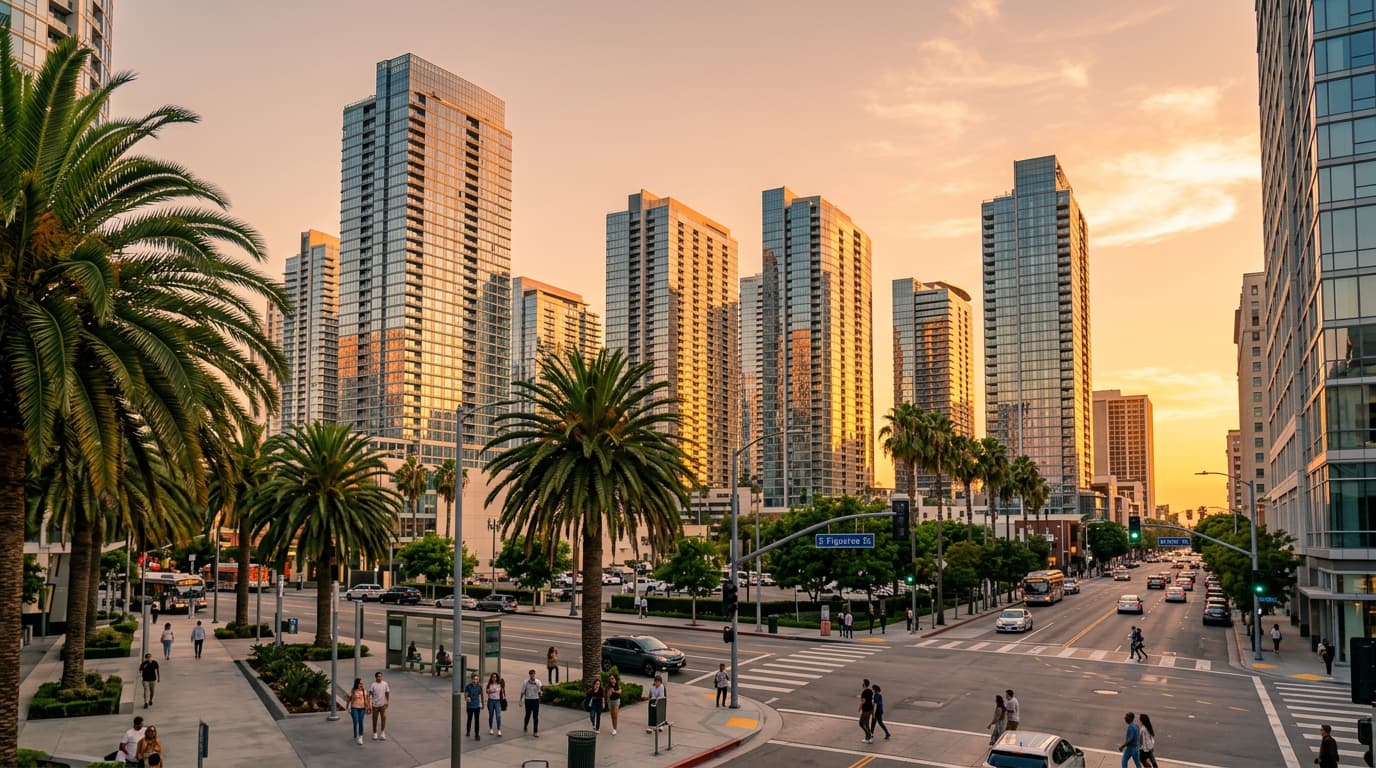
Last January I moved a young attorney from a garden apartment in Pasadena to a 27th-floor loft in a South Park tower on Grand Avenue. She'd lived in the suburbs her entire life — Arcadia as a kid, Pasadena through law school, and now her first firm was on Figueroa Street and she wanted to walk to work. On move-in day, our crew navigated a loading dock queue that had two other moving trucks waiting ahead of us, a freight elevator that fit exactly one sofa at a time, and a hallway on 27 that was so narrow the crew had to turn her dining table vertically to clear the corner. The whole job took seven hours for a 1-bedroom — twice what the same load would take in a standard building. When we finished and she stood at her window watching the sun set over the Pacific from 27 floors up, she said, "This is the most stressful and most exciting day of my life." That's Downtown LA in one sentence.
I'm Daniel, a Relocation Advisor at Green Moving, and DTLA is one of the most complex places I move people into. It's also one of the most rewarding. The neighborhood has transformed dramatically over the past decade — from an empty-after-6-PM office district to a genuine residential community with restaurants, nightlife, cultural institutions, and an energy that feels more like a real city than anywhere else in LA. But the moving logistics are unlike any other neighborhood in the county. High-rise buildings, loading dock protocols, freight elevator reservations, street closures, and one-way traffic patterns create a layer of complexity that catches people off guard if they're coming from suburban LA. This guide covers the neighborhoods, the costs, and every logistical detail you need.
DTLA in 2026: What You're Actually Moving Into
Downtown LA's residential population has exploded from roughly 30,000 in 2010 to over 90,000 in 2026. The construction boom brought luxury high-rises, adaptive reuse lofts in historic buildings, and mixed-use developments that put restaurants and retail at street level with apartments above. The result is a walkable urban core — something LA has never really had before.
The cultural infrastructure is now legitimate. The Broad museum, Walt Disney Concert Hall, Grand Central Market, ROW DTLA, the Arts District's gallery scene, and a restaurant density that rivals any neighborhood in the city. The Metro connects DTLA to Hollywood, Koreatown, Pasadena, Santa Monica, and Long Beach. For the first time in LA history, you can live downtown and get to most major destinations without a car.
The trade-offs are real too. Homelessness is visible and concentrated — Skid Row borders the eastern edge of DTLA's residential zone, and encampments are present on certain blocks throughout the area. Street noise is constant. Parking is expensive ($200–$350/month for a garage spot in most buildings). And the grocery situation, while improving, still lags behind suburban neighborhoods — Whole Foods on Grand and the Grand Central Market are the main options, supplemented by delivery services.
DTLA isn't for everyone. But for people who want genuine urban living in Los Angeles — density, walkability, culture, transit access — there's no substitute.
DTLA Neighborhoods: The Micro-Map
Downtown LA is not one neighborhood — it's a collection of distinct districts within roughly 5 square miles. Where you land determines your daily experience:
South Park is the epicenter of DTLA's luxury residential boom. Bounded roughly by 7th Street, the 110, Olympic, and the Convention Center, it's where the tallest residential towers are — Circa, Oceanwide, the Ritz-Carlton Residences, and a dozen newer high-rises with rooftop pools, gyms, and concierge services. Studios start at $2,000/month, 1-bedrooms $2,500–$3,800, 2-bedrooms $3,500–$5,500. Condo purchases range from $500K for a studio to $2M+ for premium units. This is the most polished part of DTLA — clean sidewalks, active retail, and the closest thing to a "Manhattan feel" in LA.
The Arts District sits on the eastern edge of DTLA, bounded by the LA River, 1st Street, Alameda, and 7th Street. This is DTLA's creative soul — converted warehouses, artist studios, craft breweries (Angel City, Arts District Brewing), galleries, and some of the best food in the city (Bestia, Bavel, Manuela). The housing stock is a mix of adaptive reuse lofts in former industrial buildings and newer luxury developments. Lofts with exposed brick, concrete floors, and soaring ceilings are the signature. 1-bedrooms $2,200–$3,500/month. The Arts District feels grittier than South Park — more industrial, more creative, more edges.
Historic Core / Broadway is the original commercial heart of LA. The 1920s–40s movie palaces (the Orpheum, the Palace, the Los Angeles Theatre), the jewelry district, and the Grand Central Market are all here. The adaptive reuse movement converted dozens of historic office buildings into loft apartments — the Eastern Columbia Building (that turquoise Art Deco tower on Broadway) is the most iconic. Living in the Historic Core means vintage architecture, high ceilings, and the energy of Broadway's street-level commerce. 1-bedrooms $1,800–$3,000/month.
Financial District / Bunker Hill is the office tower zone — the glass and steel corridor along Figueroa and Grand. Residential options here are primarily in the towers at the periphery, including some converted office buildings. This area is quiet on evenings and weekends when the office workers leave, which is either peaceful or dead depending on your perspective. Close to Walt Disney Concert Hall, The Broad, and Grand Park. 1-bedrooms $2,000–$3,200/month.
Little Tokyo is a culturally rich neighborhood north of the Arts District with a strong Japanese-American heritage. Restaurants, mochi shops, karaoke bars, and the Japanese American National Museum anchor the community. Residential options are more limited — a mix of older apartments and some newer developments. It's one of the more affordable DTLA zones — 1-bedrooms $1,600–$2,400/month. Walkable, transit-connected (Metro station), and full of character.
Fashion District / South DTLA sits south of the Financial District and is the garment and wholesale hub. Residential conversion is happening but slower than other areas. More affordable — studios $1,400–$1,800/month — but the streetscape is more commercial and less curated. The produce market on 7th and Central is an incredible resource for fresh food at wholesale prices.
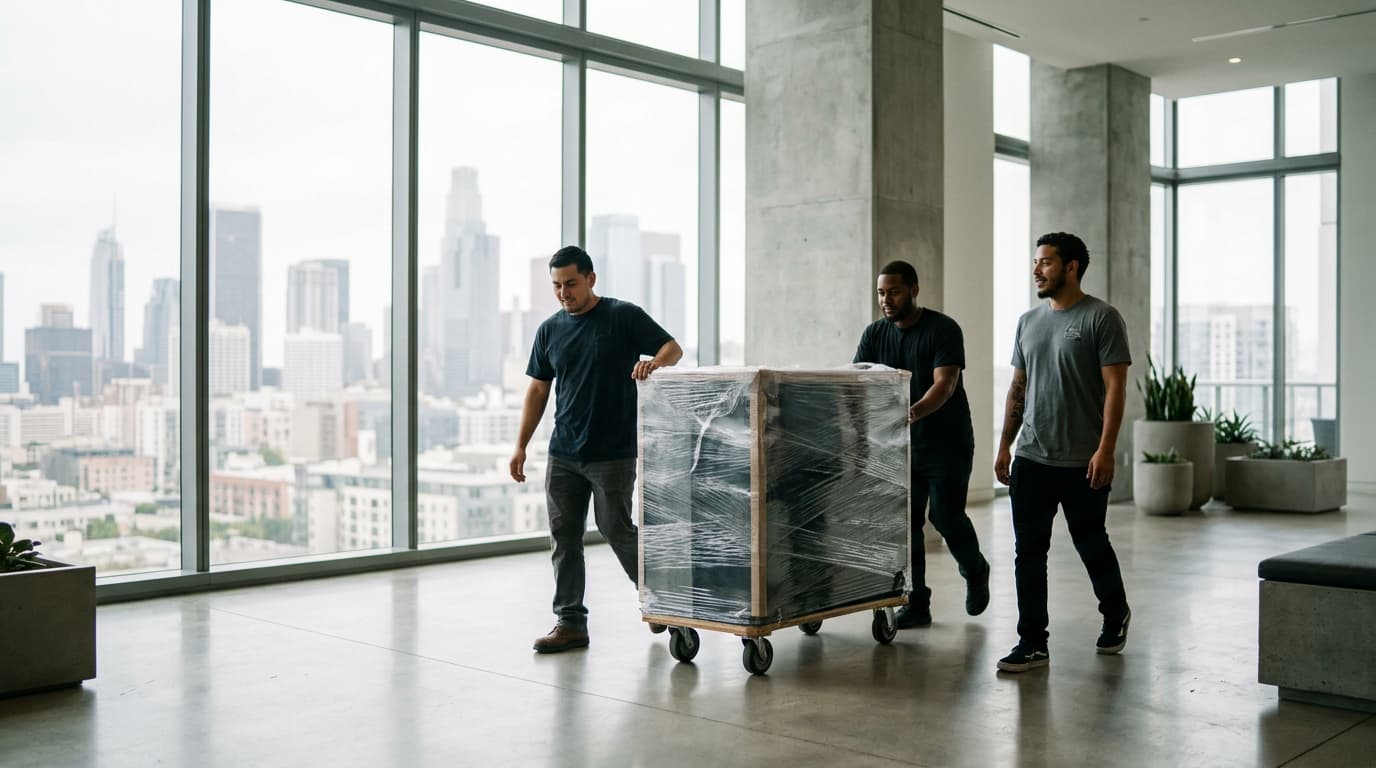
🏙️ Moving to Downtown LA? DTLA high-rise moves require building coordination, dock scheduling, and crews who know the logistics. Call (949) 266-9445 or get a free quote. Green Moving's local moving teams handle DTLA buildings every week.
Real Moving Costs for DTLA
High-rise logistics make DTLA moves more expensive per item than comparable moves in suburban neighborhoods. Here's what to budget:
From another LA neighborhood to DTLA (1-bedroom, high-rise): Crew: 2–3 movers + truck. Time: 5–7 hours. Cost: $800–$1,300. The extended time isn't because of distance — it's building logistics. Loading dock waits, freight elevator cycles (one load at a time, with other residents competing for the elevator), and long hallway carries from elevator to unit all add time to the clock.
Within DTLA (building to building): Crew: 2 movers + truck. Time: 4–6 hours. Cost: $600–$1,100. Even though the driving distance might be six blocks, the loading and unloading at two different high-rises takes just as long as if you drove 20 miles. You're paying for building navigation, not mileage.
From the suburbs (Valley, OC, SGV) to DTLA: Crew: 2–3 movers + truck. Time: 5–8 hours. Cost: $900–$1,500. Distance adds drive time on top of the building logistics at the destination.
Large loft or 2-bedroom in an adaptive reuse building: Crew: 3 movers + truck. Time: 6–9 hours. Cost: $1,100–$1,800. Adaptive reuse buildings (Eastern Columbia, Biscuit Company Lofts, etc.) have industrial freight elevators that are often larger than residential high-rise elevators — which is good — but loading docks may be shared with commercial tenants, creating scheduling constraints.
The building surcharges: Most DTLA buildings charge a refundable move-in deposit ($300–$750), and some charge a non-refundable move-in fee ($200–$500) on top of that. Confirm these charges with your building management before move day — they're due before the crew starts unloading, and some buildings won't grant elevator access until the payment is processed.
The High-Rise Moving Protocol
If you've never moved into a high-rise, the process has steps that don't exist in house or low-rise moves:
Loading dock reservation. Most DTLA towers have a single loading dock shared by all residents, deliveries, and maintenance. You must reserve your slot — typically 2–4 weeks in advance through building management. Slots are usually 4–6 hour blocks. If you miss your slot or run over, you may have to wait for the next available opening, which could be the next day.
Certificate of Insurance (COI). Your moving company must provide a COI naming the building's management company or HOA as additionally insured. At Green Moving, we issue these same-day. Some buildings also require the moving company's workers' comp certificate. Submit these at least one week before your move date — buildings will reject the moving crew at the dock without proper paperwork.
Freight elevator scheduling. Separate from the loading dock — you need the freight elevator reserved for your specific floor and time block. In buildings with 30+ floors and hundreds of units, the freight elevator serves moves, furniture deliveries, maintenance, and renovation contractors. Book early. Expect the elevator operator or security guard to enforce your time block strictly.
Floor and wall protection. Many DTLA buildings require the moving company to install protective padding on hallway walls and elevator interiors before the move begins. Some buildings provide their own pads; others require the mover to bring them. Confirm this requirement in advance — showing up without pads when the building requires them stops the move before it starts.
The complete building coordination checklist is covered in our apartment moving guide — every high-rise step applies, and DTLA buildings enforce them more strictly than almost anywhere else in LA.
Parking: The DTLA Reality
Let me be blunt: parking in DTLA is expensive, limited, and a daily consideration that affects your quality of life.
Building parking is typically $200–$350/month for a single spot. Some luxury buildings include one spot in the rent; most do not. A second car? Add another $200–$300/month. Spots are tight — some DTLA garages can't accommodate full-size SUVs or trucks.
Street parking exists but is heavily metered during business hours and permit-restricted in residential zones at night. Street sweeping enforcement is aggressive — $73 tickets for violations. Learning your block's sweeping schedule is essential in the first week.
Moving truck parking requires either the building's loading dock or a temporary street permit from LADOT. The dock is always preferable — street loading in DTLA means navigating bus lanes, bike lanes, one-way streets, and downtown traffic that doesn't stop for your furniture dolly. If your building's dock is unavailable or the building doesn't have one (common in older Historic Core buildings), apply for an LADOT permit at least 10 business days before your move.
The car-free option. DTLA is the one neighborhood in LA where going car-free is genuinely practical. The Metro system connects you to Hollywood, Koreatown, Pasadena (Gold Line), Santa Monica (Expo Line), and Long Beach (Blue Line). The DASH bus system covers DTLA internally for free. Rideshare pickup zones are on every block. Many DTLA residents sell their cars and save $400–$600/month in parking, insurance, and gas.
Daily Life: What DTLA Actually Feels Like
Groceries: Whole Foods on Grand (8th and Grand) is the primary option. Ralph's on 9th is the budget alternative. Grand Central Market has produce, meat, and prepared foods. For serious cooking, the wholesale produce market in the Fashion District (open to the public early mornings) has the best prices in the city. Most DTLA residents supplement with delivery — Instacart and Amazon Fresh serve the area extensively.
Restaurants: DTLA punches above its weight. Grand Central Market for casual eats (Eggslut, Tacos Tumbras a Tomas, Sticky Rice). The Arts District for destination dining (Bestia, Bavel, Manuela). Little Tokyo for ramen, sushi, and mochi. The Historic Core for cocktail bars in restored speakeasy spaces. You will not lack for food options.
Commute: If you work in DTLA, your commute is a walk. If you work elsewhere in LA, the Metro is your best friend for destinations it serves. Driving out of DTLA in morning rush is manageable — you're going against the flow of inbound commuters. The 10 West to the Westside or the 110 South to South Bay are the main escape routes.
Safety: DTLA's safety varies block by block more dramatically than any other LA neighborhood. South Park and the Financial District feel safe and well-patrolled. The borders of Skid Row (roughly 5th to 7th, San Pedro to Alameda) have visible homelessness, open drug use, and property crime. Most DTLA residents learn their neighborhood's patterns quickly — which blocks to walk on, which blocks to avoid at night, and where the invisible boundaries shift.
Noise: DTLA is loud. Sirens, traffic, construction (constant in 2026), nightlife, and the occasional helicopter. If you're moving from a quiet suburban street, the noise adjustment is significant. Higher floors in towers are quieter — the sound difference between the 5th floor and the 25th floor is dramatic. Ask about window insulation and building soundproofing during your apartment tour.
Settling In: Your First Month in DTLA
Walk Grand Park on a weekend. The park between City Hall and The Broad hosts events, food trucks, and community gatherings. It's the social anchor of DTLA and the quickest way to feel like a local.
Get a Metro TAP card. Load it with a monthly pass ($100 unlimited Metro rides) and explore. The Metro system from DTLA reaches more of LA than most people realize. The B Line to Hollywood, the A Line to Pasadena, the E Line to Santa Monica — you can do most of LA without a car from this central location.
Join a gym with a community. DTLA has high-rise amenity gyms (which are convenient but antisocial) and neighborhood gyms like CrossFit DTLA, Brick, and Peloton studios that build actual community. Meeting neighbors in DTLA happens through activities more than through proximity — the building elevator isn't where friendships form.
Explore on foot after dark. DTLA reveals different layers at night — the neon signs on Broadway, the quiet emptiness of the Financial District, the bar patios on Spring Street, the Arts District galleries that host evening openings. The city feels different at 9 PM than at 9 AM, and getting comfortable with both versions is part of becoming a DTLA resident.
Green Moving commits 1% of every move to California environmental causes. In a dense, transit-connected neighborhood like DTLA, choosing to live without a car and reducing your carbon footprint is already an environmental act. Pairing that choice with a moving company that invests in sustainability makes the transition meaningful from day one.
FAQ
How much does it cost to move into a DTLA high-rise? A 1-bedroom high-rise move from another LA neighborhood costs $800–$1,300 with a crew of 2–3 movers, taking 5–7 hours. The extended time reflects loading dock waits, freight elevator logistics, and long hallway carries. Budget an additional $300–$750 for building move-in deposits and potential non-refundable fees.
Do I need to reserve a freight elevator to move into a DTLA building? Yes — virtually every DTLA high-rise and mid-rise requires advance freight elevator reservation, typically 2–4 weeks ahead. Your moving company must provide a Certificate of Insurance to the building before move day. Slots are usually 4–6 hour blocks and are strictly enforced. Book as early as possible, especially for month-end dates.
Can I live in Downtown LA without a car? More practically than anywhere else in LA. The Metro system connects DTLA to Hollywood, Koreatown, Pasadena, Santa Monica, and Long Beach. The DASH bus covers DTLA internally. Rideshare is abundant. Many residents go car-free and save $400–$600/month in parking, insurance, and gas. However, destinations not served by Metro (most of the Valley, OC, Malibu) still require a car or rideshare.
Is Downtown LA safe to live in? Safety varies significantly by block. South Park and the Financial District are well-maintained and actively patrolled. The eastern edge near Skid Row has visible homelessness and higher property crime rates. Most residents learn their neighborhood's patterns quickly and feel comfortable within their regular routes. Higher floors in towers add a layer of physical separation from street-level concerns.
What are the best DTLA neighborhoods for young professionals? South Park offers the most polished urban experience with luxury amenities and walkable retail. The Arts District appeals to creatives who want an edgier, more industrial atmosphere. The Historic Core on Broadway combines vintage architecture with emerging nightlife and dining. Little Tokyo is the most affordable option with strong cultural character and transit access.
How far in advance should I book a DTLA high-rise move? Book your moving company 3–4 weeks in advance, and coordinate with your building's loading dock and freight elevator as soon as you have a confirmed move date. Month-end weekends (the last Saturday and first Saturday of each month) are the busiest — buildings may have multiple moves scheduled on the same day with tight dock rotations.
Moving to Downtown LA? Green Moving handles DTLA high-rises, lofts, and adaptive reuse buildings every week — dock scheduling, COIs, and elevator logistics included. Call (949) 266-9445, email sales@greenmovingla.com, or request your free quote. Licensed & insured — CAL-T 201327.