How to Move a Wine Collection in SoCal
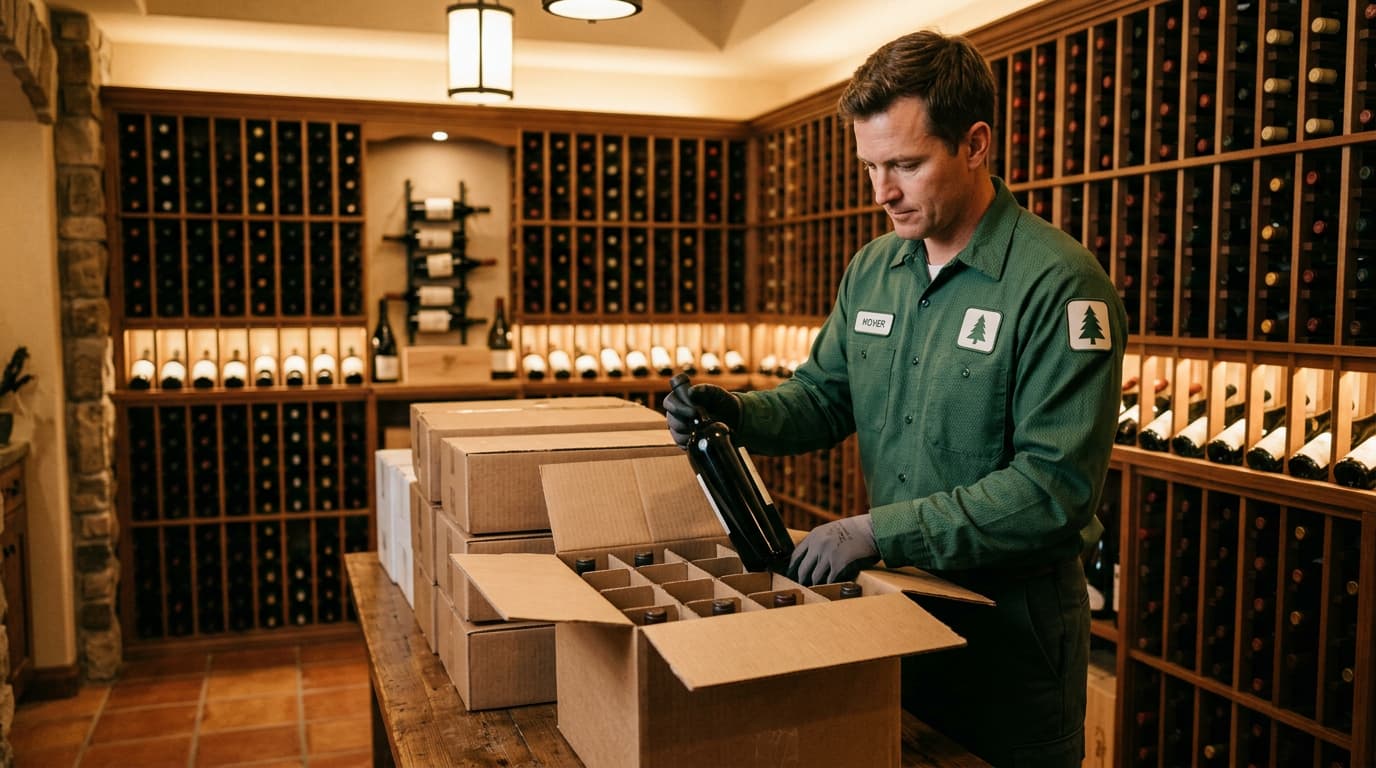
Last October my crew moved a 400-bottle wine collection from a custom cellar in a Bel Air estate to a new home in Palos Verdes. The homeowner had spent fifteen years building that collection — first-growth Bordeaux, vintage Napa Cabernets, a vertical of Opus One going back to 2005, and a few bottles of Burgundy worth more than most people's furniture. Total estimated value: over $80,000. When I walked the cellar during the pre-move assessment, he told me his biggest fear wasn't the furniture, wasn't the art, wasn't the piano in the living room. It was the wine. "If anything happens to these bottles," he said, pointing at a case of 2010 Château Margaux, "nothing else matters." We moved every bottle without a single casualty — no breakage, no temperature excursion, no label damage. But it took planning that started three weeks before the truck rolled.
I'm Marcus, an Operations Specialist at Green Moving, and I've moved wine collections ranging from a single wine fridge in a Koreatown apartment to multi-thousand-bottle cellars in Newport Coast and Hancock Park. Wine is one of the most temperature-sensitive, fragile, and emotionally valuable categories of items we handle. In this guide, I'm giving you the exact process my crew uses — whether you're moving 20 bottles or 2,000.
Why Wine Moves Are Different From Everything Else
Moving wine isn't just about preventing breakage — although that matters. The real enemy is temperature. Wine is a living, evolving product that responds to heat, vibration, light, and position. A single afternoon in a 140°F moving truck interior can permanently damage a bottle — cooked flavors, pushed corks, oxidation, and ruined structure that no amount of cellaring will fix.
In Southern California, this isn't a theoretical risk. From May through October, midday temperatures in the Valley, Inland Empire, and even coastal cities regularly hit 90°F+, and the inside of a closed moving truck amplifies that by 30–50 degrees. I've seen bottles arrive at the destination with corks pushed halfway out of the neck — a clear sign of heat damage. Those bottles are drinkable, maybe, but they're not what they were.
The other factor is vibration. Wine contains dissolved sediment, tannins, and chemical compounds that are in a slow, continuous process of evolution. Prolonged vibration — like riding in a truck for hours — agitates those compounds and can accelerate aging or create off-flavors. For everyday $15 bottles, this doesn't matter. For aged Burgundy or vintage Port, it matters a lot.
Inventory and Assessment: Start Here
Before you pack a single bottle, you need to know exactly what you're moving and how sensitive it is.
Count your bottles. This determines packing supply quantities, truck space allocation, and crew time. A 24-bottle wine fridge is a 15-minute job. A 200-bottle cellar is a half-day project. A 500+ bottle collection requires dedicated planning and possibly a separate vehicle.
Assess the value tier. Not every bottle needs the same level of care. I divide collections into three tiers:
Tier 1 — Irreplaceable / High-value ($50+ per bottle): These get individual wrapping, specialty wine boxes with dividers, and climate-controlled transport. First-growth Bordeaux, reserve Napa Cabs, vintage Burgundy, aged Champagne, anything you'd be genuinely upset to lose.
Tier 2 — Quality daily drinkers ($15–$50): Proper packing in wine boxes with dividers, standard truck transport timed for cooler hours. Good wines worth protecting but not worth the premium handling fee.
Tier 3 — Everyday bottles (under $15): Pack securely to prevent breakage, but these can travel in the main truck with the rest of your household goods. If one breaks, it's a cleanup issue, not a financial catastrophe.
Photograph valuable bottles. Labels, fill levels, cork condition (visible through the capsule). This documents the pre-move condition for insurance purposes and your own peace of mind.
Packing Wine: The Professional Method
The right packing materials make the difference between 400 intact bottles and an insurance claim. Here's exactly what my crew uses:
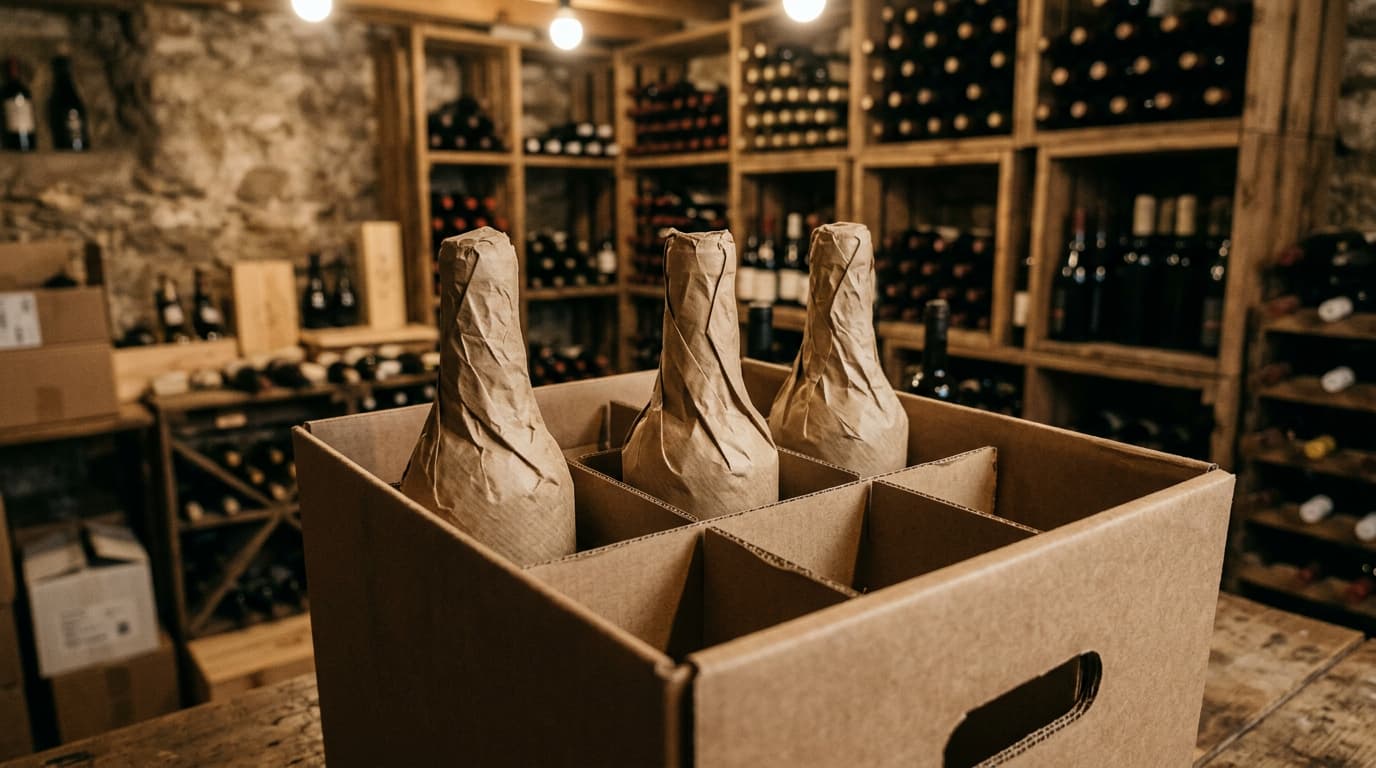
Specialty wine shipping boxes. These are corrugated cardboard boxes with molded pulp or cardboard cell dividers that hold each bottle individually. They come in 6-bottle and 12-bottle configurations. The dividers prevent bottle-to-bottle contact, which is the primary cause of breakage during transport. You can buy these from wine retailers, U-Haul, or online — about $4–$8 per box for a 12-bottle version.
Individual bottle wrapping. For Tier 1 bottles, wrap each bottle in a sheet of recycled kraft paper before placing it in the divider cell. This adds a cushioning layer and prevents label scuffing. For Tier 2, the divider alone is usually sufficient if the fit is snug.
Box orientation. Wine bottles travel on their sides — the same position they've been stored in. This keeps the cork wet and prevents air from entering the bottle. If you stand bottles upright for transport, corks can dry and shrink within hours in SoCal heat, allowing oxidation. Pack bottles label-up so you can identify them without removing them from the box.
Sealing and labeling. Tape every box securely and label it on all four sides: "WINE — FRAGILE — THIS SIDE UP — KEEP COOL." Add a count ("12 bottles") and a tier designation if you're using the system above. This tells the crew which boxes get priority handling.
What NOT to use: Never pack wine in regular moving boxes without dividers. Bottles clinking against each other will break — I've seen a single broken bottle in a box take out three others with the shattered glass. Never use newspaper as wrapping — ink transfer stains labels, which can destroy the value of collectible bottles.
🍷 Moving a wine collection? Green Moving's White Glove Services include specialty wine handling with proper packing, temperature awareness, and experienced crews. Call (949) 266-9445 or request a free quote.
Temperature Control: The SoCal Challenge
This is where wine moves in Southern California differ from wine moves anywhere else in the country. Our climate is the primary threat, and managing it requires deliberate strategy.
Time your move for cool hours. The single most effective temperature control strategy costs nothing: move your wine early in the morning. Load wine boxes first thing — between 6 and 9 AM — when outdoor temperatures are typically 60–75°F even in summer. Unload them first at the destination, directly into the new cellar, wine fridge, or a climate-controlled room.
Minimize truck time. Wine should spend the absolute minimum time inside a moving truck. For local SoCal moves, this means loading wine last (so it's nearest the truck door and comes off first) or loading it in a separate vehicle that goes directly to the destination while the main truck handles the rest. For our Bel Air-to-Palos Verdes job, we ran the wine in a separate van that went straight to the new house while the main truck was still loading furniture.
Insulated wine totes. For Tier 1 bottles, insulated wine shipping bags (available from wine retailers, about $3–$5 each) add a thermal buffer. They won't maintain cellar temperature for hours, but they'll prevent rapid temperature spikes during the loading-to-unloading window.
Climate-controlled vehicles. For large collections (200+ bottles) or long-distance moves, a climate-controlled truck or van is worth the investment. Not every moving company offers this — it's a specialty service. At Green Moving, we coordinate temperature-managed transport for high-value collections as part of our White Glove Services.
The cooler trick. For small collections (under 30 bottles), hard-sided coolers with ice packs work surprisingly well. Pack bottles in coolers with frozen gel packs (not loose ice — melting water damages labels), and transport in your air-conditioned car. This is the best option for a small wine fridge move on a hot day.
Never leave wine in a parked vehicle. Not in the truck, not in your car, not in the garage. A closed vehicle in SoCal sun reaches 140°F+ within an hour. Even 30 minutes of unattended exposure can push corks and cook wine. If there's a delay at the destination, keep the vehicle running with AC on, or bring the wine inside to any air-conditioned space immediately.
Moving the Wine Cellar Itself
Many collectors aren't just moving bottles — they're moving the storage infrastructure: wine fridges, coolers, or even custom cellar racking.
Wine fridges and coolers: These are essentially small refrigerators with compressor systems. The same rules apply as any appliance move — transport upright if possible. If a wine fridge must be tilted or laid on its side (common for moving through narrow doorways), let it stand upright for 24 hours before plugging it back in. The compressor oil needs time to settle back to the reservoir, or you risk damaging the cooling system. Empty all bottles before moving the fridge — the weight of a loaded wine fridge on a dolly is dangerous, and vibration from the dolly will agitate every bottle.
Custom racking: If your cellar has built-in wooden racking, it may or may not be worth disassembling and moving. Factory-modular racks (like those from Wine Enthusiast or IWA) disassemble and reassemble well. Custom-built racks that were designed for a specific room often can't be adapted to a different space. Evaluate this before you spend hours disassembling — it might make more sense to build new racking at the destination.
Cellar climate systems: Standalone cellar cooling units (CellarPro, WhisperKOOL) should be professionally disconnected and reconnected. These are specialized HVAC systems — don't DIY the disconnection unless you're confident in the process. Budget $200–$400 for professional disconnection and reinstallation.
Insurance and Documentation
Wine collections represent real financial value, and standard moving insurance may not adequately cover them.
Basic carrier liability (included with most moves) covers $0.60 per pound per item. A bottle of wine weighs about 3 pounds — so basic coverage pays $1.80 per bottle. If that bottle is a $300 Bordeaux, you're dramatically underinsured.
Full replacement value protection is the minimum I recommend for any collection worth over $2,000. This covers the actual replacement cost of damaged items. At Green Moving, we offer this as an add-on — ask about it when you book.
Specialty wine insurance. For collections worth $10,000+, consider a dedicated wine insurance policy through providers like Chubb, AXA Art, or your homeowner's insurance wine rider. These policies cover breakage, spoilage, temperature damage, and theft — risks that standard moving insurance may exclude.
Your documentation matters. That inventory you created at the start? Keep a copy separate from the wine. Photograph every bottle, note the purchase price or estimated value, and store the documentation digitally. If you need to file a claim, this evidence is the difference between full reimbursement and a dispute.
After the Move: The Rest Period
Wine that's been transported needs time to recover from vibration and temperature changes before drinking. The wine world calls this "bottle shock" or "travel shock" — it's a real phenomenon where recently moved wine tastes flat, disjointed, or muted.
For everyday wines (Tier 2 and 3): Let them rest in the new cellar or fridge for at least one week before opening. Most will recover fully within a few days.
For aged and high-value wines (Tier 1): Rest for 2–4 weeks minimum. Some collectors wait 2–3 months before opening anything significant. The older and more delicate the wine, the longer it needs to resettle.
For wines with sediment (aged reds, vintage Port): Stand the bottle upright for 48 hours before serving to let sediment settle to the bottom. Then decant carefully at the table.
Check your cellar conditions. Confirm that your new storage is holding proper temperature (55°F ± 3°) and humidity (60–70%) before trusting it with your best bottles. A $20 digital hygrometer from Amazon monitors both continuously. If your new space isn't dialed in yet, keep Tier 1 bottles in a wine fridge or cooler as a temporary solution.
Green Moving commits 1% of every move to California environmental causes. We use recycled kraft paper for all wine wrapping, source recyclable wine boxes, and minimize single-use plastics in our specialty packing process. Protecting your collection and protecting the environment aren't mutually exclusive — they just require a little more intentionality.
FAQ
How much does it cost to move a wine collection in Southern California? For a small collection (under 50 bottles) moved locally within a standard household move, the additional cost is minimal — $50–$100 for specialty wine boxes and packing materials. For larger collections requiring separate handling, dedicated vehicle transport, or climate-controlled logistics, expect $300–$1,000+ depending on collection size and distance. High-value collections moved under White Glove service are quoted individually.
Can regular movers handle a wine collection? Standard moving crews can safely transport wine if it's properly packed in divider boxes and loaded correctly. For high-value collections, specialty handling is recommended — experienced crews know how to manage temperature exposure, loading sequence, and vibration minimization. Ask your moving company about their experience with wine before booking.
What temperature will damage wine during a move? Sustained exposure above 80°F begins degrading wine quality. Above 90°F, damage happens within hours — pushed corks, cooked flavors, and accelerated aging. The inside of a closed moving truck in SoCal can reach 140°F+ in direct sun. The safest approach is to keep wine transport under 2 hours and schedule loading during cool morning hours.
Should I move wine in my car or the moving truck? For small collections (under 30 bottles) and any high-value bottles, transport in your air-conditioned car using coolers with gel packs. This gives you direct temperature control. Larger collections that must travel in the truck should be loaded last, positioned near the door for first unloading, and transported during the coolest part of the day.
How long should wine rest after moving before drinking? Everyday wines need at least one week to recover from transport vibration. Aged and high-value wines should rest 2–4 weeks minimum — some collectors wait 2–3 months. Wines with sediment should stand upright for 48 hours before serving. The more delicate and aged the wine, the longer the recovery period.
Do I need special insurance for my wine collection during a move? Standard moving insurance covers only $0.60 per pound — about $1.80 per bottle regardless of value. For collections worth over $2,000, upgrade to full replacement value protection through your moving company. For collections worth $10,000+, consider specialty wine insurance through providers like Chubb or AXA Art that cover breakage, spoilage, and temperature damage.
Moving a wine collection in SoCal? Green Moving's White Glove team handles collections of every size with proper packing, temperature management, and experienced care. Call (949) 266-9445, email sales@greenmovingla.com, or get your free quote. Licensed & insured — CAL-T 201327.