Long Distance Moving from LA: What to Expect
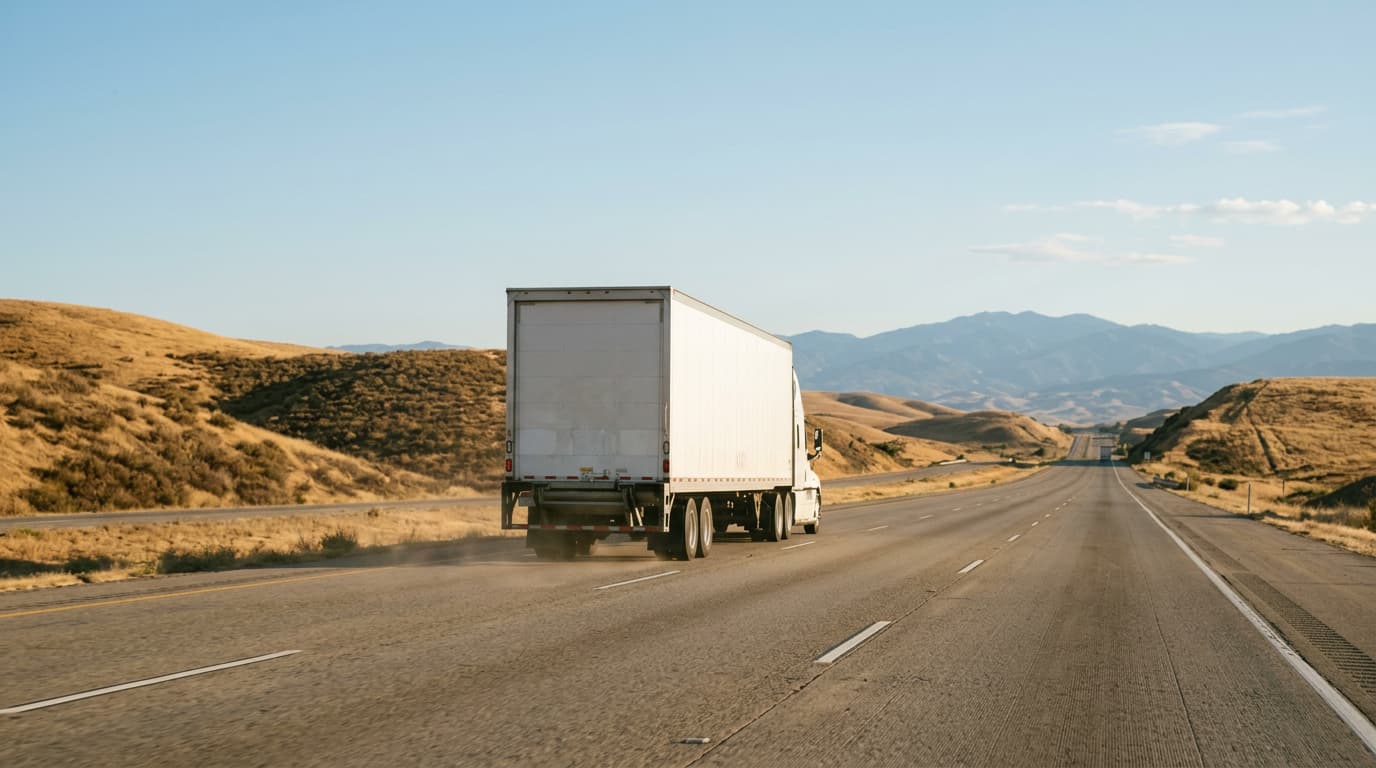
- How Long Distance Moving Actually Works
- What Long Distance Moving Costs from LA
- Non-Binding Estimates: Know the Difference
- Packing for Long Distance: It's Different
- The Delivery Window: Why It's a Range, Not a Date
- What to Keep With You (Not on the Truck)
- Interstate Regulations: The California Factor
- Choosing Between DIY and Professional for Long Distance
- After Delivery: The First 48 Hours
- FAQ
Last spring my crew loaded a 3-bedroom house in Sherman Oaks for a family relocating to Austin, Texas. The husband had accepted a remote-first position with a tech company, the wife was a freelance photographer, and they'd decided that LA's cost of living no longer made sense for their situation. We spent a full day loading — 8 hours, 4 movers, every piece of furniture wrapped in blankets, every box labeled and inventoried. Then the truck left. And the family stood in their empty living room staring at the marks on the hardwood where their couch used to be, and the wife asked me, "So... what happens now? Where does our stuff go?" That question — the gap between loading day and delivery day — is the part of long distance moving that nobody prepares you for. Your entire life is on a truck somewhere on the I-10 and you just have to trust the process.
I'm Marcus, an Operations Specialist at Green Moving, and I've coordinated dozens of long distance moves out of Los Angeles. The mechanics of a cross-country move are fundamentally different from a local move — different pricing structure, different timelines, different risks, and a different level of planning. Most people approach it like a regular move with a longer drive. It's not. This guide covers what actually happens, what it really costs, and how to make sure your stuff arrives intact on the other end.
How Long Distance Moving Actually Works
A local move is simple: the truck loads at point A, drives to point B, and unloads. Same crew, same truck, same day. A long distance move is a multi-phase operation with several moving parts — sometimes literally.
Phase 1: Survey and estimate. A reputable long distance mover does a pre-move survey — either in person or by video — to assess the total volume and weight of your belongings. Long distance moves are priced by weight (pounds) and distance (miles), not by time. The surveyor walks through every room, notes large items, counts boxes, and produces a binding or not-to-exceed estimate. This step is non-negotiable — any company that quotes a long distance move over the phone without a survey is guessing, and that guess will change on moving day.
Phase 2: Loading. The crew arrives, wraps and loads everything, and creates a detailed inventory — a numbered list of every item with its condition noted. You sign the inventory and the bill of lading (the contract). The truck departs.
Phase 3: Transit. Your belongings travel by truck to the destination. For cross-country moves (LA to the East Coast), this typically takes 7–14 business days. For shorter long distance moves (LA to Phoenix, LA to Las Vegas, LA to Portland), transit is 3–7 days. During transit, your items may be transferred to a larger truck at a consolidation point — this is standard for shared-load shipments, where multiple customers' belongings share truck space to reduce cost.
Phase 4: Delivery. The truck arrives at your new home, the crew unloads, you check items against the inventory, and you note any damage before signing the delivery receipt. Delivery windows are typically a range (e.g., "between March 15 and March 22") rather than a specific date — I'll explain why below.
What Long Distance Moving Costs from LA
Long distance pricing is weight-based, and the variables are distance, total weight, and add-on services. Here are realistic cost ranges from our recent LA-origin moves:
LA to Las Vegas (270 miles): Studio/1-bedroom (2,000–3,000 lbs): $1,500–$2,500. 2-bedroom (4,000–5,000 lbs): $2,500–$4,000. 3-bedroom (7,000–9,000 lbs): $4,000–$6,500. Transit time: 2–4 days.
LA to Phoenix (370 miles): Studio/1-bedroom: $1,800–$2,800. 2-bedroom: $2,800–$4,500. 3-bedroom: $4,500–$7,000. Transit time: 3–5 days.
LA to Portland or Seattle (960–1,135 miles): Studio/1-bedroom: $2,500–$3,800. 2-bedroom: $3,800–$5,500. 3-bedroom: $5,500–$8,500. Transit time: 5–10 days.
LA to Austin or Dallas (1,200–1,400 miles): Studio/1-bedroom: $3,000–$4,500. 2-bedroom: $4,500–$6,500. 3-bedroom: $6,500–$10,000. Transit time: 7–12 days.
LA to New York or East Coast (2,800 miles): Studio/1-bedroom: $3,500–$5,500. 2-bedroom: $5,500–$8,000. 3-bedroom: $8,000–$13,000+. Transit time: 10–14 days.
What's included in these ranges: Loading labor, truck transport, unloading labor, basic valuation coverage ($0.60/lb per item), and fuel. What's NOT included: packing services, specialty item handling (piano, art, antiques), storage at origin or destination, shuttle service (if a full-size truck can't access your new address), and full replacement value insurance.
For detailed local pricing context, check our LA moving cost guide — it helps calibrate how the local and long distance pricing models differ.
Binding vs. Non-Binding Estimates: Know the Difference
This is where people get burned. There are two types of long distance estimates, and understanding them protects your wallet:
Binding estimate locks in a price. You pay exactly what the estimate says, regardless of the actual weight. If the surveyor estimates 6,000 lbs and the truck weighs in at 6,800 lbs, you still pay the quoted price. This is the safer option for the customer.
Not-to-exceed estimate sets a ceiling. If actual weight is lower, you pay less. If actual weight is higher, you still pay the quoted maximum — but only if nothing was added to the shipment after the survey. If you load items that weren't on the original inventory, the mover can charge for the additional weight at the per-pound rate.
Non-binding estimate (different from not-to-exceed) is the risky one. It's a guess. The actual cost is determined by the actual weight, which is measured at a certified scale after loading. If the estimate said $5,000 and the actual weight produces a $7,000 charge, you owe $7,000. Legitimate long distance movers disclose this upfront. Less reputable companies use low non-binding estimates to win bookings, then hit you with the real price after your stuff is on their truck.
My recommendation: Always get a binding or not-to-exceed estimate based on an in-home or video survey. Never book a long distance move based on a phone-only non-binding quote. At Green Moving, we provide not-to-exceed estimates for all long distance moves — you know the maximum before we load a single box.
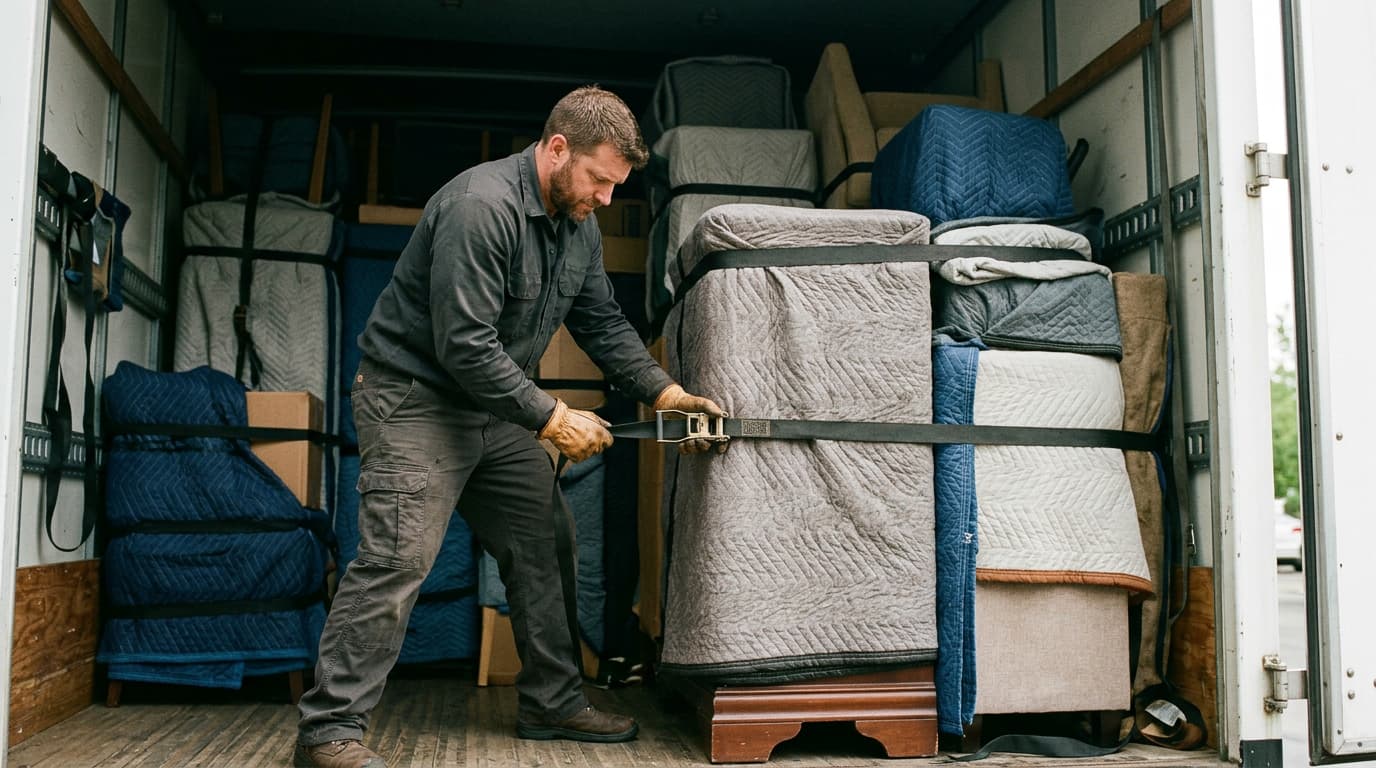
🚚 Planning a long distance move from LA? Green Moving provides not-to-exceed estimates with no hidden fees. Call (949) 266-9445 or request a free quote. Our long distance moving service covers every destination from the truck to the delivery.
Packing for Long Distance: It's Different
Local moves are forgiving — if a box is loosely packed, it travels 15 miles and gets unloaded the same day. Long distance moves are not forgiving. Your boxes travel hundreds or thousands of miles over multiple days, experiencing road vibration, temperature changes, truck turns, and highway braking forces. Items shift. Loose contents rattle. Poorly packed boxes arrive with breakage.
Pack tighter than you think necessary. Every box should be filled to the top with zero empty space. Crumpled paper, clothing, or towels fill gaps. A box with space at the top gets crushed when heavier boxes are stacked on it during the 2,800-mile journey to New York.
Reinforce the bottom of every box. Use the H-taping method — one strip along the center seam, then one strip across each end, forming an H shape. For heavy boxes (books, dishes), add a second strip along the center. Boxes that are carried for 10 feet in a local move get carried once. Boxes in a long distance truck get shifted, repositioned, and bumped for days.
Wrap fragile items with more padding than feels necessary. For local moves, I recommend two layers of kraft paper per dish. For long distance, use three layers minimum, plus crumpled paper buffers between each item. The extended vibration exposure finds every weakness in your packing. Our guide on packing a kitchen covers the technique — for long distance, add 50% more padding to every recommendation.
Label boxes on multiple sides. In a long distance truck, boxes get repositioned during transit. If the label is only on top, the crew at destination can't identify boxes that are facing sideways in the stack. Label the top and at least one side.
Consider professional packing for the kitchen and fragile items. Our packing services team packs specifically for the type of move — local packing technique is different from long distance packing technique. For a cross-country move, professional packing often pays for itself in damage prevention.
The Delivery Window: Why It's a Range, Not a Date
New long distance customers are always surprised that delivery isn't scheduled for a specific day. Here's why:
A long distance truck covers 400–500 miles per day. Weather, traffic, mechanical issues, DOT rest requirements (drivers are legally limited to 11 hours of driving per 14-hour shift), and route logistics all create variability. For a cross-country move, a 2–4 day delivery window is standard. For shorter moves (LA to Vegas or Phoenix), the window narrows to 1–2 days.
Shared loads add complexity. If your shipment shares truck space with other customers (common for apartment-size moves), the truck may make intermediate stops. Your delivery timing depends on the delivery sequence — if you're the second stop, the first delivery must complete before yours begins.
Dedicated/exclusive truck means your stuff is the only load on the truck. It goes directly from LA to your destination with no intermediate stops. This is faster (often hitting the earliest possible delivery date) but costs 20–40% more than a shared load. For a 3-bedroom house or a move with time-sensitive requirements, the premium is often worth it.
Plan your life around the window. Don't schedule work, flights, or contractors based on the assumption that delivery will happen on the first day of the window. Have a flexible 3–4 day period where you can receive delivery. If you're flying to your new city, arrive 2–3 days before the earliest delivery date to handle keys, utilities, and basic setup.
What to Keep With You (Not on the Truck)
On a local move, everything arrives the same day. On a long distance move, you're separated from your belongings for 1–2 weeks. Anything you need during that gap must travel with you.
In your personal vehicle or carry-on: Medications (enough for 2 weeks plus prescriptions), important documents (passports, birth certificates, lease/closing documents, insurance papers), laptop and chargers, 5–7 days of clothing, toiletries, phone chargers, kids' essentials (favorite toys, school materials), pet supplies, jewelry and small valuables, and cash or cards for the road.
Ship ahead or carry separately: Irreplaceable items — photo albums, family heirlooms, sentimental objects that can't be replaced at any price. Hard drives and backup media with important data. Wine and alcohol (moving companies can't legally transport alcohol across state lines in many cases — check your route's regulations).
What NOT to put on the truck (regulated/prohibited): Hazardous materials (paint, cleaning chemicals, propane, gasoline), perishable food, plants (many states restrict plant transport — California's own agricultural checkpoints apply to incoming plants), firearms (transport regulations vary by state — research your destination's laws), and anything alive.
Interstate Regulations: The California Factor
Moving out of California involves specific regulatory considerations:
Vehicle registration. Most states require you to register your vehicle within 30–90 days of establishing residency. California refunds are not given on prepaid registration fees. If you recently renewed your California registration, that money is gone.
Income tax. California taxes income earned while you were a resident, even if you move mid-year. You'll file a partial-year California return for the year you leave. If your employer is California-based and you're working remotely from a new state, the tax situation gets complex — consult a tax professional.
Driver's license. Most states require a new driver's license within 30–60 days. California does not automatically cancel your license when you get one elsewhere — you may want to formally surrender it to avoid residency disputes.
Moving expense deductions. As of 2026, moving expenses are not deductible on federal taxes for most taxpayers (the deduction was suspended under the 2017 tax law). Some states still allow a state-level deduction — check your destination state's rules. Military moves are the exception — active duty members can still deduct moving costs federally.
Choosing Between DIY and Professional for Long Distance
For local moves, the DIY-vs-professional calculation is close. For long distance, it's not even a contest in most scenarios.
Renting a truck (U-Haul, Penske, Budget): A 26-foot truck from LA to Austin runs $2,500–$4,000 for the rental alone. Add fuel ($500–$800 for a truck that gets 8–10 mpg), hotels ($150–$250/night for 2–3 nights), food, tolls, and the physical toll of driving a 26-foot truck through desert heat for three days. Total DIY cost: $3,500–$5,500 for a move that a professional handles for $4,500–$6,500 with no driving, no loading, and no personal risk.
The real math: Professional long distance moves include loading labor, driving, and unloading. DIY means you load the truck yourself (6–10 hours of heavy lifting), drive 1,200+ miles (2–3 days of driving with no rest), and unload at the destination (another 6–10 hours) while exhausted from the road. For couples and families, the professional option is almost always the better value when you factor in time, physical risk, and the reality that most people don't know how to properly load a long distance truck for transit stability.
For a complete comparison, check our DIY vs. professional analysis — the long distance math is covered in detail.
After Delivery: The First 48 Hours
Check every item against the inventory. This is not optional. The inventory sheet you signed at loading is the legal document. As items come off the truck, the delivery crew marks each number as delivered. If anything is missing or damaged, note it on the delivery receipt BEFORE you sign. Once you sign a clean receipt, filing a damage claim becomes significantly harder.
Document damage immediately. If a box is crushed, a furniture leg is broken, or a screen is cracked — photograph it at the truck before it enters your home. Note the inventory number, the item description, and the damage on the delivery receipt. File your claim with the moving company within 9 months (the federal filing period for interstate moves).
Unpack essentials first. Beds, bathroom, kitchen basics. Everything else can wait. You've been living out of a suitcase for 1–2 weeks — the instinct is to unpack everything immediately. Resist it. Methodical unpacking over 1–2 weeks is more efficient and less exhausting than a frantic first-night marathon.
Green Moving commits 1% of every move to California environmental causes. Long distance moves have a larger carbon footprint than local moves by nature — more miles, more fuel. We offset this by optimizing truck loads to minimize trips, consolidating shared shipments for efficiency, and investing in environmental programs that address the impact of transportation on California's ecosystems.
FAQ
How much does a long distance move from LA cost? Costs depend on weight and distance. A 1-bedroom move from LA to Las Vegas runs $1,500–$2,500. LA to Austin or Dallas: $3,000–$6,500. LA to New York: $3,500–$13,000+. All prices vary by total weight, add-on services, and whether you choose a shared or dedicated truck. Always get a binding or not-to-exceed estimate based on a survey.
How long does it take to receive my belongings on a long distance move? Transit times depend on distance: LA to Las Vegas is 2–4 days, LA to Texas is 7–12 days, LA to East Coast is 10–14 days. Delivery is given as a window (range of days), not a specific date, due to route variables including weather, traffic, and DOT driver rest requirements.
Should I get a binding estimate for my long distance move? Yes — a binding or not-to-exceed estimate protects you from surprise charges. Non-binding estimates are based on projected weight, and actual costs can be significantly higher. Reputable movers provide binding estimates after an in-home or video survey. Avoid companies that quote long distance moves over the phone without a walkthrough.
Can I put everything on the moving truck for a long distance move? No — several categories are prohibited or restricted. Hazardous materials (paint, chemicals, propane), perishable food, live plants (state agricultural regulations apply), and firearms (varying state laws) cannot go on the truck. Medications, important documents, jewelry, and irreplaceable items should travel with you personally.
Is it cheaper to drive a rental truck myself for a long distance move? For a 1-bedroom move, DIY can save $500–$1,500 over professional service. For 2-bedrooms and larger, the savings shrink dramatically when you factor in fuel, hotels, food, physical labor, and the risk of improper loading causing damage. Most families find professional long distance moving comparable in total cost and dramatically easier.
How do I file a damage claim after a long distance move? Document damage at delivery — photograph the item, note the damage on the delivery receipt before signing, and keep a copy. File a written claim with the moving company within 9 months of delivery (the federal filing period for interstate moves). Include photos, the inventory number, and a description of the damage. The carrier must acknowledge your claim within 30 days and resolve it within 120 days.
Moving long distance from LA? Green Moving handles every phase — survey, packing, loading, transit, and delivery at your new home. Call (949) 266-9445, email sales@greenmovingla.com, or get your free quote. Licensed & insured — CAL-T 201327.