Zero-Waste Moving: Is It Possible in LA?
- What "Zero Waste" Actually Means for a Move
- The Zero-Waste Moving Toolkit
- The Waste Audit: What a Real Zero-Waste Move Looks Like
- Where Zero Waste Gets Hard (Honest Assessment)
- The LA Infrastructure That Makes This Possible
- The Cost Question: Is Zero Waste More Expensive?
- Your Zero-Waste Moving Action Plan
- FAQ
In January I decided to run an experiment. One of our regular clients — a sustainability consultant relocating from a 2-bedroom in Mar Vista to a 3-bedroom in Culver City — asked if we could do her move with literally zero landfill waste. Not "low waste," not "mostly recycled" — zero. Nothing in a trash can at the end of moving day. I told her we'd try, and I personally tracked every single material that entered and exited the move. Every piece of tape, every packing sheet, every furniture pad. After two days of packing and one day of moving, we weighed the total landfill-bound waste at the end: 1.3 pounds. A roll of damaged packing tape, a few torn furniture pads beyond reuse, and some dust sweepings. Not zero — but close enough that both of us stood in her new kitchen staring at a single small bag thinking, "This is actually possible."
I'm Kuanysh Mustafin, founder of Green Moving. I started this company in 2022 because I believed the moving industry could operate more responsibly — less waste, less damage, less dishonesty. That experiment in January confirmed something I'd been building toward: zero-waste moving isn't a marketing fantasy. It's a real, achievable goal with the right materials, the right process, and the right expectations. In this article, I'm going to show you exactly what it takes — the honest version, including where it's hard and where most people compromise.
What "Zero Waste" Actually Means for a Move
Let's define terms, because "zero waste" gets thrown around loosely. In the sustainability world, zero waste means diverting 90% or more of materials from landfill — through reuse, recycling, composting, or repurposing. True absolute zero is nearly impossible in any human activity, and moving is no exception.
A standard LA move generates an enormous amount of waste. The average 2-bedroom move uses 30–40 cardboard boxes, 200+ feet of bubble wrap, 2–3 rolls of plastic tape, styrofoam packing peanuts, plastic stretch wrap for furniture, and assorted filler materials. After unpacking, most of this goes straight into the trash — or at best, into a recycling bin where only a fraction actually gets recycled (LA's actual recycling rate hovers around 30% for residential waste, despite what the blue bin implies).
The zero-waste approach replaces every one of these materials with something reusable, recyclable, or compostable — and then actually ensures it gets reused, recycled, or composted. That second part is where most "eco-friendly" moves fall short. Buying recycled cardboard and then throwing it in the trash after one use isn't zero waste. It's slightly less bad conventional waste.
The Zero-Waste Moving Toolkit
After testing dozens of products and approaches over the past three years, here's the toolkit that actually works for a waste-free move in LA:
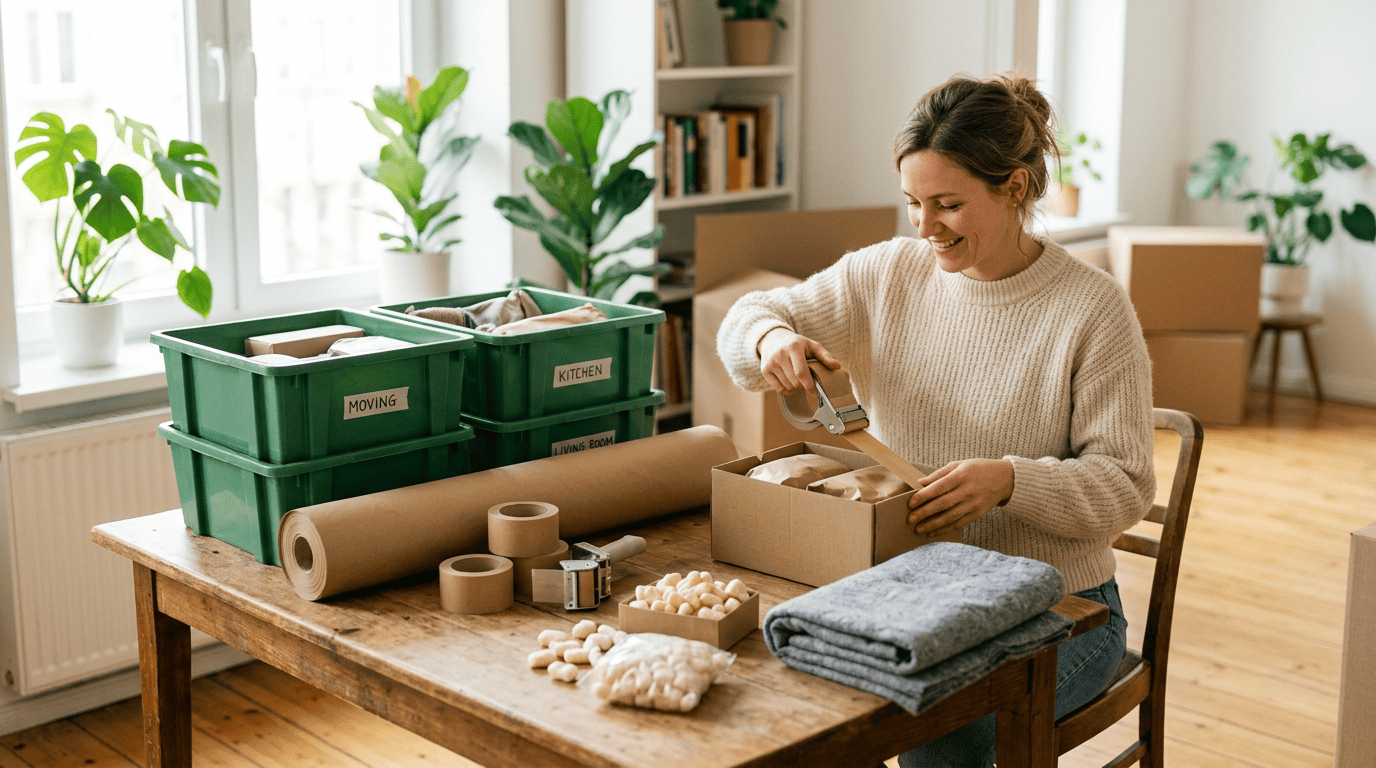
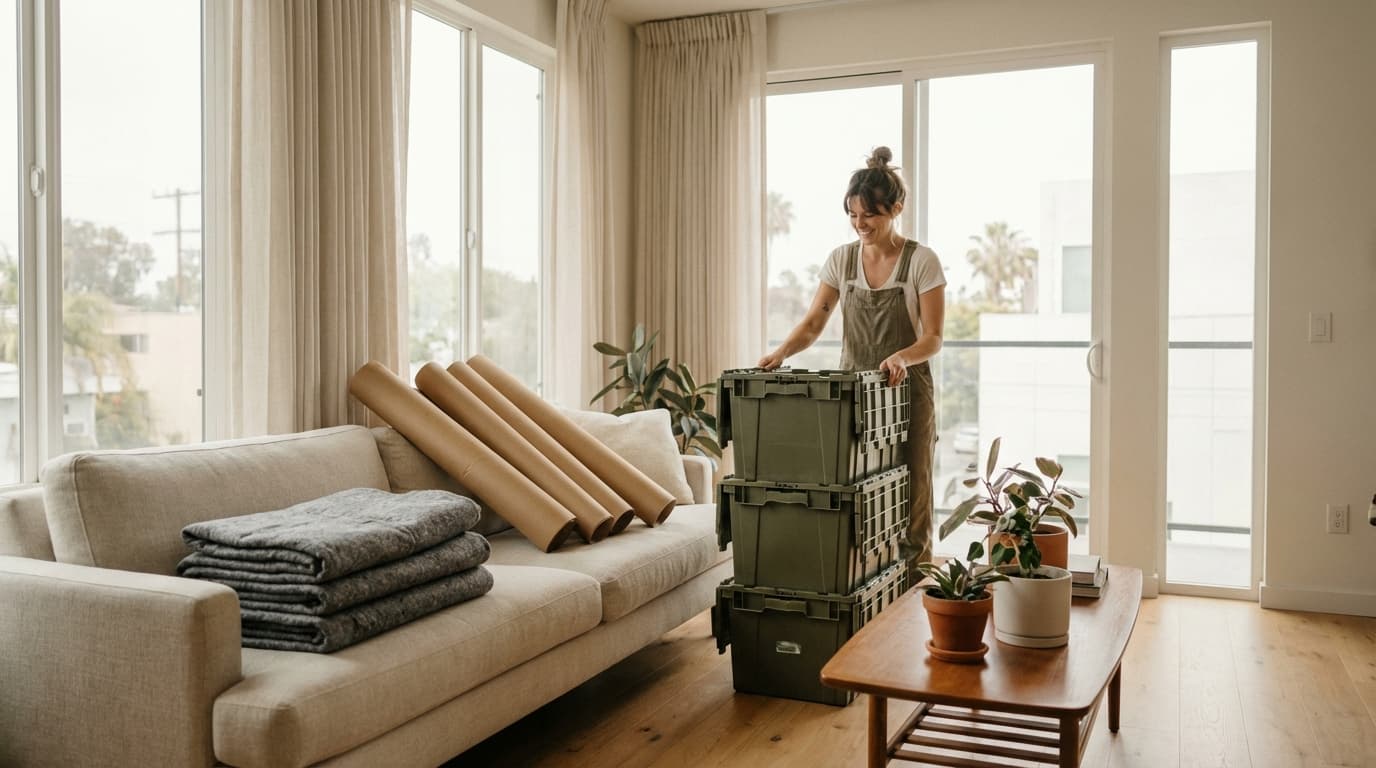
Reusable plastic bins replace cardboard boxes entirely. Companies like ZippGo and Rentable Crates deliver them to your door in LA and pick them up after you unpack. They're stronger than cardboard, stackable, waterproof, and get reused hundreds of times before being recycled into new bins. For a 2-bedroom move, 20–25 bins at roughly $65–$85/week covers everything that fits in a standard box.
Recycled kraft paper replaces bubble wrap for wrapping dishes, glassware, and fragile items. Two sheets per item with proper technique provides equivalent protection. It's fully recyclable after use — drop it in any LA blue bin. Our packing specialist Sarah Chen wrote a detailed guide to eco-friendly packing materials that covers technique specifically.
Paper gummed tape replaces plastic packing tape. You wet it to activate the adhesive, it bonds to cardboard like cement, and it's fully recyclable with the paper it's attached to. Two rolls covers a full apartment move.
Your own linens, towels, and clothing replace packing peanuts and filler materials. Wrap stemware in socks, cushion picture frames between folded blankets, pad electronics with sweaters. You're moving this stuff anyway — let it do double duty.
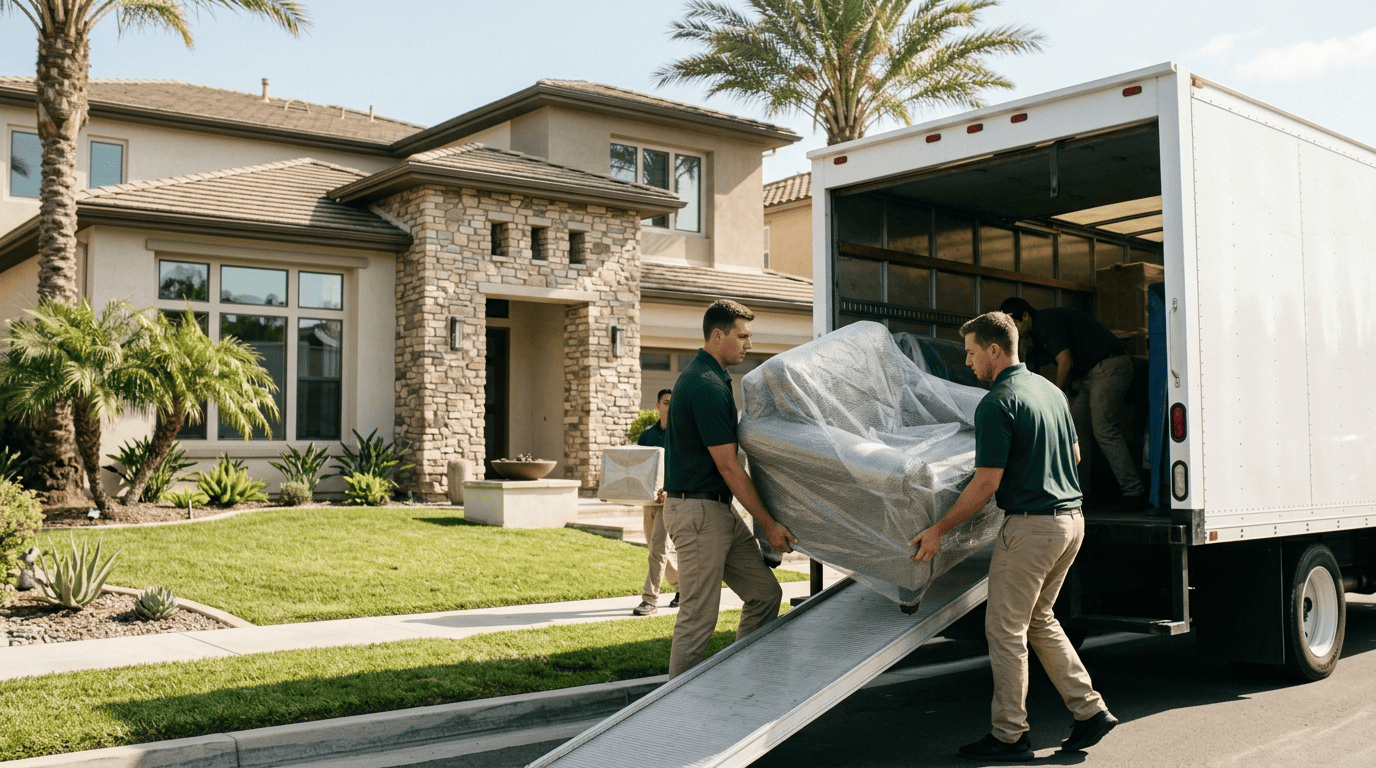
Reusable moving blankets replace plastic stretch wrap for furniture protection. Professional movers already use blankets for most furniture — the zero-waste version simply eliminates the plastic wrap that many companies add on top. At Green Moving, our crews use heavy-duty cotton and polyester blankets that get laundered and reused across hundreds of moves.
Cornstarch packing peanuts fill any remaining gaps in bins. They dissolve in water and compost within weeks. Use them sparingly — they're the backup, not the primary cushioning.
The Waste Audit: What a Real Zero-Waste Move Looks Like
Let me walk you through the actual numbers from that January Mar Vista-to-Culver City move. This was a 2-bedroom, approximately 900 square feet, with a full kitchen, home office, and a moderate amount of furniture.
Materials used: 22 reusable bins (rented), 1 roll recycled kraft paper (24" × 200'), 2 rolls paper gummed tape, 8 reusable moving blankets (company-owned), client's own towels and linens for fragile wrapping, 1 small bag of cornstarch peanuts.
Materials NOT used: Zero cardboard boxes, zero bubble wrap, zero plastic tape, zero styrofoam, zero plastic stretch wrap.
What happened to everything after: Bins were picked up by the rental company three days after the move. Kraft paper was smoothed, folded, and placed in the client's recycling bin. Paper tape went into recycling attached to the paper. Moving blankets returned to our warehouse for laundering. Towels and linens went into the client's linen closet. Cornstarch peanuts were composted in her backyard bin.
Total landfill waste: 1.3 pounds — one partially used roll of paper tape that got wet and lost adhesion, two torn blanket corners beyond repair, and floor sweepings.
Total cost of materials: Approximately $95 for bin rental + $25 for kraft paper + $12 for paper tape + $20 for cornstarch peanuts = $152. A comparable conventional pack with new cardboard, bubble wrap, and plastic tape would have cost $100–$130 — so the zero-waste version was about $20–$50 more.
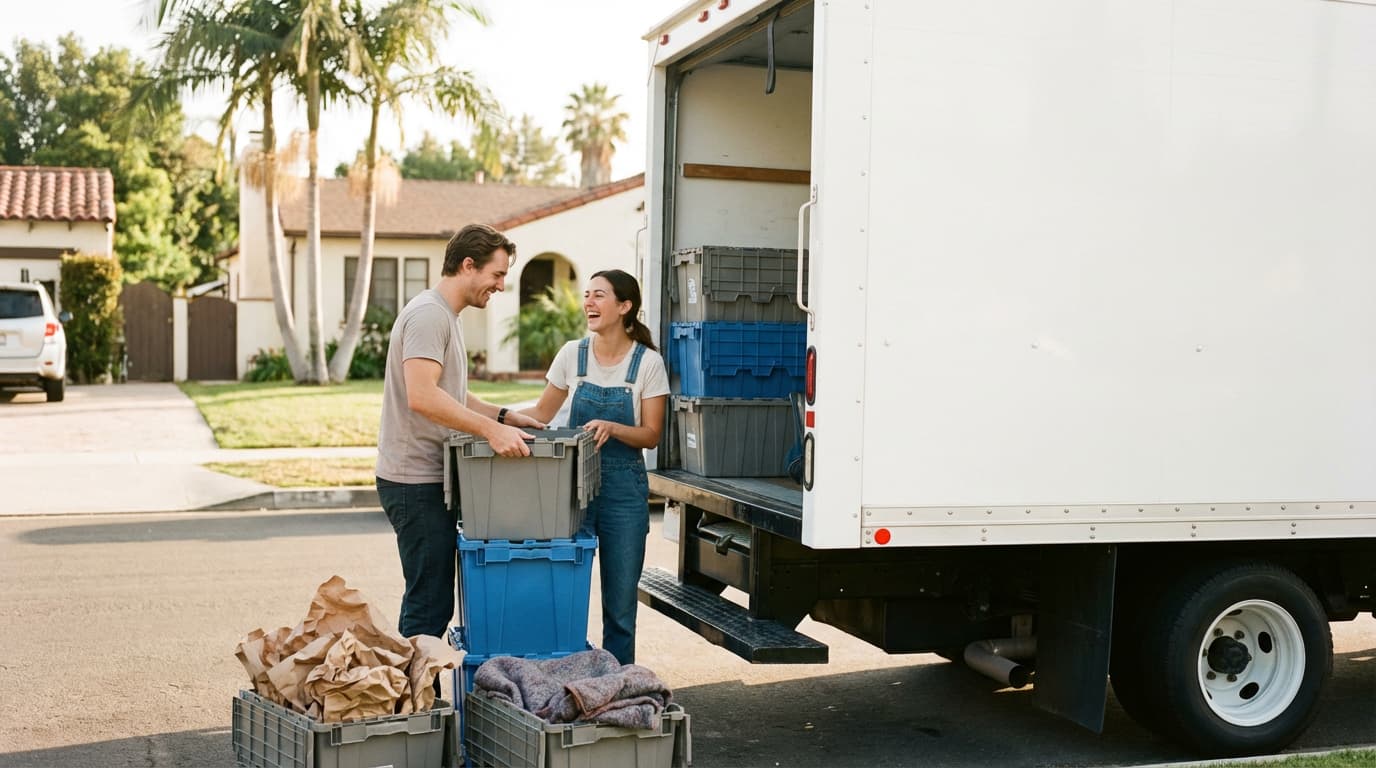
♻️ Want to try a zero-waste move? Green Moving can plan your entire relocation with sustainable materials and reusable equipment. Call (949) 266-9445 or request a free quote. We serve all of LA County and Orange County with eco-conscious moving options.
Where Zero Waste Gets Hard (Honest Assessment)
I promised you the honest version, so here's where the ideal meets reality:
Large furniture protection. Blankets cover most furniture, but some items — glass tabletops, marble surfaces, large mirrors — genuinely need a layer of protective material between the blanket and the surface to prevent scratching. The most common solution is a sheet of recycled cardboard or kraft paper, which is recyclable. But some movers still default to plastic wrap because it's faster to apply. If zero waste is your goal, explicitly tell your moving company: no plastic wrap on any item.
Mattresses. Industry standard is a disposable plastic mattress bag for hygiene and protection during transit. A reusable mattress cover exists but costs $40–$60 and most people don't want to store it after the move. The compromise: use a recyclable plastic mattress bag and actually recycle it. LA accepts #4 LDPE plastic film at designated drop-off points (not in curbside blue bins — this is a common mistake).
Tape residue. Even paper gummed tape leaves a residue on reusable bins that the rental company has to clean. It's minor, but it's technically a waste of cleaning resources. The workaround: use bins with attached lids that don't need tape at all, or secure with reusable rubber straps.
Specialty items. Custom crating for artwork, pianos, and antiques typically uses new lumber, foam inserts, and plastic wrapping. There's no practical zero-waste alternative for high-value specialty crating at this point. The wood can be repurposed or recycled, but the foam cannot. If you're moving a piano or valuable art, accept this as an area where zero waste doesn't apply — and focus your sustainability effort everywhere else.
Time. Zero-waste packing takes longer. The two-sheet kraft paper method for dishes requires more wrapping time per item than bubble wrap. Fitting items into reusable bins (which come in fewer sizes than cardboard boxes) requires more spatial planning. Budget an extra 1–2 hours of packing time for a 2-bedroom home.
The LA Infrastructure That Makes This Possible
One reason zero-waste moving is more achievable in Los Angeles than in most American cities: LA actually has the infrastructure.
Reusable bin rental companies operate throughout LA and OC. ZippGo, Rentable Crates, and others deliver and pick up, creating a genuine circular economy for moving containers.
Curbside recycling is universal in LA. Every residence has a blue bin, and kraft paper, cardboard, and paper tape are all accepted. The key is making sure your recyclables are clean and dry — contaminated recycling gets diverted to landfill.
Composting is expanding. Under SB 1383, California now requires organic waste diversion statewide. LA's green bin accepts compostable packing materials like cornstarch peanuts. Check your hauler's specific guidelines, but most LA-area haulers now accept compostable packaging.
Donation networks are robust. Habitat for Humanity ReStore, Goodwill, Salvation Army, and dozens of smaller organizations do free furniture and household pickups throughout LA. Instead of throwing away items you don't want to move, donate them — it's diversion from landfill and a community benefit. Our article on what to donate before movingcovers the complete process.
E-waste recycling. Old electronics, cables, and batteries that surface during a move can be dropped off at any Goodwill location, Best Buy, or city-sponsored e-waste event rather than going in the trash.
The Cost Question: Is Zero Waste More Expensive?
The short answer: slightly, but less than you'd think.
For the material cost alone, zero-waste packing runs about $140–$170 for a 2-bedroom apartment versus $90–$130 for conventional materials. The premium is $30–$50. For a move that already costs $800–$1,200 in labor and truck fees, that's a 3–5% increase in total cost.
Where you can actually save money is in the decluttering phase. Clients who commit to zero-waste moves tend to purge more aggressively — they question every item because they know the environmental cost of moving it. A client who eliminates 15% of their belongings before the move may save an hour of labor time, which at $150–$180/hour more than offsets the material premium.
The real cost of conventional moving waste is externalized — it shows up in landfill capacity, methane emissions, and the energy required to manufacture single-use packaging materials. Those costs are real even if they don't appear on your moving invoice. At Green Moving, we commit 1% of every move to California environmental causes because we believe those external costs deserve a response, even if it's modest.
Your Zero-Waste Moving Action Plan
Here's the step-by-step plan I give clients who want to attempt a zero-waste move:
6 weeks before: Start decluttering. Donate, sell, or give away everything you won't use at the new place. The less you move, the less material you need.
4 weeks before: Order reusable bin rental. Book your moving company and specify zero-waste handling — no plastic wrap, no styrofoam, no disposable materials.
3 weeks before: Buy recycled kraft paper, paper gummed tape, and a small bag of cornstarch peanuts. Begin packing non-essentials using the towel-and-linen wrapping method for fragile items.
2 weeks before: Continue packing. Each bin gets packed, lidded, and labeled. No tape needed on bins with attached lids.
1 week before: Pack remaining rooms. Set aside your essentials bag. Confirm bin pickup schedule with the rental company for 2–3 days after your move.
Moving day: Movers use reusable blankets and pads for all furniture. No plastic wrap. Kraft paper protects surfaces where needed. Everything moves in bins, blankets, and your own soft goods.
After the move: Flatten and recycle all kraft paper. Compost cornstarch peanuts. Return reusable bins on schedule. Send damaged blankets or pads to textile recycling. Weigh your landfill waste. If it's under 5 pounds for a full apartment move, you've achieved effective zero waste.
FAQ
Is a completely zero-waste move actually achievable? Achieving 95–99% waste diversion is realistic with proper planning and materials. True absolute zero is nearly impossible due to incidental waste like tape scraps, torn materials, and dust. The goal is to eliminate all significant landfill-bound waste from your move, which is achievable for most apartment and house moves.
How much more does a zero-waste move cost compared to a standard move? The material cost premium is approximately $30–$50 for a 2-bedroom move — about 3–5% of your total moving budget. Aggressive decluttering before the move can offset this premium by reducing labor hours. The reusable bin rental ($65–$85/week) is comparable to purchasing new cardboard boxes.
Can I do a zero-waste move with a large house? Yes, but it requires more planning and more reusable bins. A 3–4 bedroom house may need 40–50 reusable bins and 2–3 rolls of kraft paper. The biggest challenge with larger homes is specialty items — pianos, artwork, and antiques may require conventional crating materials that can't be fully diverted from landfill.
Where do I recycle packing materials in Los Angeles? Kraft paper and cardboard go in your curbside blue bin. Cornstarch packing peanuts go in the green organics bin. Plastic film (if any was used) goes to designated drop-off points — not curbside. E-waste goes to Goodwill, Best Buy, or city collection events. Reusable bins are returned to the rental company.
Does Green Moving offer zero-waste moving services? We offer eco-conscious moving with reusable blankets, minimal packaging, and sustainable practices on every move. For clients who want a fully zero-waste approach, we coordinate reusable bin rentals, sustainable material sourcing, and waste-free handling. Call us at (949) 266-9445 to discuss your specific requirements.
Make your next move your greenest one. Green Moving brings sustainable practices to every relocation — and we commit 1% of every move to California environmental causes. Call (949) 266-9445, email sales@greenmovingla.com, or get your free quote. Licensed & insured — CAL-T 201327.