Eco-Friendly Packing Materials: What Works
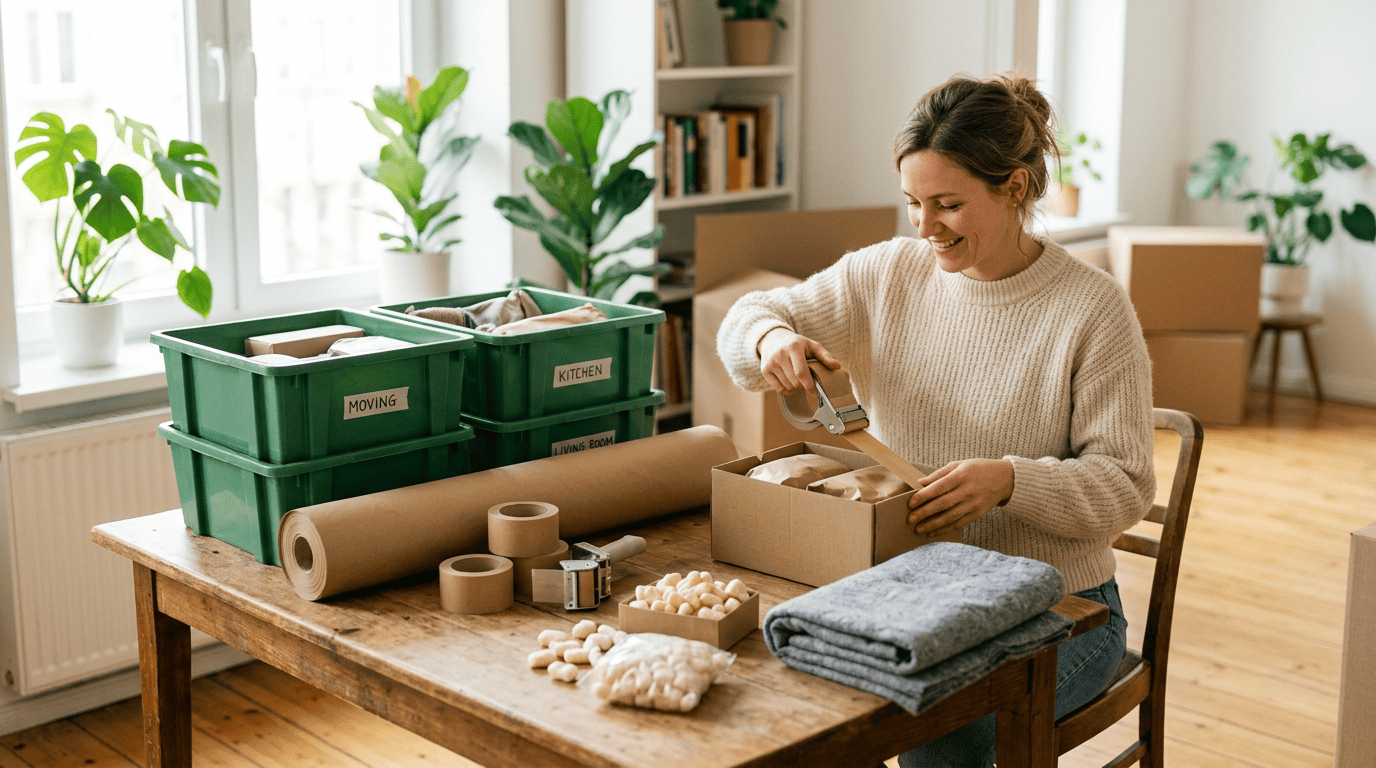
- Why Most People Get Eco Packing Wrong
- Recycled Kraft Paper: The MVP
- Biodegradable Bubble Wrap and Cushioning
- Reusable Plastic Moving Bins: The Game Changer
- What Doesn't Work (Honest Takes)
- The Towel-and-Linen Method: Zero-Cost, Zero-Waste
- Building Your Eco Packing Kit
- When to Call In Professional Eco Packers
- FAQ
Three months ago I packed a full kitchen in a Craftsman bungalow in Eagle Rock using nothing but recycled kraft paper, biodegradable cushioning, and reusable plastic bins. Not a single piece of bubble wrap, not one strip of plastic tape. Twenty-seven boxes of glassware, ceramics, cast iron, and small appliances — and when the client unpacked in her new place in Altadena, zero breakages. She texted me a photo of her grandmother's teacup set, perfectly intact, with the caption "you're a witch." I'm not a witch. I just know which eco-friendly materials actually work and which ones are marketing dressed up as cardboard.
I'm Sarah, a Packing Specialist at Green Moving, and I pack homes for a living. I've tested every "sustainable" packing product that's hit the market over the past few years — some are genuinely excellent, some are garbage that will leave your dishes in pieces at the bottom of a box. This guide is the honest breakdown.
Why Most People Get Eco Packing Wrong
The biggest mistake I see: clients buy a bunch of "eco-friendly" supplies from Amazon based on the label, then pack exactly the way they would with conventional materials. That doesn't work. Sustainable materials have different strengths and different weaknesses than traditional bubble wrap and styrofoam. You have to adjust your technique.
Recycled paper, for example, is excellent for wrapping — but it doesn't provide the same cushioning thickness as bubble wrap. So you need more layers, and you need to crumple buffer paper into the gaps differently. Biodegradable packing peanuts dissolve in water, which is great for the environment but terrible if your boxes get rained on during loading. Cornstarch-based tape holds well on cardboard but slips off plastic bin surfaces.
Once you understand the properties of each material, you can pack just as securely as conventional methods — sometimes more securely, because eco materials force you to be more deliberate.
Recycled Kraft Paper: The MVP
If I could only use one packing material for the rest of my career, it would be recycled kraft paper. It's the backbone of every eco-friendly pack job I do, and for good reason.
What it does well: Wrapping individual items, filling box gaps, creating layered cushioning for plates and bowls, protecting wood surfaces from scratches. It's flexible, cheap, widely available, and fully recyclable after use.
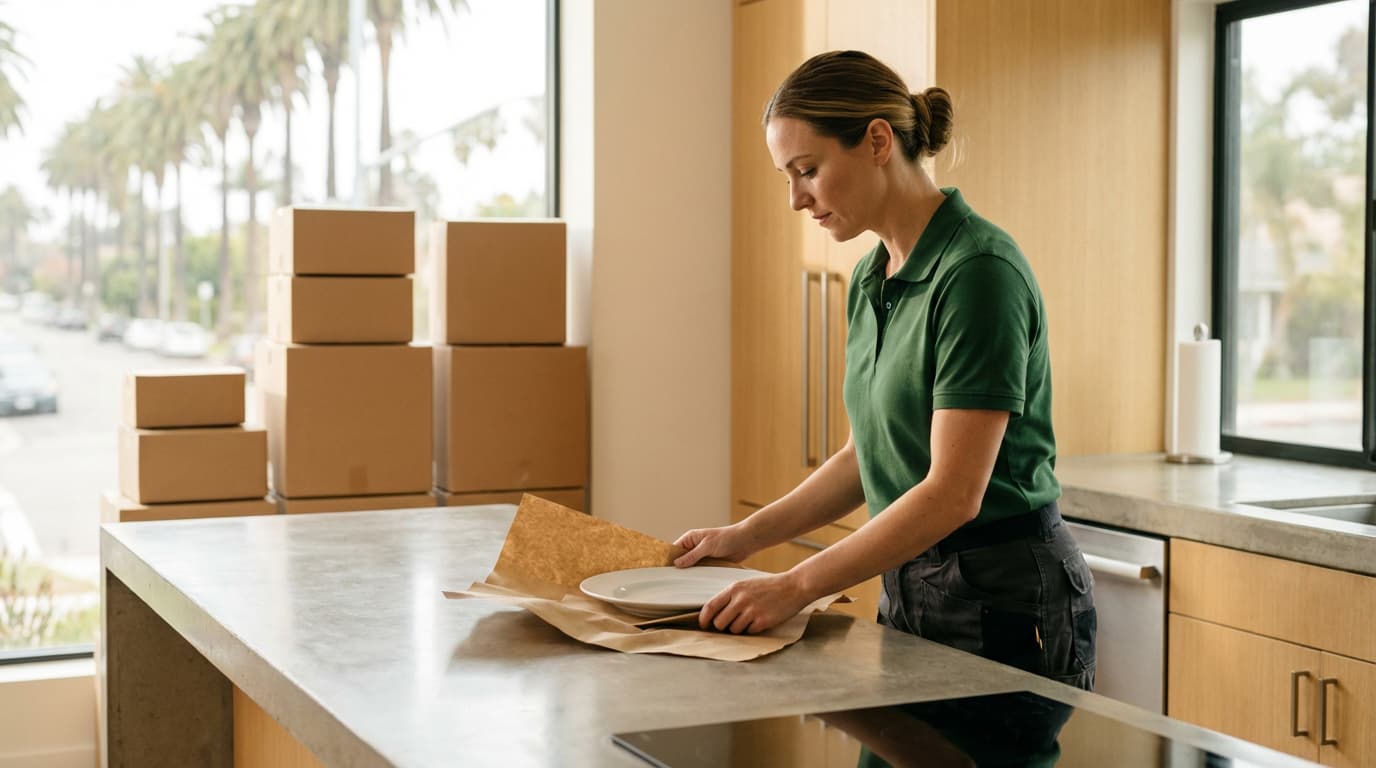
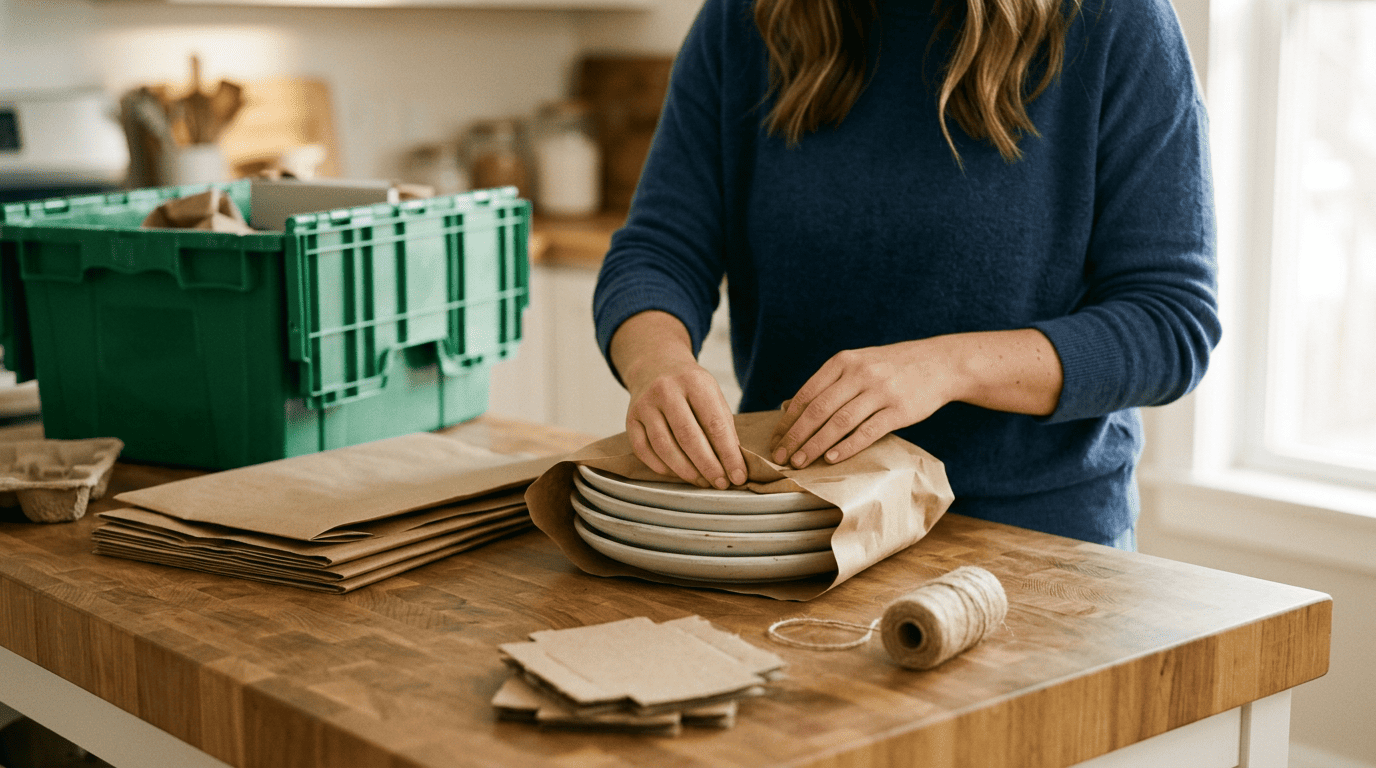
How I use it: For dishes, I use the two-sheet method — one sheet wrapped snug around the item, one sheet crumpled loosely around that for cushion. For a standard dinner plate, this gives about an inch of protection on all sides. Stack plates vertically (on edge, not flat) in the box with crumpled paper between each one. I've packed this way hundreds of times — the breakage rate is effectively zero when done correctly.
Where to buy in LA: U-Haul locations carry recycled paper rolls. For bulk orders, I recommend hitting the Uline warehouse in City of Industry or ordering from EcoEnclose online. A 24-inch roll of recycled kraft paper runs about $25–$30 and covers a full 1-bedroom apartment.
The limitation: Paper alone isn't enough for heavy or extremely fragile items like marble tabletops or large mirrors. For those, you need blankets or specialized crating — which is where our White Glove Services come in.
Biodegradable Bubble Wrap and Cushioning
Traditional bubble wrap is polyethylene — it's petroleum-based and takes 500+ years to decompose. The good news: biodegradable alternatives have gotten genuinely good in the last two years.
Recycled-content bubble wrap: Made from recycled polyethylene. Still plastic, but diverts waste from landfills. Performs identically to virgin bubble wrap. This is my go-to when a client needs bubble wrap and doesn't want to go full paper-only. Available at most LA packing supply stores.
Corrugated bubble wrap (paper-based): Layers of crimped kraft paper that mimic the cushioning profile of bubble wrap. I tested this side-by-side with traditional bubble wrap on wine glasses — the paper version actually performed slightly better because it doesn't shift and slide the way slick plastic does. The downside: it's bulkier, so you'll use more box space.
Cornstarch packing peanuts: These dissolve in water, which means they're fully compostable. For fill material inside boxes, they work great. But do not use them as the primary cushion for heavy items — they compress under weight more than styrofoam peanuts. I use them to fill the top 2 inches of a box after the items are already secured with paper wrapping.
🌱 Want a fully eco-friendly pack job? Green Moving's packing team can handle your entire home using sustainable materials. Call (949) 266-9445 or request a quote — we'll bring the supplies and the expertise.
Reusable Plastic Moving Bins: The Game Changer
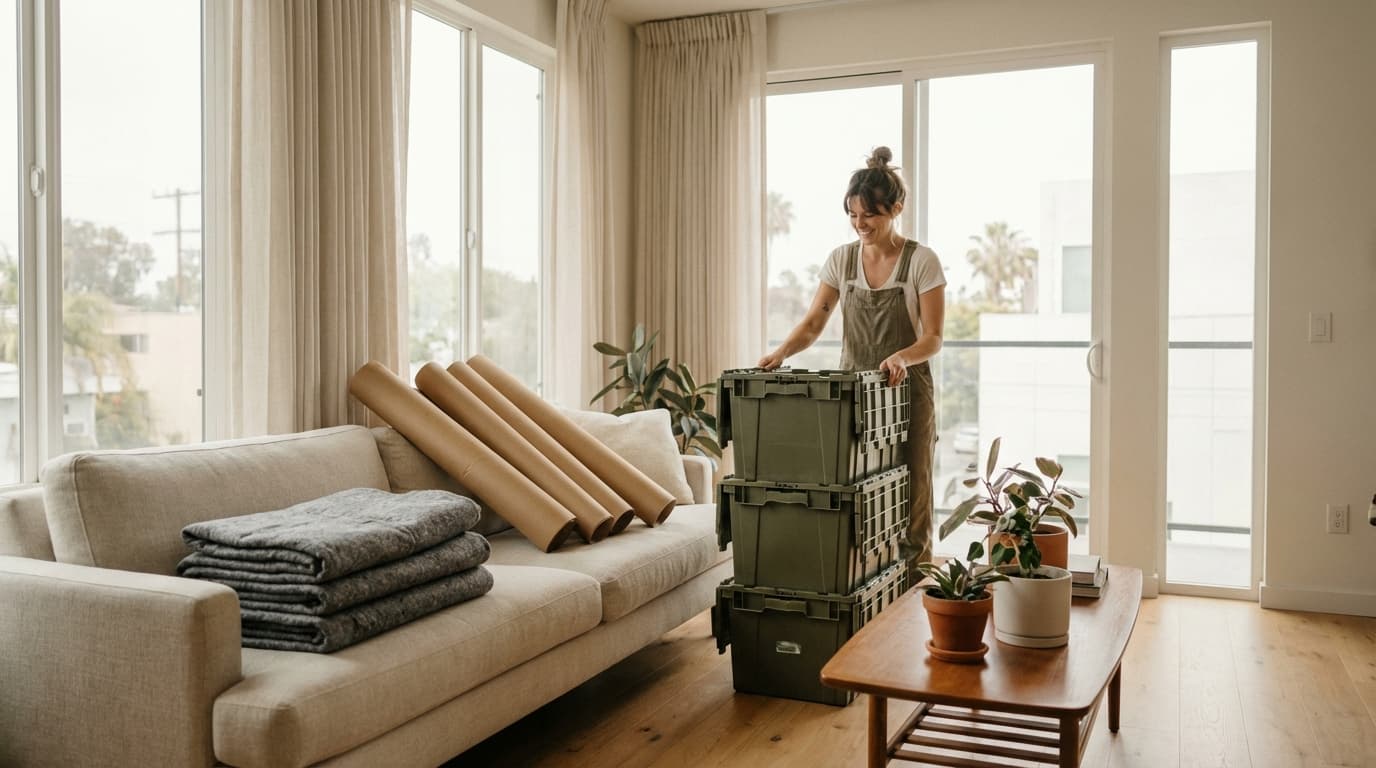
If there's one product that has genuinely changed how I think about sustainable moving, it's reusable plastic bins. Companies like ZippGo and Rentable Crates operate throughout LA — they deliver sturdy, stackable plastic bins to your door, you pack into them, and after the move they pick them up for the next customer.
Why they're superior to cardboard for most items: They don't crush. They're waterproof. They stack perfectly without sagging. They have attached lids, so you don't need tape. And because they're uniform in size, they load into a truck more efficiently, which means fewer trips and less fuel.
Cost comparison: Renting 20 reusable bins for a week in LA runs about $60–$80. Buying 20 new cardboard boxes plus tape costs $50–$70, and then you're stuck recycling or trashing them. The reusable bins are only marginally more expensive, they protect your belongings better, and they generate zero waste.
My recommendation: Use reusable bins for everything that fits — books, kitchen items, clothing, bathroom supplies, office items. Use recycled kraft paper for wrapping fragile items inside the bins. Save cardboard for odd-shaped items that don't fit standard bin sizes.
What Doesn't Work (Honest Takes)
I've tested plenty of eco products that I won't use again. Here's the honest list:
Newspaper as packing paper. Yes, it's recycled content. But the ink transfers onto everything — white linens, ceramic surfaces, light-colored upholstery. I've had clients furious about ink stains on their dishes. Use unprinted kraft paper instead.
Mushroom-based packaging. I tried this for a client who specifically requested it. It's molded mycelium that theoretically provides structured cushioning like styrofoam. In practice, it's expensive, hard to source in LA, only comes in specific shapes, and it crumbles if you try to cut it. Great concept, not ready for residential moving.
Seaweed-based wraps. Same story — interesting material, but too fragile and too inconsistent in thickness to trust with valuable items. Maybe in five years.
"Biodegradable" tape that won't stick. Several brands of plant-based packing tape I've tested lose adhesion within hours, especially in LA's dry heat. The boxes pop open in the truck. I now exclusively use paper gummed tape (the kind you wet to activate) — it's paper-based, recyclable, and bonds to cardboard like cement.
The Towel-and-Linen Method: Zero-Cost, Zero-Waste
This is my favorite technique for clients on a budget who also want to minimize waste. You're already moving your towels, bedsheets, pillowcases, and clothing — so use them as packing material.
Plates and bowls: Wrap each one in a dish towel or washcloth. Stack in a reusable bin with t-shirts filling the gaps.
Wine glasses and stemware: Roll each glass in a thick sock, then wrap in a hand towel. Place upright in a bin with socks filling the spaces between.
Picture frames: Sandwich between folded bedsheets or blankets. For larger frames, wrap in a comforter.
Small electronics: Wrap in sweaters or hoodies. The soft knit provides excellent shock absorption.
This method means fewer purchased packing materials, less waste after the move, and your linens and clothing arrive just as safely as they would in their own boxes. I've packed entire studio apartments in Koreatown and Downtown LA this way — the client didn't buy a single roll of packing paper.
Building Your Eco Packing Kit
Here's the exact kit I recommend for a 1-bedroom apartment move in LA:
Recycled kraft paper: 1 roll (24" × 200') — about $25. Covers all wrapping needs.
Paper gummed tape: 2 rolls — about $15. Forget plastic tape forever.
Reusable bins: 15–20 rented — about $60–$75/week. Replaces most cardboard.
Cornstarch packing peanuts: 1 bag — about $20. For box-top fill only.
Moving blankets: 6–8 (rent from your moving company). For furniture and large items.
Total cost: $120–$135 for a fully eco-friendly pack job. A comparable conventional setup with new cardboard boxes, bubble wrap, styrofoam, and plastic tape runs $90–$110 — so you're paying roughly $25–$30 more for zero waste. And if you use the towel-and-linen method aggressively, you can cut that gap to almost nothing.
Green Moving commits 1% of every move to California environmental causes, so when you choose sustainable packing with us, the impact compounds — less waste from your move plus direct environmental investment from ours.
When to Call In Professional Eco Packers
DIY eco packing works great for most items. But certain things require professional technique and materials:
Large mirrors and glass tabletops need custom cardboard corner protectors and moving blankets — paper alone won't protect them from impact.
Antiques and high-value items should be professionally crated. Our team builds custom wood crates on-site for items like chandeliers, sculptures, and oversized artwork. Check our guide on moving to Pasadena — we discuss handling heritage home items there.
Full-home packs with eco materials take about 20% longer than conventional packing because of the extra layering and wrapping technique. If you're on a tight timeline, having our packing services crew handle it means it gets done right and on schedule.
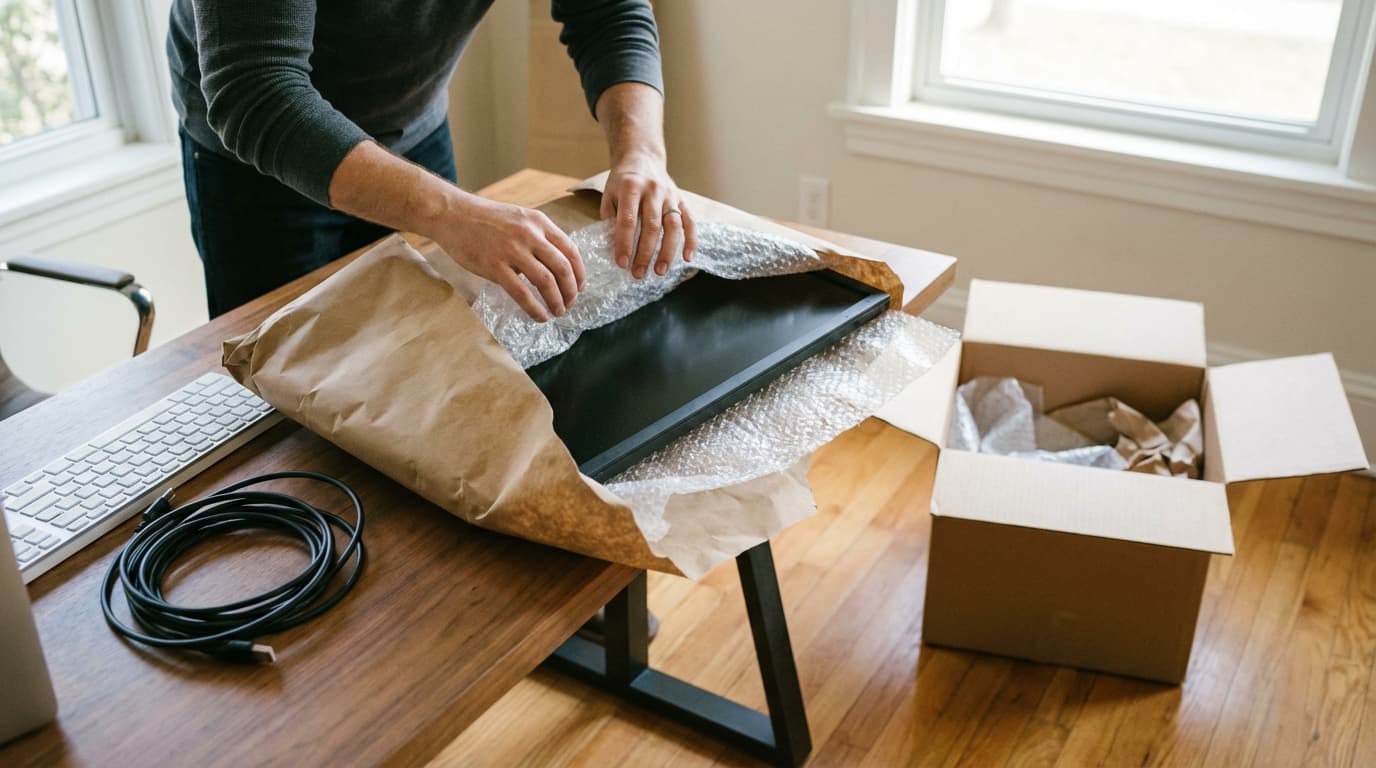
Electronics and IT equipment — if you're packing a home office, check our upcoming guide on packing electronics for specific techniques on protecting screens, drives, and cables during a move.
FAQ
Are eco-friendly packing materials as protective as traditional ones? Yes, when used correctly. Recycled kraft paper with proper wrapping technique protects dishes and glassware just as well as bubble wrap. The key difference is technique — you need more layers of paper and tighter wrapping to match the cushioning of plastic-based materials.
How much more do eco-friendly packing materials cost? For a typical 1-bedroom move, eco-friendly supplies cost about $25–$30 more than conventional materials — roughly $120–$135 total versus $90–$110. Using your own towels and linens as packing material can close that gap almost entirely.
Where can I buy sustainable packing supplies in Los Angeles? U-Haul locations carry recycled paper and some biodegradable options. For bulk orders, Uline in City of Industry and EcoEnclose online are reliable sources. Reusable bin rentals are available from ZippGo and Rentable Crates, which both serve the LA metro area.
Can I compost biodegradable packing peanuts? Yes — cornstarch-based packing peanuts dissolve in water and can go directly into a home compost bin. They break down within weeks. Just make sure they're actually cornstarch-based (they dissolve when you hold them under running water) and not traditional styrofoam labeled misleadingly.
What's the most eco-friendly way to pack fragile dishes? Wrap each dish individually in recycled kraft paper using the two-sheet method — one tight wrap, one loose crumple for cushioning. Stand plates on edge (not flat) in the box with crumpled paper between each one. For zero waste, use dish towels and washcloths instead of paper.
Ready for a zero-waste move? Green Moving's packing specialists use tested sustainable materials to protect your belongings and the environment. Call (949) 266-9445, email sales@greenmovingla.com, or get your free quote. Licensed & insured — CAL-T 201327.