First-Time Mover's Survival Guide to LA
- The LA Reality Check Nobody Gives You
- How to Choose the Right Neighborhood
- The Parking and Transportation Reality
- How to Find Housing Without Getting Burned
- Setting Up Your LA Life — The Admin Checklist
- Building a Life in a Sprawling City
- First-Timer Mistakes That Cost Real Money and Time
- Frequently Asked Questions
- Get Started
I talked to a client last month — a 28-year-old software engineer relocating from Chicago for a new job in Culver City. She'd found an apartment online, booked a cross-country moving company, and felt completely prepared. Then she arrived. Her apartment was on a street with permit-only parking and she didn't have a permit yet. The moving truck couldn't fit down her block. Her furniture sat on the sidewalk for two hours while the crew figured out an alternative loading zone three blocks away. Her first grocery run took 40 minutes because the nearest store was a 15-minute drive. Welcome to LA.
That story isn't unusual — I hear some version of it every week from first-time movers who underestimated how different Los Angeles operates from other cities. LA isn't one place. It's a sprawl of 88 cities and dozens of distinct neighborhoods across 503 square miles, and almost every assumption you bring from somewhere else will be wrong in some way. This guide covers the reality of moving to Los Angeles for the first time — neighborhoods, costs, transportation, parking, housing logistics, and the mistakes that make the first three months miserable. Green Moving helps families and individuals relocate across LA and Orange County daily, and the patterns I see in first-timer struggles are remarkably consistent.
The LA Reality Check Nobody Gives You
Before you choose a neighborhood or sign a lease, recalibrate your expectations about three things.
The sprawl. LA County spans 4,751 square miles. You can drive for two hours in one direction and technically still be in "Los Angeles." A restaurant that's 15 miles away might take 20 minutes on a Sunday morning or 90 minutes on a Thursday at 5 PM. Distance in LA is measured in time, not miles, and that time fluctuates wildly.
The cost of living. Average rent for a 1-bedroom apartment in LA exceeds $2,400. Studios in desirable areas start around $1,800. Groceries, gas, and dining out run 15–25% higher than the national average. If you're moving from a mid-size city in the Midwest or South, budget 30–40% more than your current cost of living to maintain a comparable lifestyle. Most first-timers I talk to underestimate this by $500–$800/month.
The car dependency. Despite an expanding Metro system, Los Angeles remains a car city. Public transit connects some corridors effectively — the Expo Line between Downtown and Santa Monica, the Red Line through Hollywood to North Hollywood — but leaves most neighborhoods unreachable without transfers and long waits. Unless you're living and working along a single Metro line, you'll need a car. Budget for insurance ($150–$250/month in LA), gas, and parking costs on top of your rent.
How to Choose the Right Neighborhood
Your neighborhood determines your commute, your social life, your weekend routine, and honestly your overall happiness in LA. Choosing based on aesthetics or reputation without considering proximity to work is the single most common first-timer mistake I see.
The Westside — Santa Monica, Venice, Culver City, Mar Vista. Beach access, walkable pockets, a strong tech-industry presence. Young professionals cluster here. Rent is premium — $2,800+ for a 1-bedroom in Santa Monica, slightly less in Culver City and Mar Vista. If your job is on the Westside, this makes sense. If your job is in Burbank or Pasadena, you're signing up for a soul-crushing reverse commute. For a detailed look at one of the most popular Westside neighborhoods, read our Santa Monica moving tips and parking guide.
Hollywood and surrounding areas — Hollywood, East Hollywood, Los Feliz, Koreatown. More affordable than the Westside, with strong nightlife and walkable stretches along Vermont, Hollywood Boulevard, and Western. Parking is brutal — permit zones, street sweeping, and limited garage spots. The Red Line Metro stop at Hollywood/Highland provides real transit access. Expect $1,800–$2,400 for a 1-bedroom.
The Valley — Sherman Oaks, Studio City, Burbank, North Hollywood. More space for less money. Hotter summers — 15–20 degrees warmer than coastal neighborhoods on peak days. Studios, production offices, and entertainment industry jobs cluster here. A 1-bedroom runs $1,900–$2,500. Family-friendly with better parking and easier street access than central LA. The trade-off is distance from the beach and a cultural vibe that feels more suburban.
The Eastside — Silver Lake, Echo Park, Highland Park, Eagle Rock. Creative community energy with independent coffee shops, vintage stores, and walkable weekend culture along Sunset Boulevard in Silver Lake or York Boulevard in Highland Park. Hilly terrain creates parking nightmares and makes some streets genuinely difficult on move-in day. Rent ranges $1,800–$2,600 for a 1-bedroom depending on how close you are to Silver Lake Reservoir or the trendier blocks.
The South Bay — Manhattan Beach, Hermosa Beach, Redondo Beach. Beach town atmosphere with a suburban, family-oriented feel. Great schools, lower density, strong community identity. But the South Bay is geographically isolated from central LA — commuting to Hollywood, Downtown, or the Valley from Manhattan Beach can run 45–90 minutes each way. Rent: $2,500–$3,200 for a 1-bedroom near the water.
Orange County — Irvine, Newport Beach, Costa Mesa. If your job is in south LA or OC, living in Orange County offers cleaner infrastructure, newer housing stock, and a different pace. Green Moving serves the entire Orange County corridor, and many of our clients make the LA-to-OC transition for more space and lower density.
The Parking and Transportation Reality
This deserves its own section because parking catches every single first-timer off guard.
Street parking is a minefield. Signs are dense, confusing, and aggressively enforced. Sweeping days, permit zones, time limits, and rush-hour tow-away zones create a system where missing one sign costs $68–$98 per ticket. In neighborhoods like Hollywood, Koreatown, and Silver Lake, finding a street spot after 7 PM can take 20–30 minutes of circling. Some streets allow parking on one side only during certain hours.
Parking at your apartment matters. When evaluating rentals, a dedicated parking spot is worth $100–$200/month in avoided headaches and tickets — even if it costs that much on top of rent. In my experience, first-time movers who choose a cheaper apartment without parking end up spending more in tickets and frustration than the savings were worth.
Traffic patterns to know. Morning rush runs roughly 7–10 AM. Evening rush starts around 3 PM and lasts until 7 PM on most freeways. The 405, the 101, and the 10 are the worst offenders. The practical rule: if your commute crosses a major freeway during rush hour, it will take twice as long as Google Maps shows at midnight.
On moving day specifically, parking the truck is one of the biggest logistical challenges — especially in dense neighborhoods. Many LA streets are too narrow for a full-size moving truck to park legally without blocking traffic. Some buildings have loading zones; most don't. Our Green Moving crews handle parking logistics as part of every local move in Los Angeles, including permits and alternative staging when necessary.
Have questions about your move to LA? I'm here to help — call (949) 266-9445 or get in touch.

How to Find Housing Without Getting Burned
The LA rental market moves fast. Desirable apartments — good location, reasonable price, in-unit laundry, parking — disappear within days, sometimes hours. Start your search 6–8 weeks before your move date.
What to budget upfront. Most LA landlords require first month's rent, last month's rent, and a security deposit equal to one month's rent. For a $2,400/month 1-bedroom, that's $7,200 due before you move in. Credit checks and income verification (typically 2.5–3x monthly rent in gross income) are standard. Have your documentation — pay stubs, bank statements, employer letter — ready to submit same-day when you find the right place.
Where to search. Apartments.com, Zillow, and Craigslist are the primary platforms. For higher-end rentals, Westside Rentals and local property management companies list inventory not always found on aggregator sites. Drive the neighborhoods you're considering — many smaller buildings post "For Rent" signs without listing online.
Red flags. Listings priced significantly below market rate for the area are almost always scams. Never wire money or pay a deposit before seeing the unit in person or via live video walkthrough. Any landlord who pressures you to commit without a viewing is a problem. Verify the landlord's identity against property records — Los Angeles County Assessor records are searchable online.
Before signing, check the specific parking situation (assigned spot? street only? guest parking?), laundry access (in-unit, shared on-site, or laundromat?), the building's moving restrictions (which days, which hours, elevator reservation, COI requirements), and noise levels at different times of day.
Setting Up Your LA Life — The Admin Checklist
Once you've secured housing, a stack of administrative tasks awaits. Handle these in order of legal deadlines.
California driver's license. State law requires new residents to obtain a California license within 10 days of establishing residency. Schedule a DMV appointment online immediately — walk-ins at LA DMV offices can mean 2–3 hour waits. You'll need your out-of-state license, proof of residency (lease agreement), Social Security card, and a completed DL 44 form.
Vehicle registration. California requires vehicle registration within 20 days of establishing residency. You'll need a smog certification (required for most vehicles), your out-of-state title, and the registration fee — which in California is based on vehicle value and often runs $300–$500+ for the first year. Budget for this.
Utilities. LADWP handles electricity and water for most of the city. SoCalGas provides natural gas. Spectrum, AT&T, and various fiber providers handle internet. Set up LADWP and gas accounts before move-in day — you can do it online or by phone, and activation is usually same-day if the previous tenant's service was recent.
Renter's insurance. Many LA landlords require proof of renter's insurance before move-in. Policies run $15–$30/month for standard coverage and protect your belongings against theft, fire, and water damage. Set this up before your lease starts.
Building a Life in a Sprawling City
LA can feel isolating in the first few months. The geography works against spontaneous socializing — you can't just walk to a friend's apartment in most neighborhoods the way you might in New York or Chicago. Building community here requires intentional effort.
Join activity-based groups. Meetup.com has thousands of active LA groups organized around hiking, running, photography, board games, industry networking, and more. LA's outdoor culture makes hiking and fitness groups particularly effective for meeting people — Runyon Canyon, Griffith Park, and Temescal Gateway are social hubs as much as trail systems.
Become a regular somewhere. Pick a coffee shop, a gym, or a farmers market in your neighborhood and show up consistently. LA's neighborhood culture is stronger than its citywide culture — people identify with their 10-block radius more than with "Los Angeles" as a whole. The Silver Lake Farmers Market on Saturdays, the Culver City steps on weekday mornings, the Venice Boardwalk on Sunday afternoons — these are community anchors.
Give yourself time. Most people I talk to who love LA say it took them 6–12 months to feel settled and 18–24 months to feel like they belong. The adjustment period is real and normal. Don't make a final judgment about the city in your first three months — you haven't seen enough of it yet.
First-Timer Mistakes That Cost Real Money and Time
I've tracked the patterns across hundreds of first-time LA movers. These mistakes show up over and over.
Choosing a neighborhood for the wrong reason. Picking Silver Lake because it's "cool" without considering that your office is in El Segundo means a 45–75 minute commute twice a day. Prioritize proximity to work first, lifestyle preferences second. You'll spend far more time commuting than exploring your neighborhood's restaurants.
Underestimating moving-day logistics. LA streets, buildings, and parking create challenges that don't exist in most other cities. A move that would take 3 hours in a suburban Texas neighborhood takes 5 hours in a 4th-floor Hollywood walkup with no elevator and permit-only street parking. When budgeting for your move, factor in the access complexity. Our guide breaks down exactly how much movers cost in Los Angeles by home size and situation.
Signing a lease sight-unseen. The rental market moves fast, but committing to a unit you've never physically visited — or at least toured via live video — leads to nasty surprises. Photos hide street noise, parking nightmares, pest problems, and the fact that "natural light" means one small window facing a wall.
Ignoring the sun. This sounds trivial but it's not. Your car interior reaches 140°F+ on summer days. Windshield shades, sunscreen as a daily habit, and hydration become essentials — not optional. Heat exhaustion during a summer move is a real risk. If you're moving between June and September, start early in the morning and stay hydrated throughout the day.
Not understanding the financial picture. Between first/last/deposit on an apartment, DMV fees, insurance, and the move itself, the upfront cost of establishing yourself in LA can exceed $10,000–$12,000. Having that cash ready before you arrive prevents the stress of scrambling during your first weeks.
Frequently Asked Questions
How much should I budget for my first month in LA total?
Plan for $8,000–$12,000 to cover apartment deposits (first, last, and security — roughly $7,200 for a $2,400/month unit), DMV and registration fees ($300–$500), renter's insurance ($15–$30), utility setup, groceries, gas, and the move itself. A local move with professional movers for a 1-bedroom apartment typically runs $500–$800. Having a financial cushion of $2,000–$3,000 beyond these costs provides critical breathing room.
What's the best neighborhood for someone new to LA?
It depends entirely on where you work. If your job is on the Westside, Culver City and Mar Vista offer good value with solid walkability. If you work in the Valley, Sherman Oaks and Studio City balance affordability with quality of life. For Downtown jobs, Arts District and Little Tokyo put you within walking or biking distance. The universal rule: live within 20 minutes of your office and you'll be happier than someone paying less rent 45 minutes away.
When is the best time of year to move to LA?
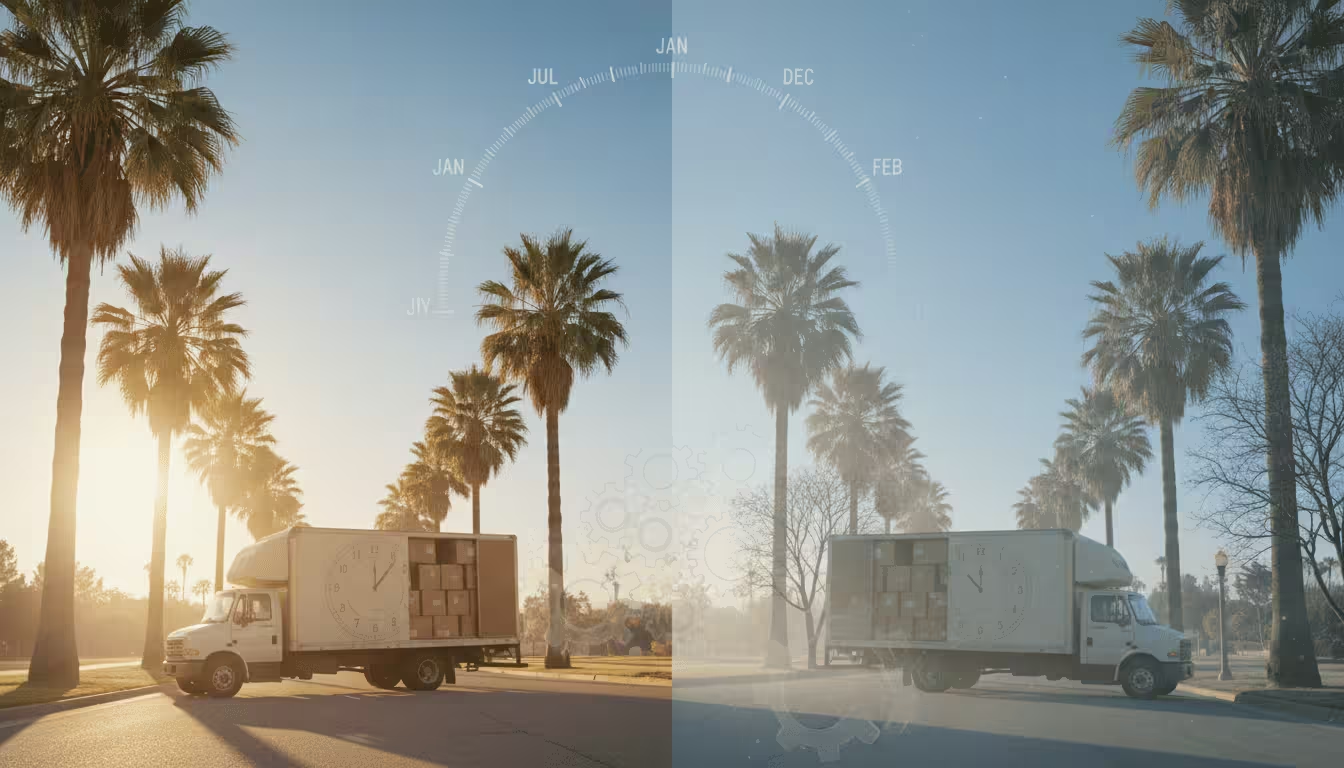
October through February offers lower moving costs, better scheduling availability, and cooler weather for the physical work of unpacking and setting up. Summer (May–September) is peak season for movers across LA — rates are the same but availability tightens and you're moving in extreme heat. If your job start date allows flexibility, target fall or early winter.
Do I really need a car in Los Angeles?
For most people, yes. Exceptions exist if you live and work along the same Metro line — the Expo Line corridor (Downtown to Santa Monica) and the Red/Purple Line corridor (Downtown through Hollywood to North Hollywood/Koreatown) offer genuine car-free commuting. But errands, socializing, and exploring the city practically require a car. Ride-shares add up fast as a primary transportation method.
Can Green Moving help with a long-distance move to Los Angeles?
Yes. Our long-distance moving service handles cross-country relocations to LA with guaranteed delivery windows. We coordinate the logistics — packing, loading, transport, and delivery — so you can focus on the transition itself. For first-time movers coming from out of state, we also handle the local delivery side, including navigating LA's building requirements, parking logistics, and tight access situations that out-of-state carriers often struggle with.
Get Started
Moving to Los Angeles for the first time is one of the biggest transitions you'll make. The city rewards people who prepare for its quirks rather than fighting them — and the right moving experience sets the tone for everything that follows.
Schedule Your Free Consultation:
- Call: (949) 266-9445
- Email: sales@greenmovingla.com
- Online: greenmovingla.com/contacts
Green Moving — Licensed (CAL-T 201327) & Insured. 1% of every move supports California environmental causes.