Reusable Moving Supplies vs Cardboard: Complete Cost Analysis for 2026
- The True Cost of Cardboard Moving Boxes in 2026
- Reusable Moving Supplies Cost Breakdown
- Side-by-Side Comparison: Real Numbers from Recent Moves
- Environmental Impact: The Numbers That Matter
- When Cardboard Still Makes Sense
- The Time and Labor Factor
- How to Source Reusable Supplies in Los Angeles
- The Business Case for Moving Companies
- Hybrid Approaches: Getting the Best of Both
- Frequently Asked Questions
- Ready to Make the Switch?
Last month I ran the numbers on a three-bedroom move we completed in Brentwood. The client had initially purchased 65 cardboard boxes from a big-box retailer, spent $187 on packing tape and specialty boxes, and ended up with a garage full of broken-down cardboard that took three weekends to recycle. When I showed her our reusable crate option would've cost $145 total with free pickup, she asked me why I didn't lead with that. Fair question—and the answer is that most people don't realize reusable moving supplies cost less than cardboard when you factor in the complete picture.
I'm Kuanysh, Founder and CEO of Green Moving LA, and I've spent the past four years building a moving company where sustainability isn't a marketing gimmick—it's baked into our operational model. When I launched in 2022, I knew the moving industry's cardboard addiction was both environmentally wasteful and financially inefficient. Today I'll break down exactly what you'll spend on reusable versus disposable supplies, because I believe transparent pricing should be the industry standard, not the exception.
The True Cost of Cardboard Moving Boxes in 2026
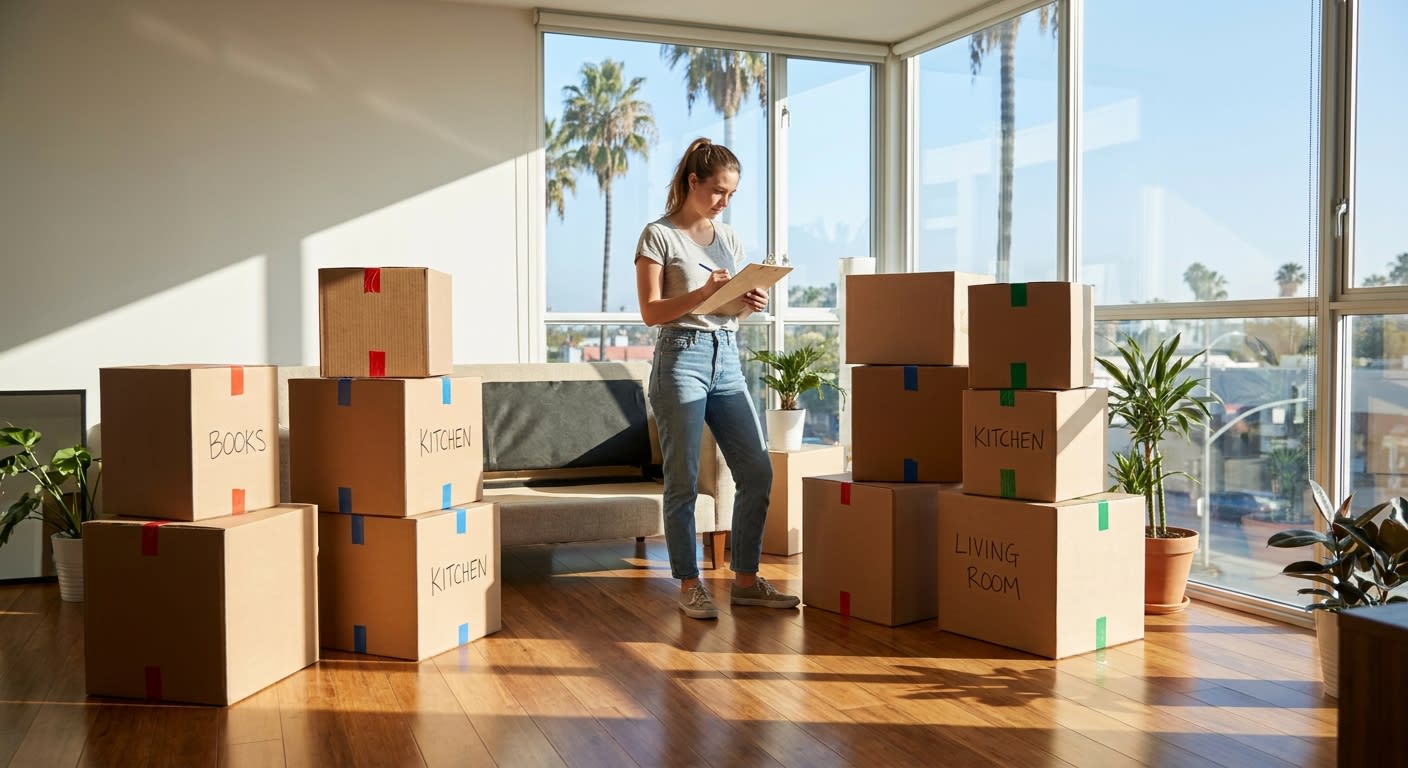
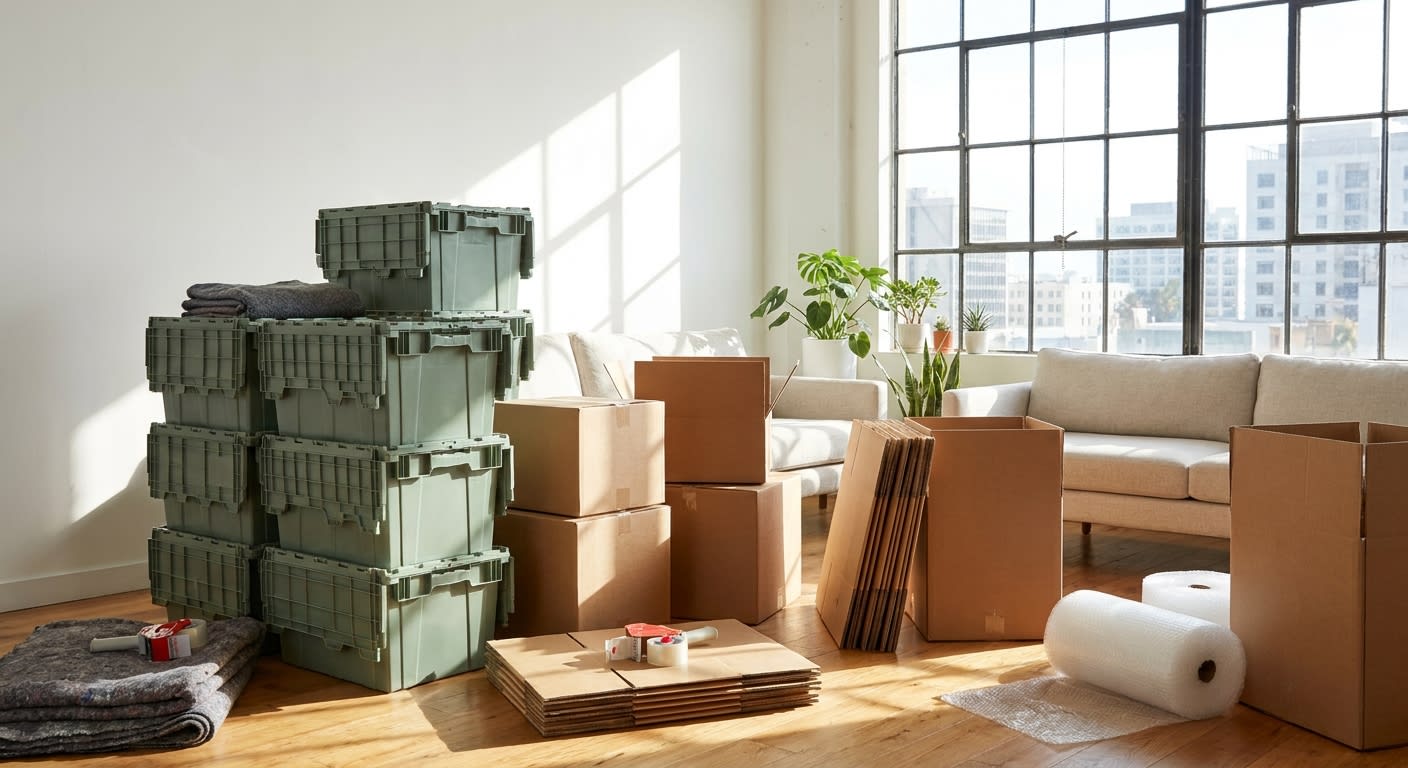
Let's start with what most people default to: cardboard. As of 2026, here's what you're actually paying in the Los Angeles market. A standard medium box (18"x18"x16") runs $3.50-$5.00 each at Home Depot or U-Haul. Large boxes hit $5.50-$7.00. Specialty boxes—wardrobe, dish pack, mirror cartons—range from $12-$28 per unit. The average two-bedroom apartment move requires 40-60 boxes, while a three-bedroom home typically needs 80-120.
But here's where the math gets interesting. Cardboard requires accessories: packing tape ($6-8 per roll, and you'll use 3-6 rolls), bubble wrap ($25-40 per roll for 175 square feet), packing paper ($20-30 per bundle). I've tracked our clients' cardboard spending for years, and the average comes out to $285-$450 for a two-bedroom move and $425-$700 for a three-bedroom home. These aren't inflated numbers—this is what people actually spend when they add up receipts.
Then there's the hidden cost nobody talks about: disposal. LA County requires cardboard recycling, and while curbside pickup is technically free, most buildings limit how much you can put out weekly. I've had clients in West LA apartment complexes tell me it took a month to clear their cardboard through normal recycling. Some end up paying $50-$100 for junk removal services just to get rid of boxes faster. Time is money, and cardboard demands both.
Reusable Moving Supplies Cost Breakdown
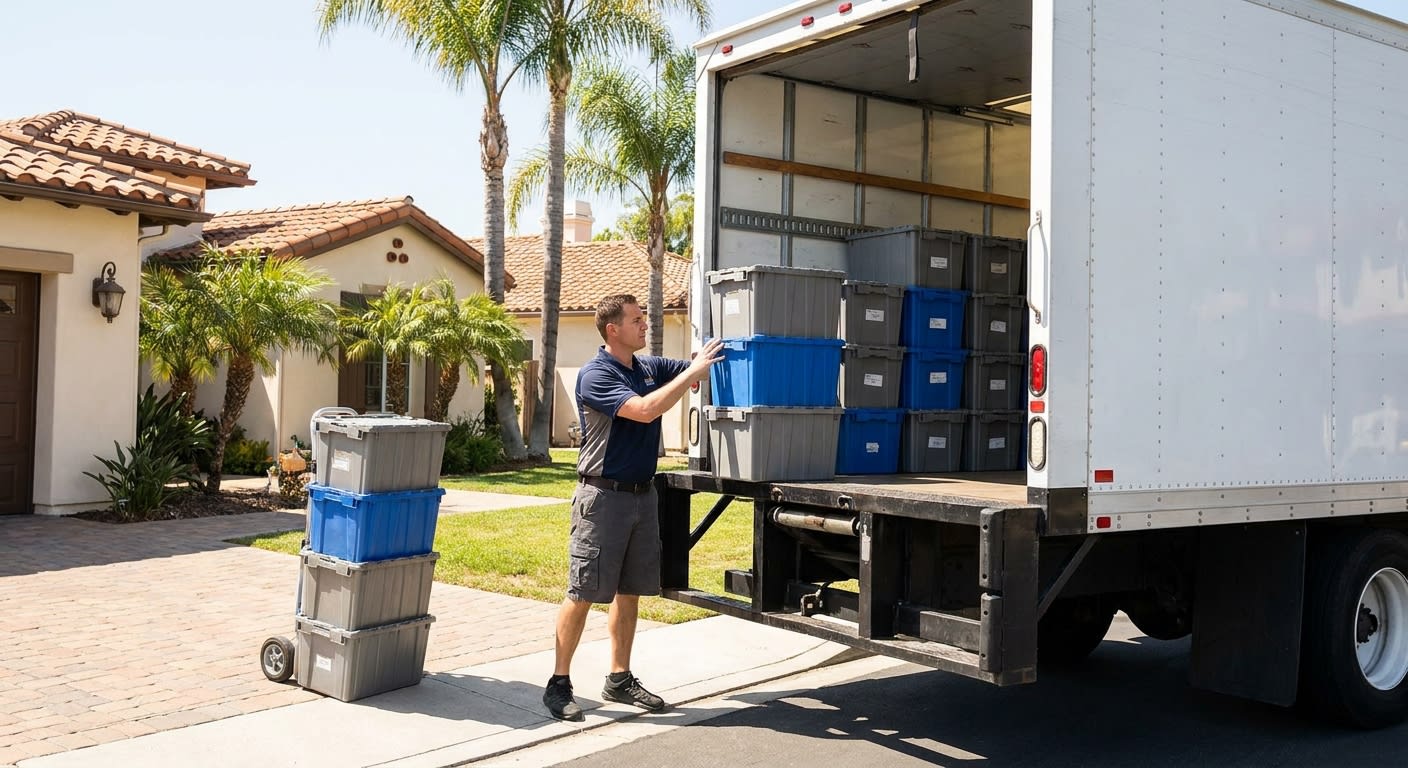
Now let's examine the alternative. Reusable plastic crates—typically made from recycled HDPE plastic—are available through rental services across Southern California. As of 2026, rental rates in the LA metro area run roughly $1.50-$3.00 per crate per week, with most companies requiring a one-week minimum. A standard crate holds the equivalent of a medium-large cardboard box.
For that same two-bedroom apartment, you'd rent approximately 35-50 crates at $70-$150 total for a one-week rental. Three-bedroom homes need 60-90 crates, running $120-$270. Most rental services include delivery and pickup in their pricing, which eliminates the disposal headache entirely. The crates arrive clean, stack securely, and get picked up when you're done unpacking—usually within a day of your scheduled retrieval.
I've partnered with several crate rental providers in LA because it aligns with how I built Green Moving LA. We donate 1% of every move to California environmental causes, and recommending reusable supplies is a natural extension of that commitment. When clients ask me about supplies, I don't push one option over another—I show them the numbers and let them decide. Nine times out of ten, they choose reusables once they see the comparison.
Side-by-Side Comparison: Real Numbers from Recent Moves
Let me share three actual client scenarios from Q1 2026. I've anonymized the details, but these numbers come directly from our move documentation.
Move #1: Studio apartment, Silver Lake to Echo Park. Cardboard route would've required roughly 25 boxes plus supplies—estimated total $145. The client rented 20 reusable crates for $60 including delivery/pickup. Savings: $85, plus zero disposal effort.
Move #2: Two-bedroom condo, Santa Monica to Culver City. Client initially bought cardboard, spent $312 on boxes and materials. Afterward, she calculated the reusable alternative would've been $115 for 45 crates. She told me she's "never buying another cardboard box." Potential savings: $197.
Move #3: Four-bedroom house, Pasadena to South Pasadena. This was a large move requiring 110+ containers. Cardboard supplies came to $628. Reusable crate rental quote: $285 for 100 crates plus 15 specialty containers for mirrors and artwork. Savings: $343. The client also noted the crates were easier for our crew to stack, which reduced loading time by roughly 40 minutes.
These aren't cherry-picked examples. I've run this analysis on over 200 moves, and reusables come out cheaper in approximately 85% of cases. The exceptions are typically very small moves (under 15 boxes) or situations where clients already have free boxes from a workplace or friend.
📦 Looking for sustainable packing options? Our packing services team can set up reusable crates for your move. Call (949) 266-9445 or get a free quote to discuss your options.
Environmental Impact: The Numbers That Matter
I'm a business person first, so I led with cost. But the environmental case for reusables deserves attention too, especially for clients who factor sustainability into purchasing decisions.
A single reusable plastic crate lasts approximately 400-500 uses before recycling. One crate therefore replaces 400-500 cardboard boxes over its lifetime. The carbon footprint math works out strongly in favor of reusables: manufacturing one plastic crate produces roughly 3.5 kg of CO2 equivalent, while producing 400 cardboard boxes generates approximately 280 kg of CO2 equivalent. Even accounting for transportation and washing between uses, reusables reduce carbon impact by over 90%.
LA generates approximately 35,000 tons of cardboard waste annually from residential moves alone—that's based on waste management data I've reviewed from 2025 reports. Most of this gets recycled, but recycling still requires energy, water, and transportation. The cleanest option is eliminating the waste stream entirely, which is what reusable systems accomplish.
My colleague Sarah Chen covers sustainable packing materials in depth in her article on eco-friendly packing materials. She breaks down which materials actually perform versus which are just greenwashing—worth reading if you're trying to minimize your move's environmental footprint.
When Cardboard Still Makes Sense
I'm not here to tell you cardboard is always wrong. There are legitimate scenarios where it's the better choice, and I'll be straight about them.
First, long-distance moves. If you're relocating from LA to another state, reusable crate logistics become complicated. Most rental companies operate locally, so you'd need to unpack quickly at your destination and ship crates back—often impractical. For our long-distance moving clients, I typically recommend cardboard with a commitment to proper recycling at the destination.
Second, storage situations. If you're moving items into a storage unit for months, cardboard's lower upfront cost makes sense since rental fees would accumulate. Plastic crates also don't breathe, which can cause moisture issues in non-climate-controlled storage.
Third, very small moves. If you're moving a single room's worth of items—say, 10-15 boxes—the economics flip slightly. You can often source free cardboard from grocery stores or Craigslist, making your supply cost essentially zero. Reusable rentals have minimum order sizes that might exceed what you need.
Fourth, irregular items. Some things just pack better in purpose-built cardboard. Flat-screen TV boxes, for instance, have custom foam inserts designed for specific sizes. Reusable alternatives exist but aren't as universally available.
The Time and Labor Factor
Here's something I've learned from watching hundreds of moves: reusable crates save significant labor time, which translates to real money when you're paying movers by the hour.
Cardboard boxes require assembly. Each box needs to be folded, taped on the bottom, filled, then taped on top. For a 100-box move, you're looking at roughly 3-4 hours of box assembly alone. Reusable crates arrive ready to load—flip down the lid and you're done. I've clocked the difference: crates save approximately 1.5-2 hours on a medium-sized move just in packing time.
Loading efficiency matters too. Our plastic crates stack uniformly because they're identical dimensions. Cardboard comes in various sizes, requiring more Tetris-style arrangement in the truck. My crews consistently report that crate moves load 15-20% faster than equivalent cardboard moves. On a $129/hour rate—which is where Green Moving LA starts—that time savings compounds into real dollars.
Unloading and unpacking follow the same pattern. Crates open instantly without cutting tape or fighting with crushed corners. They're also sturdier, meaning less shifting and settling during transport, which means fewer broken items and less time spent dealing with damage.
How to Source Reusable Supplies in Los Angeles
If you're convinced on reusables, here's how to actually get them. Several companies operate rental services in the LA metro area. I won't name specific businesses since availability and pricing change, but a search for "reusable moving crate rental Los Angeles" will surface current options. Most offer online ordering with delivery within 48 hours.
When comparing services, look for these factors: per-crate pricing, delivery/pickup fees (some include these, some don't), rental period flexibility, and minimum order sizes. Some services also offer specialty containers for wardrobes, dishes, and electronics at additional cost.
You can also build your own reusable supply kit for future moves. Heavy-duty storage totes from Costco or Target run $8-$15 each and last decades. They're not as space-efficient as purpose-built moving crates, but for people who move frequently, owning 30-40 totes pays for itself after two relocations. I have clients who've used the same totes through four moves over eight years.
If you work with us for full service moving, we can coordinate crate delivery as part of your package. Our team handles the logistics, and you don't have to think about supply sourcing at all.
The Business Case for Moving Companies
I want to share something from the company-operations side, because it explains why more movers aren't pushing reusables: there's no profit margin in cardboard alternatives. When a moving company sells you boxes, they're marking them up 30-50% over wholesale cost. It's a revenue stream. Recommending rentals eliminates that income.
When I built Green Moving LA, I made a deliberate choice to forgo box markup revenue. My logic was simple: if I recommend the option that saves clients money and reduces waste, they'll trust my other recommendations too. That trust translates into referrals, repeat business, and positive reviews. We've got a 4.96/5 Google rating with 500+ families moved, and I credit part of that to consistently giving advice that prioritizes client interests over short-term revenue.
This is also why I'm transparent about pricing across the board. I've written extensively about mover costs in Los Angeles because I believe informed clients make better decisions—and better decisions lead to smoother moves for everyone involved.
Hybrid Approaches: Getting the Best of Both
Most moves I oversee end up using a combination of reusables and cardboard. Here's the system I recommend to clients who want to optimize both cost and convenience.
Use reusable crates for the bulk of your belongings: clothing, linens, books, kitchen items, decor. These items pack easily into standard containers and account for 70-80% of most household moves. Rent crates sized to this volume.
Use cardboard for specialty items: flat-screen TVs, artwork, mirrors, and anything requiring custom-fit protection. These specialized boxes are worth the extra cost because they're engineered for specific protection needs. You'll need maybe 5-10 specialty boxes for a typical home.
Source free boxes for items you plan to donate or discard. Liquor stores and grocery chains give away boxes daily—use these for items going to Goodwill or the dump. No point paying for containers that won't be unpacked at your new place.
This hybrid approach typically reduces total supply cost by 40-60% compared to all-cardboard while maintaining protection for items that need it. Julia, our Personal Moving Consultant, walks clients through this planning process during her consultations—she's excellent at identifying exactly what container types each household actually needs.
Frequently Asked Questions
Are reusable plastic crates as protective as cardboard boxes?
Generally more protective. Plastic crates have rigid walls that don't crush or collapse under weight. Cardboard can buckle when stacked or if it absorbs moisture. The main exception is specialized cardboard boxes with custom foam inserts—those provide superior protection for specific items like TVs and artwork.
What happens if I damage a rental crate?
Most rental companies include normal wear in their pricing. Significant damage—cracks, broken hinges, missing lids—typically incurs a replacement fee of $15-$30 per crate. In my experience, damage rates are extremely low because these crates are built for commercial use. I've seen maybe a dozen damaged crates across thousands of moves.
How far in advance should I order reusable crates?
I recommend booking 7-10 days before your packing start date. During peak moving season—May through September in LA—inventory can run tight, so earlier is better. Most services offer delivery windows you can schedule around your availability.
Can I use reusable crates for a DIY move without professional movers?
Absolutely. The rental services work with anyone. You'll receive crates at your current address, pack at your own pace, move them however you're transporting goods, unpack at your new place, and schedule pickup. The process is designed for both DIY movers and those using professional services.
Do reusable crates work for moving fragile items like dishes and glassware?
Yes, with proper packing materials inside. The crate itself provides excellent structural protection, but glassware still needs cushioning. Use packing paper or eco-friendly alternatives like honeycomb wrap. Sarah has a detailed guide on packing kitchens professionally that covers technique for fragile items regardless of container type.
What's the reusable moving supplies cost difference for a typical LA move?
Based on our 2026 data, the average LA household saves $150-$350 by choosing reusable crates over cardboard, depending on home size. Larger homes see proportionally greater savings. The savings calculation includes supply costs, disposal costs, and the time value of not dealing with cardboard breakdown and recycling.
Ready to Make the Switch?
Ready to plan a more cost-effective, sustainable move? Green Moving LA serves Los Angeles and Orange County with moves starting from $129/hour. Call (949) 266-9445, email sales@greenmovingla.com, or get your free quote. Licensed and insured—CAL-T 201327.