High-Rise Moving in Downtown LA: Equipment & Logistics Guide
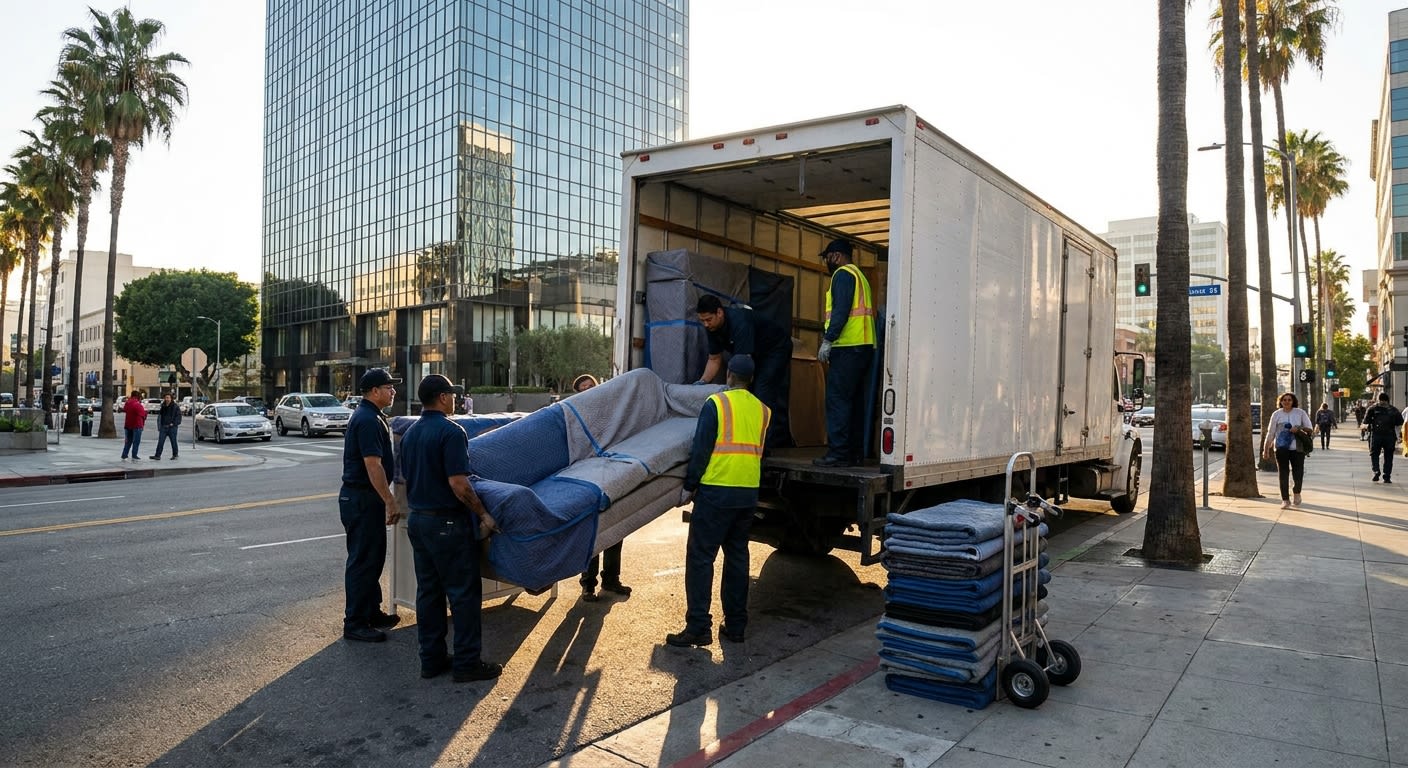
- Understanding Downtown LA's High-Rise Landscape in 2026
- Essential Equipment for High-Rise Moving
- The Certificate of Insurance Reality
- Elevator Reservations and Time Windows
- Loading Dock Logistics and Street Access
- Navigating Building Management and Security
- Special Handling for High-Rise Challenges
- Timing Your High-Rise Move
- Costs Specific to High-Rise Moving
- Building-Specific Tips for Popular DTLA Towers
- FAQ
- Ready to Move?
Two weeks ago, my crew and I moved a tech executive from the 38th floor of a tower on Figueroa Street to a penthouse unit in the South Park district. The origin building required a Certificate of Insurance naming three separate entities, the freight elevator had a 2,500-pound capacity limit, and the loading dock only allowed a 90-minute window starting at 7 AM. The destination building? Different management company, different COI requirements, and a freight elevator with interior dimensions that couldn't fit the client's 96-inch sectional sofa without removing the legs and tilting it at a precise 47-degree angle. That's high-rise moving in Downtown LA—every building is its own puzzle.
I'm Marcus, Head of Operations at Green Moving LA, and I've been running high-rise moves in DTLA since before many of these towers even opened. My team and I have moved families and professionals in and out of virtually every major residential building downtown—from the historic Eastern Columbia Building on Broadway to the newest luxury towers along the 110 corridor. I'm going to walk you through exactly what it takes to execute a successful high-rise move, from the specialized equipment we use to the logistics that can make or break your moving day.
Understanding Downtown LA's High-Rise Landscape in 2026
Downtown LA's residential high-rise inventory has exploded over the past decade. As of 2026, we're looking at over 75 residential towers exceeding 15 stories, with roughly a dozen buildings topping 40 floors. These aren't uniform structures—they range from converted pre-war office buildings with quirky floor plans to brand-new glass towers with freight elevators designed specifically for move-in efficiency.
The South Park neighborhood alone has become a vertical city. Buildings like Circa, Oceanwide Plaza (finally occupied after years of delays), and the towers along Olive Street present unique challenges. I've noticed that newer buildings typically have better freight elevator access and more reasonable loading dock policies, while older converted buildings often have narrower hallways, smaller elevators, and more restrictive HOA rules.
The Arts District has its own character—many buildings there are mid-rise lofts with industrial freight elevators that can handle massive loads but have older mechanisms that move slowly. A move that would take four hours in South Park might take six in the Arts District simply because of elevator speed. When I'm estimating a job, building age and type matter as much as floor count and inventory size.
Essential Equipment for High-Rise Moving
Standard moving equipment won't cut it in a DTLA high-rise. Here's what I load onto the truck for every tower move:
Four-wheel furniture dollies with pneumatic tires: These are essential for long corridor runs. Most high-rise residential floors have 100+ feet of hallway between the freight elevator and end units. Pneumatic tires roll smoothly over thresholds and carpet transitions without jarring your furniture. I keep three on every high-rise job.
Appliance dollies with stair-climbing wheels: Even in buildings with freight elevators, you sometimes need to navigate a few steps between the loading dock and the elevator bank. Our appliance dollies handle loads up to 800 pounds and have rubber-coated straps that won't scratch stainless steel refrigerators.
Forearm forklifts (moving straps): For items that can't be dollied—like a 400-pound marble dining table or an oversized mattress—these leverage body mechanics to distribute weight between two movers. My crew uses them constantly in tight elevator situations.
Corner protectors and door jamb guards: Building management will charge your client hundreds of dollars for scuffed walls or damaged door frames. I bring a full set of padded corner guards, temporary door jamb protectors, and floor runners for every high-rise move. It's cheaper than the damage deposit deductions.
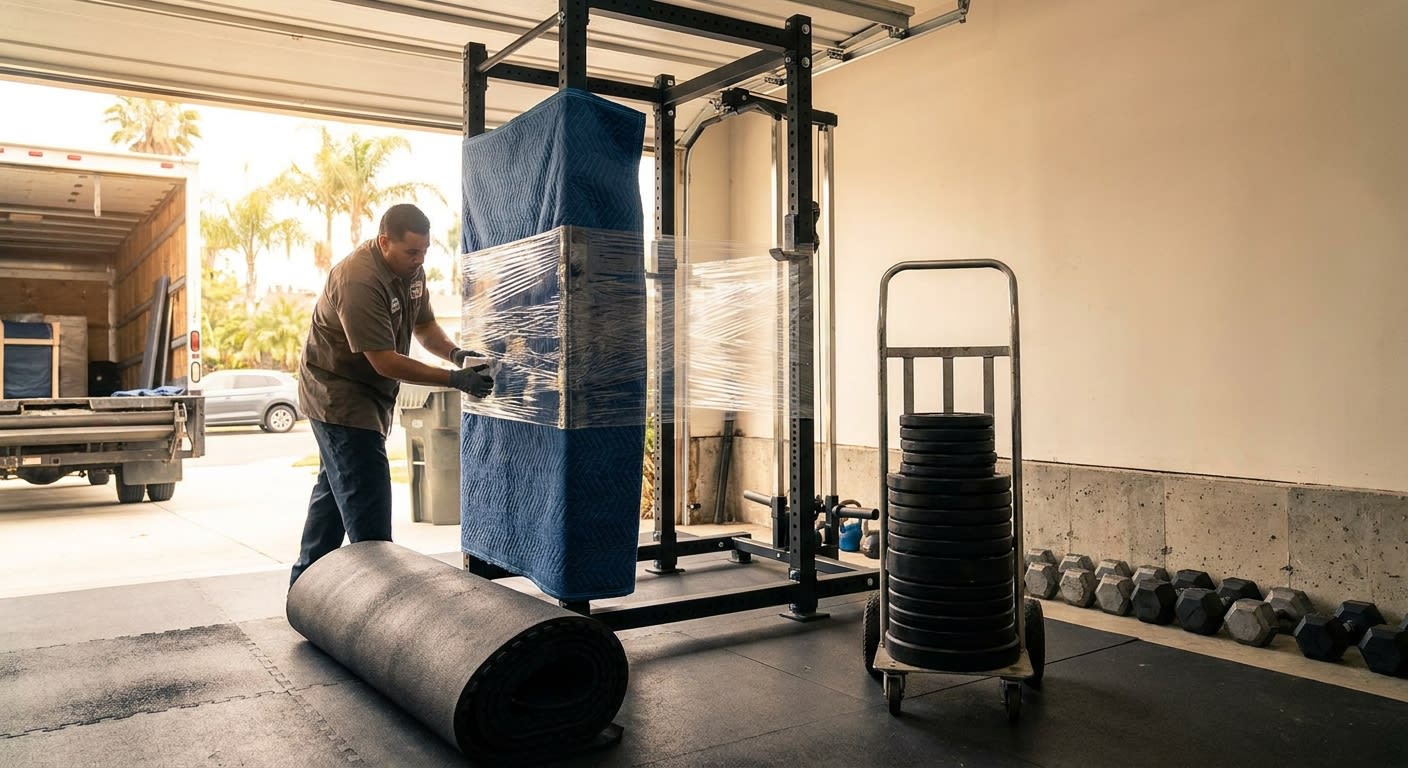
Furniture blankets and shrink wrap: Every piece gets wrapped. In a freight elevator shared with construction crews and delivery services, your furniture will rub against walls and other cargo. I use 72" x 80" quilted moving blankets secured with shrink wrap—never tape directly on wood surfaces.
The Certificate of Insurance Reality
If there's one thing that derails high-rise moves, it's COI issues. A Certificate of Insurance is a document from our insurance provider proving we carry adequate liability and workers' compensation coverage. Sounds simple, but every building has different requirements.
Most DTLA high-rises require a COI naming the building owner, the property management company, and sometimes the HOA as additional insureds. The coverage minimums vary—I've seen buildings require $1 million general liability, while others demand $2 million or even $5 million for moves above the 30th floor. Workers' comp requirements are standard, but some buildings also require auto liability coverage for the truck.
Here's what catches people off guard: COI processing takes time. Some management companies need 5-7 business days to approve a COI. Others require specific formatting or language that your moving company's insurance agent might need to customize. I always tell clients to get me the COI requirements at least two weeks before moving day. Rushing a COI is how moves get postponed.
At Green Moving LA, we've streamlined this process because we move people in DTLA towers constantly. Our insurance agent knows exactly what language buildings like The Ritz-Carlton Residences or Ten Thousand require. But if you're hiring a company that hasn't worked your building before, budget extra time for COI back-and-forth.
Elevator Reservations and Time Windows
Every high-rise has a freight elevator reservation system, and they're all different. Some buildings use online portals where you book slots yourself. Others require you to email the building manager and wait for confirmation. A few old-school buildings still want you to call the front desk and reserve verbally—which I don't love because there's no paper trail.
Typical reservation windows I see in DTLA:
4-hour blocks: The most common format. You get 8 AM-12 PM or 1 PM-5 PM. Going over means either paying overtime fees to the building or getting kicked out mid-move.
Full-day reservations: Some luxury buildings allow 8-hour reservations for an additional fee, typically ranging from $200 to $500 as of 2026. Worth it for large moves.
Weekday-only moves: Several buildings prohibit weekend move-ins entirely. Others allow Saturday morning only. Check this before you schedule your lease start date.
📦 Tackling a high-rise move in Downtown LA? My crew specializes in buildings with strict logistics requirements. Our white glove moving services include full COI coordination and building protocol compliance. Call (949) 266-9445 or request your free estimate.
Loading Dock Logistics and Street Access
The loading dock situation in DTLA is genuinely complex. Many residential towers share loading docks with retail tenants, which means morning delivery trucks competing for space. I've had moves where we couldn't get the truck into the dock until a beverage distributor finished unloading 45 minutes into our reservation window.
Building height restrictions matter too. Our standard moving trucks are 12'6" tall. Most modern parking structures accommodate this, but I've encountered older buildings with 11-foot clearances. For those jobs, we use smaller trucks and make multiple trips—which adds time and cost.
Street access is another variable. Some Figueroa Street buildings have dedicated loading zones, but you need to coordinate with building security for cone placement. Buildings on Grand Avenue often require parking on side streets and hand-trucking items 200+ feet to the loading dock. For a recent move at a tower near Pershing Square, we had to park on Hill Street and wheel everything through the building's retail corridor before reaching the freight elevator.
One trick I've learned: always do a site visit before quoting a high-rise job. Google Street View doesn't show you the loading dock ceiling height or the 90-degree turn into the freight elevator vestibule. I've walked out of site visits and had to revise estimates upward by 30% because the building access was more complicated than the client described.
Navigating Building Management and Security
High-rise buildings have gatekeepers, and your move goes smoother when you respect their protocols. The property manager controls elevator reservations and COI approval. The front desk or concierge manages day-of-move access. Security often has separate requirements—background checks on moving crews, ID verification, vehicle registration.
For buildings that require crew background checks—and several luxury DTLA towers do—I submit our team roster a week in advance. Green Moving LA runs background checks on all employees anyway, so providing documentation is straightforward. But I've seen moves stall because a moving company couldn't produce the paperwork building security required.
Day-of-move protocol typically involves checking in at the front desk, getting temporary parking validation, and receiving a freight elevator key or access code. Some buildings assign a building engineer to escort us and operate the elevator. Others give us the key and let us work independently. Either way, I always introduce myself to the security team, explain our timeline, and ask about any building-specific rules—like whether we can prop open the freight elevator doors or if there's a designated staging area in the loading dock.
Special Handling for High-Rise Challenges
Certain items require extra planning in high-rise environments:
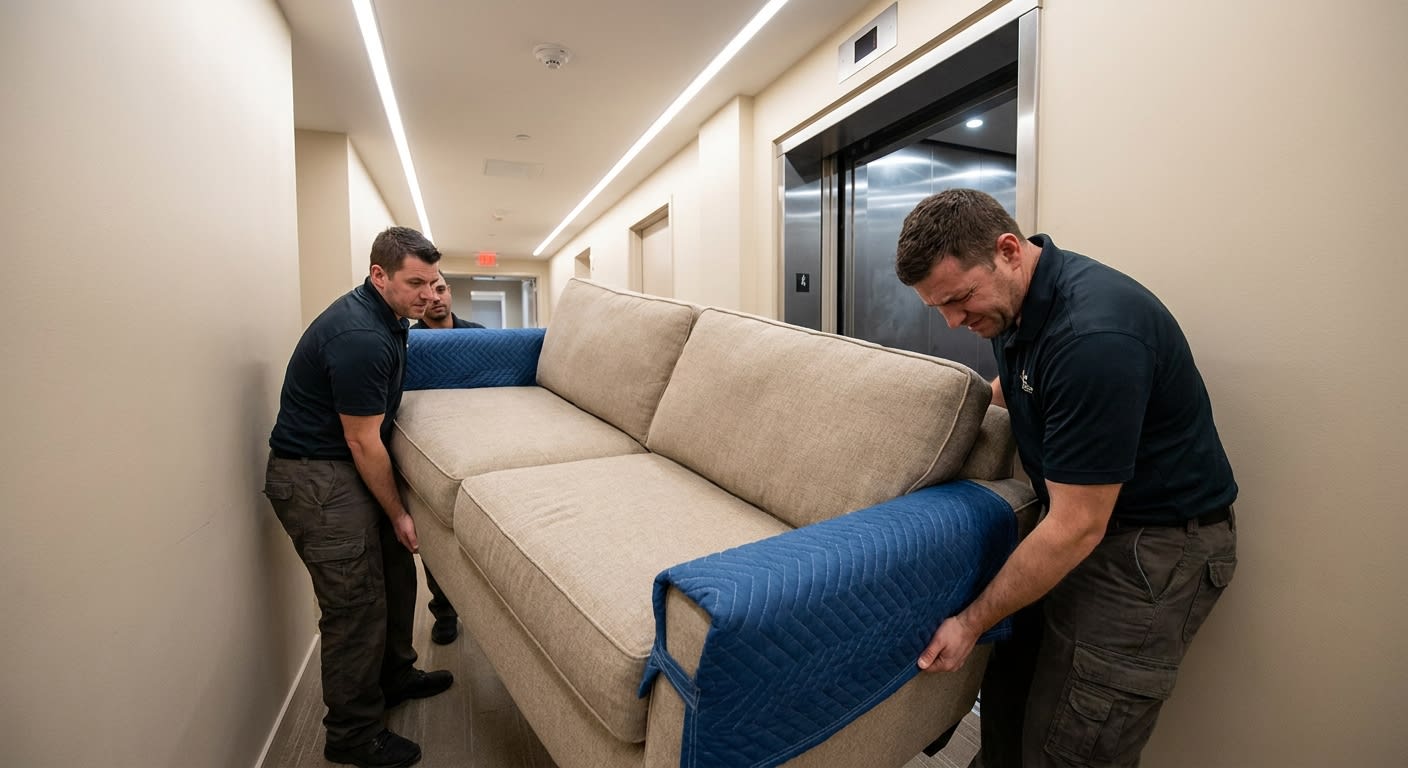
Oversized furniture: That 10-foot sectional sofa looked great in the showroom, but will it fit in the freight elevator? Standard DTLA freight elevators have interior dimensions around 6' x 8' with ceiling heights of 9-10 feet. I've disassembled countless sectionals, removed sofa legs, and tilted pieces diagonally to make them fit. For clients considering furniture purchases, I recommend measuring the freight elevator before buying anything longer than 84 inches.
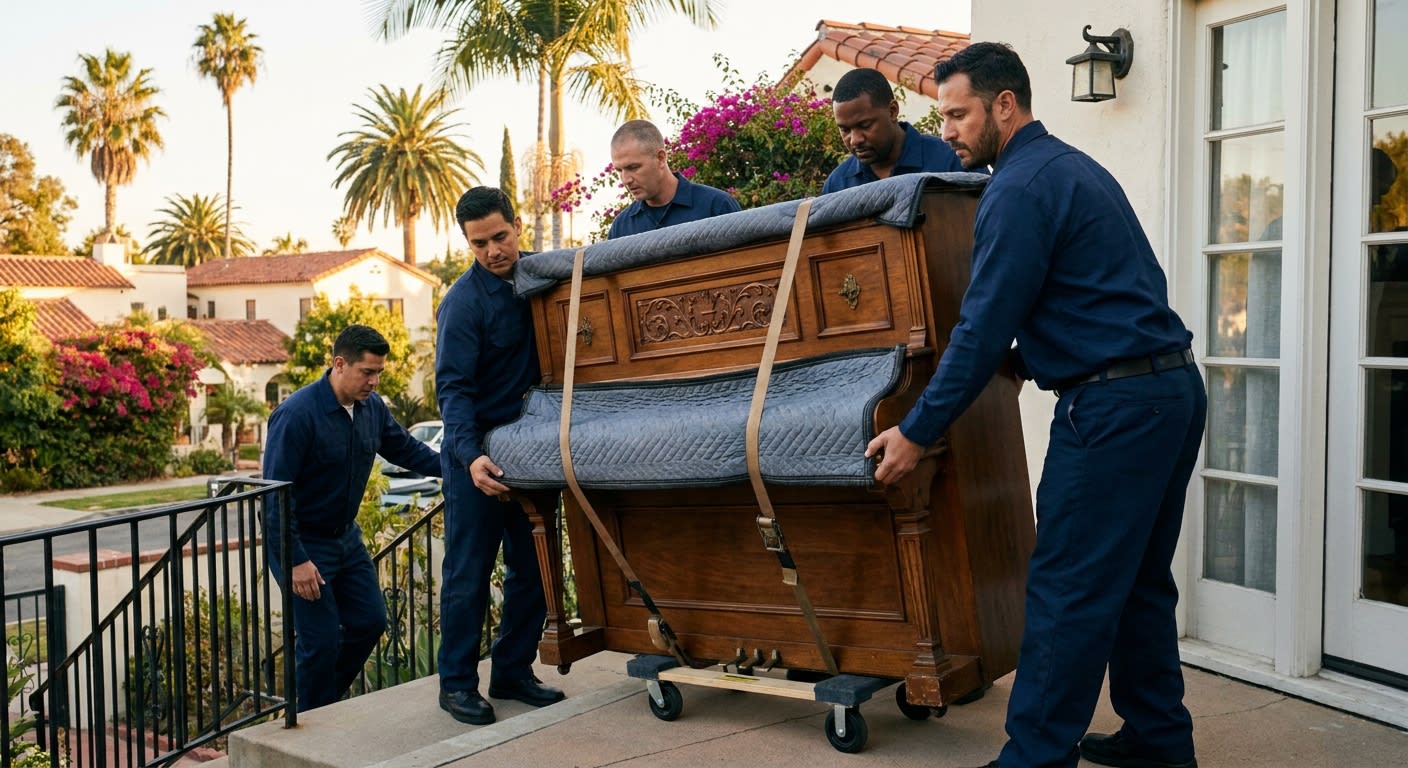
Pianos: A high-rise piano move is a specialty job. Grand pianos can weigh 700-1,200 pounds and require specific positioning to fit through elevator doors. As I covered in my piano moving guide, we use piano boards, leg removal, and precise weight distribution across four crew members. I always verify the freight elevator weight capacity before accepting a high-rise piano job—most handle up to 3,500 pounds, which provides adequate margin, but older buildings sometimes max out at 2,000 pounds.
Artwork and mirrors: Vibration in freight elevators can damage large framed pieces. I use custom-built mirror boxes and corner protectors for anything over 36 inches. For gallery-quality artwork, my colleague Sarah's guide to packing materials covers the acid-free paper and foam corners we use. Transport orientation matters too—large pieces travel vertically whenever possible to minimize stress on frames.
Appliances: Refrigerators need to remain upright during transport to avoid compressor damage. In freight elevators with height limitations, this sometimes means removing refrigerator doors. Washers and dryers require transit bolts reinstalled before moving—most people throw these away after installation, so check your building's storage room or order replacements before moving day.
Timing Your High-Rise Move
When you schedule matters almost as much as how you prepare. First of the month is chaos in DTLA—everyone's lease starts on the 1st, and you're competing for elevator reservations with a dozen other move-ins. I recommend clients negotiate lease start dates on the 2nd through the 5th when possible. You'll have more reservation flexibility and shorter waits at the loading dock.
Time of day matters too. Morning moves (7 AM or 8 AM starts) beat afternoon moves almost every time. Building traffic is lighter, the loading dock is less congested, and if something goes wrong, you have the rest of the day to troubleshoot. Afternoon reservations often get squeezed by earlier moves running over or evening retail deliveries claiming dock space.
Seasonally, January through March sees the lowest move volume in DTLA. If you have flexibility, winter moves mean better pricing, easier reservations, and less stress all around. Summer months—particularly June through August—are peak season when every building has multiple moves scheduled daily.
Costs Specific to High-Rise Moving
High-rise moves in Downtown LA cost more than standard residential moves, and understanding why helps you budget accurately. At Green Moving LA, our rates start from $129/hour, but high-rise jobs typically require:
Larger crews: A standard 2-bedroom apartment might need two movers. The same apartment on the 35th floor of a DTLA tower needs three or four movers to shuttle items between the truck, loading dock, freight elevator, and unit efficiently within the reservation window.
Extended labor time: Freight elevator wait times, long hallway distances, and strict building protocols add 20-40% to move duration compared to ground-floor or low-rise moves.
Building fees: Many DTLA buildings charge move-in fees ranging from $250 to $750 as of 2026. These cover elevator reservation, common area wear, and building staff time. Some buildings also require refundable damage deposits ($500-$1,000) that you get back after a post-move inspection.
Specialized equipment: Piano boards, oversized mirror boxes, and extra protective materials add to the bill for clients with challenging inventory.
For a typical 2-bedroom high-rise move in DTLA—let's say 25th floor, standard furniture, no piano—I usually estimate 5-7 hours with a 3-person crew. That's roughly $1,200-$1,800 for labor before building fees and packing materials. Larger units or higher floors push those numbers up accordingly. I break down LA moving costs more broadly in our complete pricing guide.
Building-Specific Tips for Popular DTLA Towers
Every DTLA building has quirks. Here are patterns I've observed across building types:
Luxury towers (30+ floors, built after 2015): Generally have efficient freight elevators, professional management, and reasonable reservation systems. Expect higher COI requirements and stricter security protocols. Loading docks are usually purpose-built and accessible.
Mid-rise lofts (Arts District, industrial conversions): Freight elevators are often original to the building—slow but spacious. Hallways tend to be wider, which helps with oversized items. Loading dock situations vary wildly; some have dedicated docks, others require street loading.
Historic conversions (pre-war office buildings): Charming but challenging. Narrow corridors, smaller elevators, and unusual floor plans. The Eastern Columbia Building, for example, has beautiful Art Deco details but freight elevator dimensions that require creative maneuvering for larger furniture pieces.
Mixed-use towers: Buildings with retail or office space on lower floors often have shared loading docks with commercial tenants. Morning delivery windows can conflict with residential move-ins. Schedule early and expect some dock competition.
FAQ
How far in advance should I reserve the freight elevator?
I recommend reserving at least 2-3 weeks before your move date, especially if you're moving on a weekend or at the beginning of the month. Popular buildings book up quickly, and you want your preferred time slot. Some buildings require even more notice—check with your property manager as soon as you have a confirmed moving date.
What happens if my move runs over the elevator reservation time?
Policies vary by building. Some charge overtime fees ($50-$150 per hour), others force you to vacate the elevator and reschedule the remainder of your move for another day. I build buffer time into my estimates specifically to avoid this situation. If we're approaching the reservation end time and items remain, I'll prioritize getting essentials into your unit and work with building management on options.
Can I move into a DTLA high-rise on weekends?
Many buildings allow Saturday moves, though often with restricted hours (8 AM-2 PM is common). Sunday moves are less frequently permitted—about half the buildings I work with prohibit them entirely. Always verify weekend availability before signing your lease if weekend moving is important to you.
Do I need to be present for the entire move?
Building security typically requires the resident to check in the moving crew at the start of the day. After that, you can usually leave us to work while you handle other moving-day tasks. I do recommend being present at the end to walk through your unit with us, verify item placement, and sign off on the move before we leave.
What if my furniture doesn't fit in the freight elevator?
This happens more often than you'd think. For oversized pieces, I'll first try disassembly—removing legs, separating sectional sections, or taking doors off armoires. If an item truly can't fit, options include hoisting through a window (requires city permits and special equipment) or, in some cases, acknowledging that the piece isn't suited for your new space. I always recommend clients measure critical furniture against freight elevator dimensions before moving day.
Are there any items high-rise buildings prohibit during moves?
Some buildings have restrictions on propane tanks, gasoline-powered equipment, and certain chemicals. I've also encountered buildings that prohibit moving crew members from transporting plants through common areas due to pest concerns. Your building's move-in packet should detail any restrictions—read it carefully and flag anything on the prohibited list for discussion.
Ready to Move?
High-rise moving in Downtown LA requires specialized knowledge, proper equipment, and meticulous coordination with building management—but it doesn't have to be stressful when you work with a team that knows these buildings inside and out. Green Moving LA serves Los Angeles and Orange County with crews experienced in every major DTLA tower. Call (949) 266-9445, email sales@greenmovingla.com, or get your free quote today. Licensed and insured—CAL-T 201327.