How to Move Antique Furniture in Los Angeles Without Damage
- Understanding What Makes Antique Furniture Vulnerable
- Climate Considerations Specific to Los Angeles Moves
- The Right Materials Make All the Difference
- Disassembly: When to Do It and When to Leave It Alone
- Lifting and Carrying Techniques for Antique Pieces
- Loading and Securing in the Truck
- Special Categories: What Requires Extra Expertise
- Working With LA's Unique Moving Challenges
- Insurance and Documentation for Valuable Antiques
- After the Move: Positioning and Ongoing Care
- Frequently Asked Questions
- Ready to Move Your Antiques Safely?
Three weeks ago, I moved a 1780s Philadelphia highboy from a collector's estate in Hancock Park to a climate-controlled storage facility in Glendale. The piece weighed 340 pounds, stood nearly seven feet tall, and had original brass hardware that the owner's family had maintained for six generations. One scratch, one dent, one moment of carelessness—and I'd be responsible for damaging something irreplaceable. That's the weight I carry on every antique move, and it's why I've developed systems that leave nothing to chance.
I'm Marcus, Head of Operations at Green Moving LA, and I've spent over a decade moving some of the most valuable and delicate furniture pieces in Southern California. From French armoires in Beverly Hills mansions to mid-century modern collections in Palm Springs, I've handled pieces valued from a few thousand dollars to well over six figures. Let me walk you through exactly how my crew and I move antique furniture in Los Angeles without damage—because the techniques matter as much as the care.
Understanding What Makes Antique Furniture Vulnerable
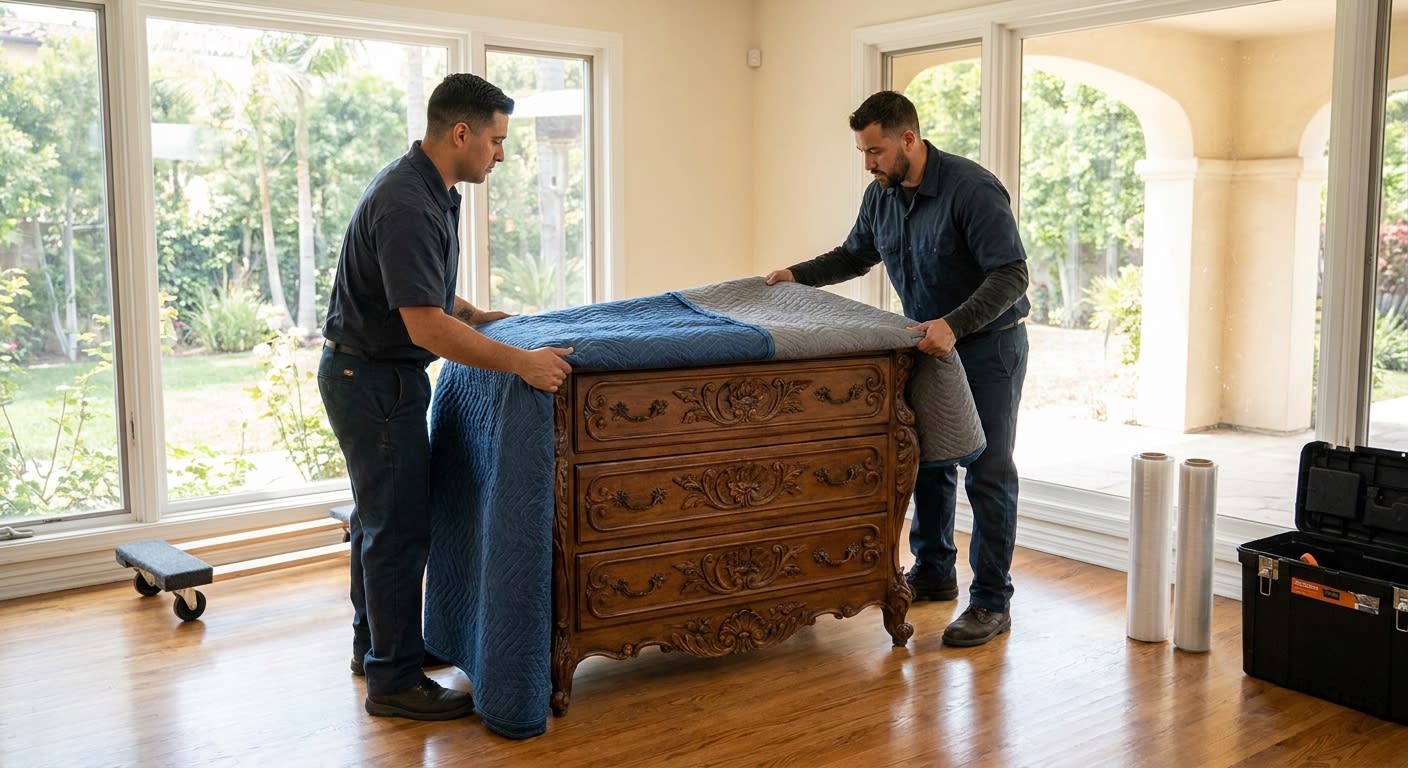
Before I touch any antique piece, I assess its specific vulnerabilities. Age alone doesn't determine fragility—construction method, wood type, and previous repairs all factor in. A solid oak mission-style piece from 1910 handles differently than a delicate Rococo Revival table from 1860 with its ornate carved details and hide glue joints.
Here's what I look for during my pre-move assessment. First, I check for loose joints. Antique furniture was typically assembled with mortise-and-tenon joints held by hide glue, which weakens over time. I gently rock each piece to identify any movement. Second, I examine veneer condition—lifted edges, bubbling, or cracks indicate areas that need extra protection. Third, I document existing damage with photographs. This protects both the owner and my crew if there's any dispute about pre-existing conditions.
Wood type matters significantly. Mahogany, walnut, and rosewood are relatively stable, but softer woods like pine or poplar dent easily. Marquetry and inlay work require extreme care because the different wood pieces expand and contract at different rates. I once moved a Dutch marquetry cabinet where the owner hadn't realized that three inlay pieces were already loose—my documentation saved us from a very uncomfortable conversation.
The finish tells its own story. Shellac finishes from the 19th century can be damaged by alcohol-based products or even prolonged contact with certain plastics. Lacquer finishes chip easily. Original milk paint is increasingly rare and valuable. I train my crew to never place tape directly on any antique finish, period.
Climate Considerations Specific to Los Angeles Moves
Moving antique furniture in Los Angeles presents unique challenges that movers in other regions don't face. Our climate varies dramatically between neighborhoods—a piece moving from a climate-controlled home in coastal Santa Monica to the San Fernando Valley will experience a significant humidity and temperature shift.
As of 2026, we're seeing more extreme temperature variations during summer moves. Last July, I moved a collection of Victorian furniture from a Brentwood estate to a new home in Pasadena. The temperature difference between the air-conditioned origin and the 98-degree loading zone was over 30 degrees. Rapid temperature changes cause wood to expand and contract, stressing joints and potentially cracking finishes.
My approach involves acclimatization windows. For particularly valuable pieces, I recommend the client turn off air conditioning in the room containing the furniture 24 hours before the move. This gradual temperature adjustment reduces thermal shock. At the destination, we position pieces away from direct sunlight and HVAC vents for the first week.
Humidity is the silent threat. Coastal areas like Manhattan Beach average 65-70% humidity, while inland areas like Riverside drop to 30-40%. Wood absorbs and releases moisture constantly. A drawer that slides smoothly in Santa Monica might stick in Pasadena—or worse, joints might loosen as wood shrinks. I always discuss these factors with clients moving valuable antiques between climate zones.
The Right Materials Make All the Difference
I'm particular about packing materials because I've seen what the wrong choices can do. Standard moving blankets work for most furniture, but antiques require additional considerations.
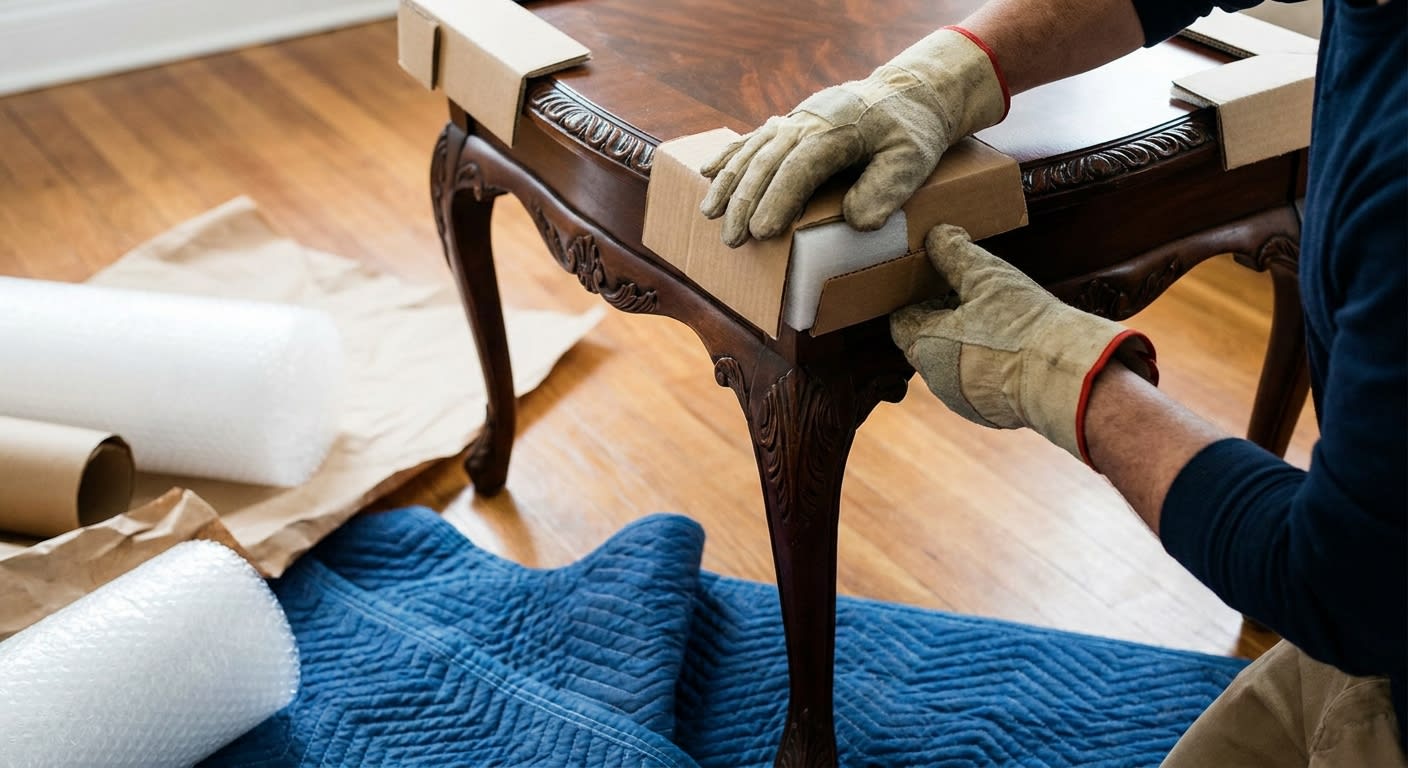
Acid-free tissue paper goes between any surface and protective wrapping. Regular paper and cardboard contain acids that can stain or damage finishes over time—even during a short move. For pieces with intricate carvings or applied decorations, I use cotton batting secured with twill tape, never rubber bands that can leave marks.
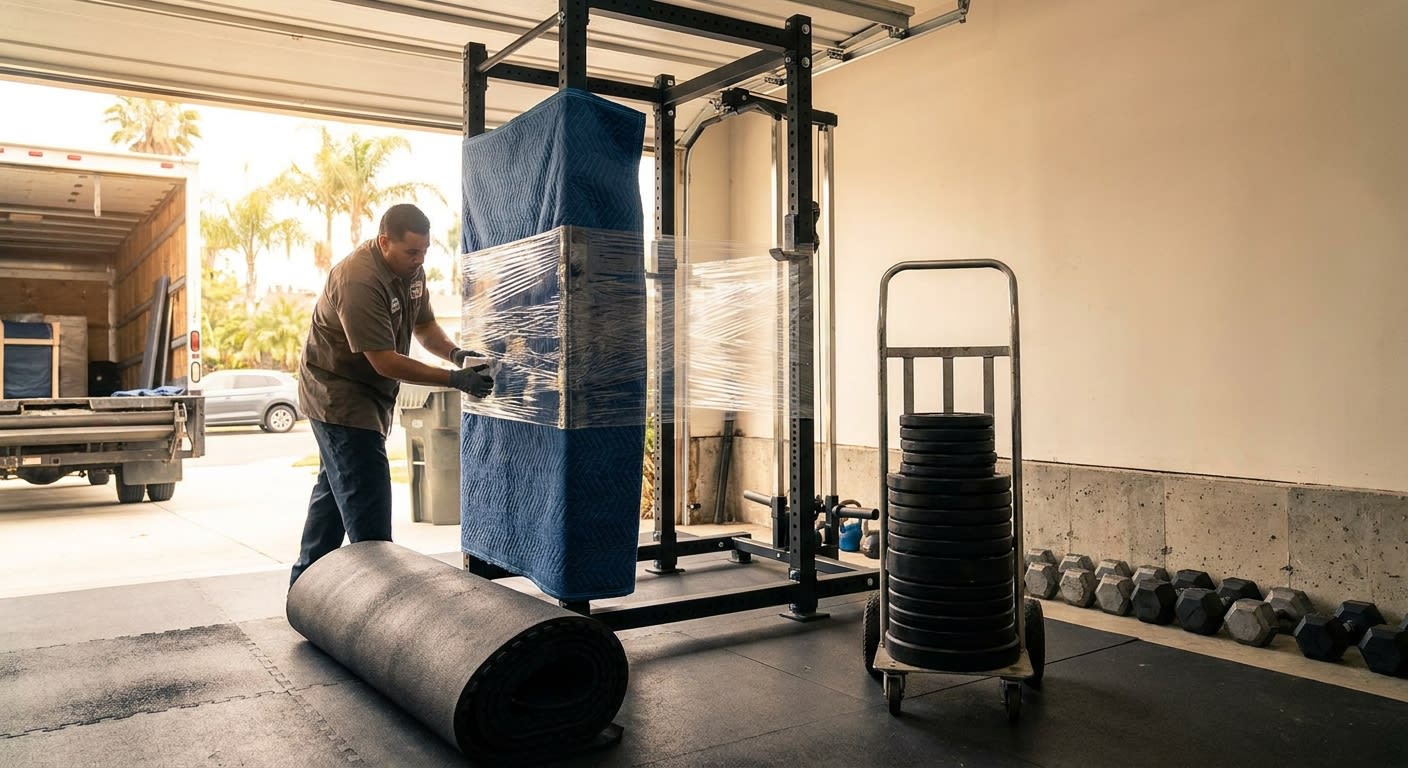
Stretch wrap has its place, but never directly on wood surfaces. The plastic can react with finishes, especially in warm temperatures. I wrap pieces in clean cotton sheets or acid-free paper first, then apply stretch wrap over that protective layer to hold padding in place.
Custom crating becomes necessary for pieces over a certain value or fragility threshold. I built a custom plywood crate lined with foam for that Philadelphia highboy I mentioned—the $400 crating cost was insignificant compared to the piece's value and the owner's peace of mind. For moves involving multiple antiques or extremely valuable pieces, our white glove services include custom crating as standard.
Corner protectors are essential but must be the right type. Hard plastic corners can crack fragile wood; I prefer padded foam corners for antiques. For pieces with protruding carved elements, I fashion custom padding from closed-cell foam cut to fit the specific contours.
📦 Need your antiques handled with museum-level care? Our white glove moving team specializes in high-value and irreplaceable pieces. Call (949) 266-9445 or request your free consultation.
Disassembly: When to Do It and When to Leave It Alone
Here's where experience really matters. Some antiques should be partially disassembled for safe transport; others should never be taken apart. Making the wrong call can cause more damage than the move itself.
Removable elements that should come off include: table leaves, pedestal table bases (if designed to separate), removable marble tops, mirror glass from frames, and drawers from case pieces. These components are designed to separate and travel more safely individually.
What stays together: any joint held by original hide glue, legs that aren't designed to detach, and any element where disassembly would stress the piece. I've seen well-meaning owners try to remove table legs that were never meant to come off—the resulting damage required professional restoration.
For pieces with removable elements, I bag and label all hardware immediately. Original brass pulls, hinges, and escutcheons are often impossible to replace. Each bag gets labeled with the piece name and hardware location. I photograph the hardware in place before removal as a reassembly reference.
Drawers require special handling. I remove them, wrap them individually, and transport them separately. A 200-pound dresser is much easier to maneuver without the added weight and movement of drawers sliding during transport. Plus, drawer contents can shift and damage the piece from the inside.
Lifting and Carrying Techniques for Antique Pieces
This is where my crew's training becomes critical. Antique furniture cannot be handled like modern pieces. The techniques that work for an IKEA bookshelf will destroy a Georgian secretary desk.
Never lift by protruding elements. That means no grabbing carved crests, finials, arms, or decorative aprons. These elements are attached with methods designed to resist downward gravity, not horizontal or upward force. I've seen chair arms snap off when lifted incorrectly—a repair that cost the moving company thousands.
Support comes from structural elements: the main frame, seat rails on chairs, the base on case pieces. For tables, we lift from the apron or frame, never by the top alone. Tops are often attached with wooden buttons or clips that allow for wood movement; lifting by the top alone can separate it from the base.
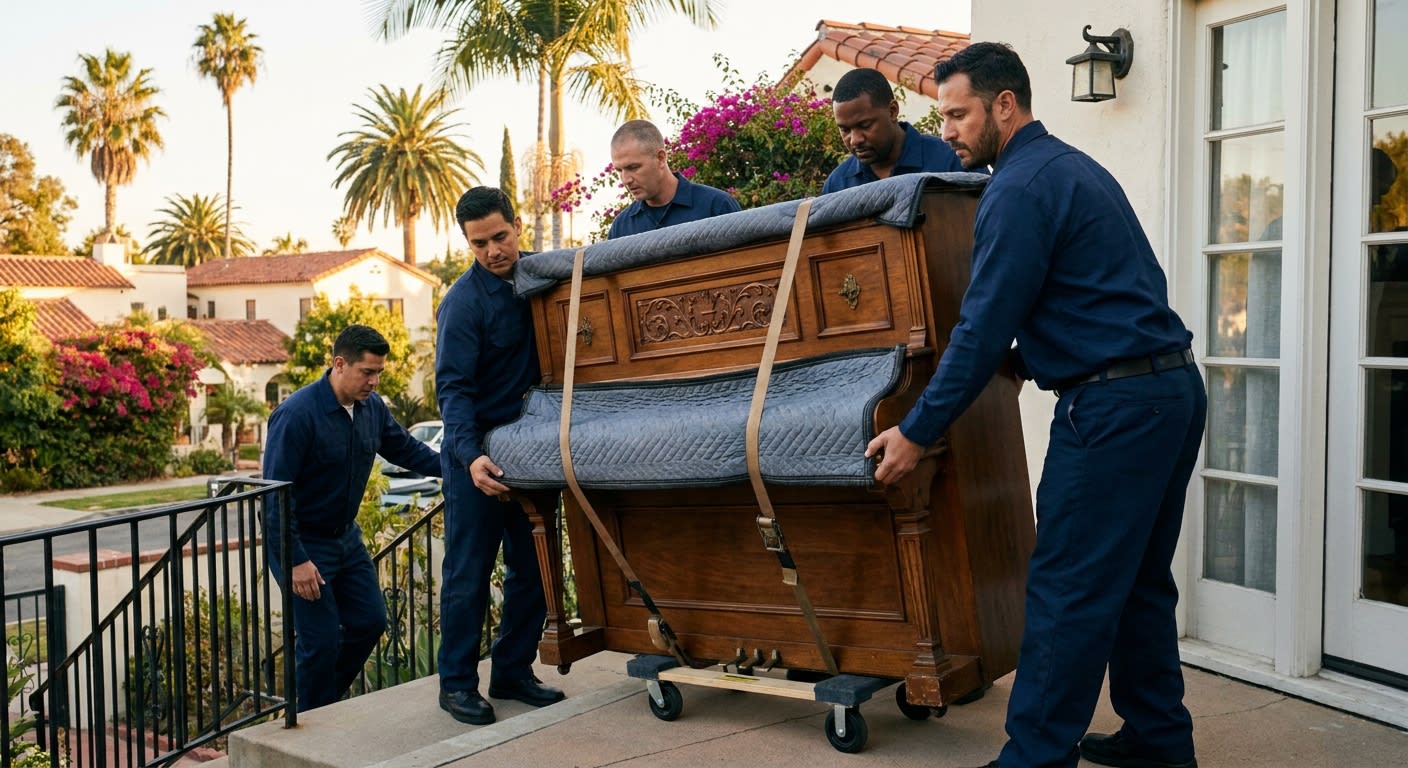
My crew uses proper two-person lifting techniques for anything over 50 pounds. We communicate constantly: "lifting," "moving left," "setting down." This coordination prevents the jerky movements that stress joints. For extremely heavy pieces like armoires or tall case clocks, we use furniture dollies with rubber wheels that won't mark floors.
Stairs present the greatest challenge. We always move antiques up stairs with the heavier end at the bottom and down stairs with the heavier end at the top. This positioning keeps gravity working with us, not against us. In multi-story LA homes with narrow staircases—common in older neighborhoods like Windsor Square or Angelino Heights—we sometimes need to bring in a four-person crew for safe handling.
Loading and Securing in the Truck
How pieces are loaded and secured determines whether they arrive safely. I've developed a loading protocol specifically for antique moves that differs from standard practices.
Antiques load last and unload first. This minimizes the time they spend in the truck and ensures they're positioned where I want them—against the truck wall in the front third of the cargo area, where vibration and movement are minimized. The back of the truck experiences the most bounce on LA's notoriously potholed streets.
Weight distribution matters. Heavy pieces go on the floor; lighter pieces can be carefully elevated on padded shelving or stacked case pieces (only when appropriate). Nothing ever stacks directly on an antique—only on reinforced surfaces I've verified can handle the load.
I use a combination of ratchet straps and furniture pads to secure pieces without pressure points. Straps never contact wood directly; they go over protective padding at angles that prevent shifting without crushing. For tall pieces, I use additional overhead straps to prevent tipping.
Climate control extends to the truck. For summer moves, we start the truck's air conditioning 30 minutes before loading. For valuable collections, we've invested in climate-monitored trucks that maintain consistent temperature and humidity. It's one of the ways we put our 1% environmental commitment into practice—newer, efficient trucks with proper climate systems reduce both emissions and damage risk.
Special Categories: What Requires Extra Expertise
Certain antique furniture categories require specialized knowledge beyond general best practices.
Tall case clocks (grandfather clocks): These are among the most complex pieces to move. The movement must be secured or removed by a clock specialist before transport. Pendulums and weights always come out. The case itself is often extremely top-heavy and can tip unexpectedly. I always recommend hiring a clock specialist to prepare the piece for moving—we handle the transport, they handle the mechanism.
Upholstered antiques: Original horsehair stuffing and antique fabrics are irreplaceable. We never use plastic directly against old textiles; it traps moisture and can cause mildew. Tyvek or cotton sheeting provides breathable protection. For particularly fragile upholstery, I recommend temporary protective covers made by a textile conservator.
Antique beds: Many antique beds use wooden pegs or bolts that have seized over decades. Forcing them can crack rails or posts. I apply penetrating oil to stuck hardware and allow time for it to work before attempting disassembly. Original rope bed frames require specific reassembly knowledge—the rope must be tightened in a particular pattern.
Veneered pieces: Los Angeles heat can devastate old veneer. Transport during early morning hours when possible, and never leave a veneered piece in a parked truck. I've seen veneer bubble and lift from just 30 minutes in an unattended vehicle on a warm day.
For extremely specialized pieces like those requiring art handling protocols, my colleague covers the approach in our guide to piano moving in Los Angeles—the principles of protecting irreplaceable items overlap significantly.
Working With LA's Unique Moving Challenges
Moving antique furniture in Los Angeles means navigating challenges specific to our region. Narrow canyon roads, buildings without elevators, and HOA restrictions all complicate antique moves.
Street parking permits are essential in many LA neighborhoods. In areas like Silver Lake or Echo Park, parking a moving truck often requires a permit from LA DOT, especially for the extended loading times antique moves require. I file permits at least 72 hours in advance—rushing an antique move because of parking time limits is a recipe for damage.
Building access in high-rise condos and historic apartment buildings requires advance coordination. Many buildings in the Wilshire Corridor restrict moving to specific days and hours. Freight elevator dimensions limit what can fit—I measure elevator interiors during my pre-move assessment. The beautiful old buildings along Rossmore Avenue have notoriously small service elevators that challenge large antique transport.
For homes in the hills—whether Hollywood Hills, Laurel Canyon, or Pacific Palisades—steep driveways and tight turns require specific truck choices. Our 16-foot trucks navigate most residential streets, but some locations need a smaller vehicle with subsequent shuttle trips. Planning this in advance prevents the nightmare of discovering your armoire won't fit around the hairpin in your driveway.
If you're new to LA and planning a move involving antiques, as covered in our first-time mover's survival guide, understanding local logistics is crucial for protecting valuable pieces.
Insurance and Documentation for Valuable Antiques
Standard moving insurance—released value protection at 60 cents per pound—is laughably inadequate for antiques. A 50-pound side table worth $15,000 would be covered for just $30 under basic coverage. I always discuss insurance options thoroughly with clients moving valuable pieces.
Full value protection through the moving company offers better coverage but has limitations. As of 2026, most carriers cap full value protection at declared values up to $50,000 without additional underwriting. For collections exceeding that threshold, third-party moving insurance from specialty providers offers more comprehensive coverage.
Documentation protects everyone. I photograph each piece from multiple angles before wrapping, after wrapping, during loading, and after delivery. This photographic record proves condition at every stage. For pieces over $10,000 in value, I recommend clients obtain an independent appraisal dated within the past year—it establishes value for insurance purposes and provides detailed condition documentation.
Our full service moving option includes detailed inventory documentation and photographs as standard for antique moves. The small additional investment provides significant protection for valuable pieces.
After the Move: Positioning and Ongoing Care
My job doesn't end when the piece is in place. How antiques are positioned in their new home affects their long-term condition.
Keep antiques away from direct sunlight. UV exposure fades finishes and dries wood. In LA's abundant sunshine, this means positioning pieces away from west-facing windows or using UV-filtering window treatments. I've seen beautiful patinas destroyed by a year of afternoon sun exposure.
Distance from HVAC vents matters. The dry air from heating and cooling systems can crack wood and loosen joints. I recommend at least four feet between antique furniture and any vent. If that's not possible, redirect the vent or use a deflector.
Allow the piece to acclimate before using. Drawers may stick or loosen as wood adjusts to the new environment's humidity. Give it two weeks before deciding anything needs adjustment. Many "problems" resolve themselves once the wood stabilizes.
Consider ongoing climate control. For truly valuable collections, a whole-house humidifier or room-specific climate control system protects your investment. The roughly $300-500 annual cost of maintaining proper humidity levels is insignificant compared to restoration costs from climate damage.
Frequently Asked Questions
How much does it cost to move antique furniture in Los Angeles?
Antique furniture moving costs more than standard moving because of the additional time, materials, and expertise required. At Green Moving LA, antique moves typically start from $129/hour for a two-person crew, with most jobs requiring additional padding materials and often custom crating. A single large piece like an armoire might take 2-3 hours to properly pack and transport; a collection of antiques could require a full day. I provide detailed quotes after assessing the specific pieces involved.
Should I hire a regular moving company or an antique specialist?
For truly valuable or irreplaceable pieces, you need movers with specific antique handling experience—not just strong backs. Ask any moving company about their antique training, materials, and insurance coverage before booking. A company that hesitates or offers vague answers isn't equipped for the job. I've repaired many pieces that were damaged by well-meaning movers who didn't understand what they were handling.
Can antique furniture be stored during a move?
Yes, but only in climate-controlled storage. Standard storage units experience temperature swings that damage wood and finishes. I recommend facilities that maintain temperatures between 65-75 degrees and humidity between 40-55%. Your antiques should be wrapped in breathable materials—never plastic—and elevated off concrete floors on pallets or shelving.
What's the most common mistake people make when moving antiques themselves?
Using improper materials, particularly tape directly on surfaces and plastic wrap without a protective barrier. I've seen tape pull off original finish, and I've seen plastic-wrapped pieces develop moisture damage during a move of less than five miles. The second most common mistake is lifting by decorative elements rather than structural components—this causes breaks that are expensive to repair properly.
How do I find a reputable antique furniture restorer in LA if something does get damaged?
The best restorers work on referral. Ask antique dealers on La Cienega's Antique Row or in the Pasadena area—they know who does quality work. Good restoration isn't cheap, often running $100-200 per hour for skilled craftspeople, but the difference between proper restoration and amateur repair is immediately visible and dramatically affects value.
Do I need to be present during an antique move?
I strongly recommend it, especially for the pre-move assessment and final placement. You know your pieces best—you can point out previous repairs, sticky drawers, or wobbly elements that I need to know about. Your presence also ensures pieces end up exactly where you want them, minimizing the need to move them again later.
Ready to Move Your Antiques Safely?
Ready to move antique furniture in Los Angeles without risking damage? Green Moving LA serves Los Angeles and Orange County with specialized antique handling expertise. Call (949) 266-9445, email sales@greenmovingla.com, or get your free quote. Licensed and insured—CAL-T 201327.