How to Move a Gun Safe in Los Angeles: 2026 Expert Guide
- Understanding Gun Safe Weight Classes and What They Mean for Your Move
- Essential Equipment for Safe Gun Safe Moving
- The Step-by-Step Process My Crew Uses
- California-Specific Considerations for Gun Safe Moves in 2026
- Common Mistakes I See Homeowners Make
- Cost Factors for Gun Safe Moving in Los Angeles
- Preparing Your Home for Gun Safe Moving Day
- When to Consider Professional Rigging Services
- After the Move: Proper Safe Installation
- FAQ
Two weeks ago, my crew and I moved a 1,400-pound Liberty Presidential safe from a second-floor master bedroom in Brentwood down to a converted garage workshop in Torrance. The homeowner had purchased the safe fifteen years ago and had it craned through a window during original installation—that window was now blocked by a bathroom addition. We had to remove the door from its hinges, build a custom ramp system down the staircase, and use a stair-climbing dolly rated for 1,800 pounds. The move took four hours and three crew members. That's gun safe moving in Los Angeles.
I'm Marcus, Head of Operations at Green Moving LA, and I've personally supervised over 200 gun safe relocations across Los Angeles and Orange County since 2022. Gun safes aren't just heavy—they're dense, awkward, and unforgiving. One wrong move can destroy hardwood floors, crack tile, or send 800 pounds of steel tumbling down a staircase. I'm going to walk you through exactly how we approach these moves in 2026, what equipment we use, and what you need to know before your safe goes anywhere.
Understanding Gun Safe Weight Classes and What They Mean for Your Move
The first thing I do when a client calls about moving a gun safe is ask for the model number. Weight determines everything—crew size, equipment, timeline, and cost. Here's how I break down the weight classes based on what I see in the field:
Light safes (under 500 pounds): These are typically small residential models, 12-24 gun capacity. A two-person crew with a standard heavy-duty appliance dolly can handle these. We're looking at Stack-On, Cannon, and entry-level Liberty models. These are the safes most people buy from sporting goods stores. Moving one from a ground-floor location takes about 45 minutes to an hour.
Medium safes (500-800 pounds): This is where things get serious. We're talking about mid-range Liberty, Browning, and Fort Knox models with 30-48 gun capacity. These require a three-person crew minimum, a reinforced dolly, and careful floor protection. If there are stairs involved, I'm bringing the stair-climbing equipment.
Heavy safes (800-1,200 pounds): Premium models from Liberty, Browning ProSteel, and American Security. Four-person crew, stair-climbing dolly mandatory for any elevation changes, and I'm personally on-site for these. We moved a 1,100-pound Browning Medallion out of a basement in Sherman Oaks last month—it took us three hours just to get it up the stairs.
Ultra-heavy safes (1,200+ pounds): These are vault-class units. Liberty Presidential, Fort Knox Defender, custom builds. I've seen safes hit 2,500 pounds. These moves require specialized rigging equipment, sometimes structural assessment of flooring, and occasionally crane service for exterior lifts. I quote these individually after an in-person assessment.
Essential Equipment for Safe Gun Safe Moving
I don't show up to a gun safe move with a furniture dolly and hope for the best. Here's the equipment my crew uses on every gun safe relocation:
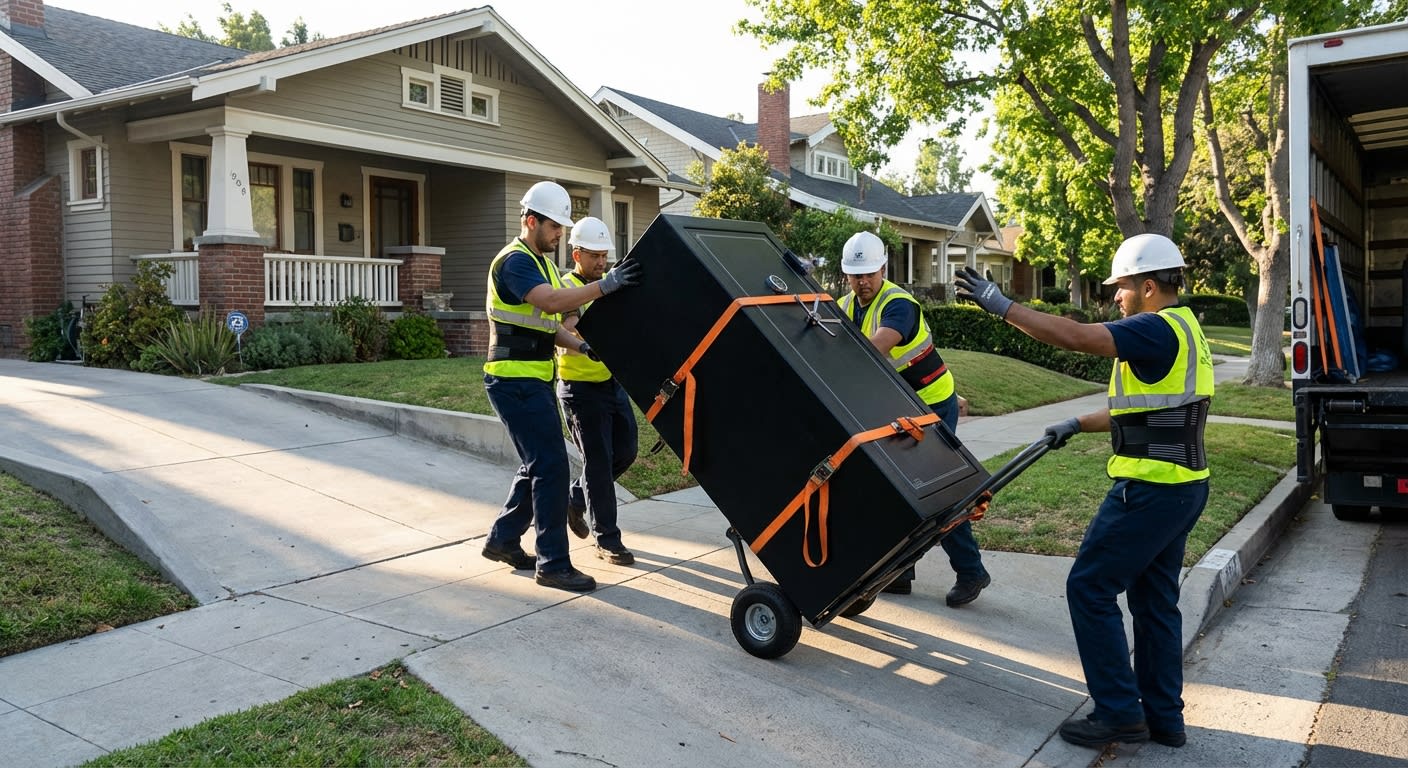
Heavy-duty appliance dolly: Our primary dollies are rated for 1,200 pounds with pneumatic tires. The pneumatic tires matter—they absorb shock and provide traction on uneven surfaces. A solid-wheel dolly will skip and slide on concrete driveways.
Stair-climbing dolly: For any move involving stairs, we use electric stair-climbing dollies rated for 1,800 pounds. These have motorized tracks that grip each stair tread. The operator controls descent speed. Without this equipment, moving a 900-pound safe down a flight of stairs is genuinely dangerous.
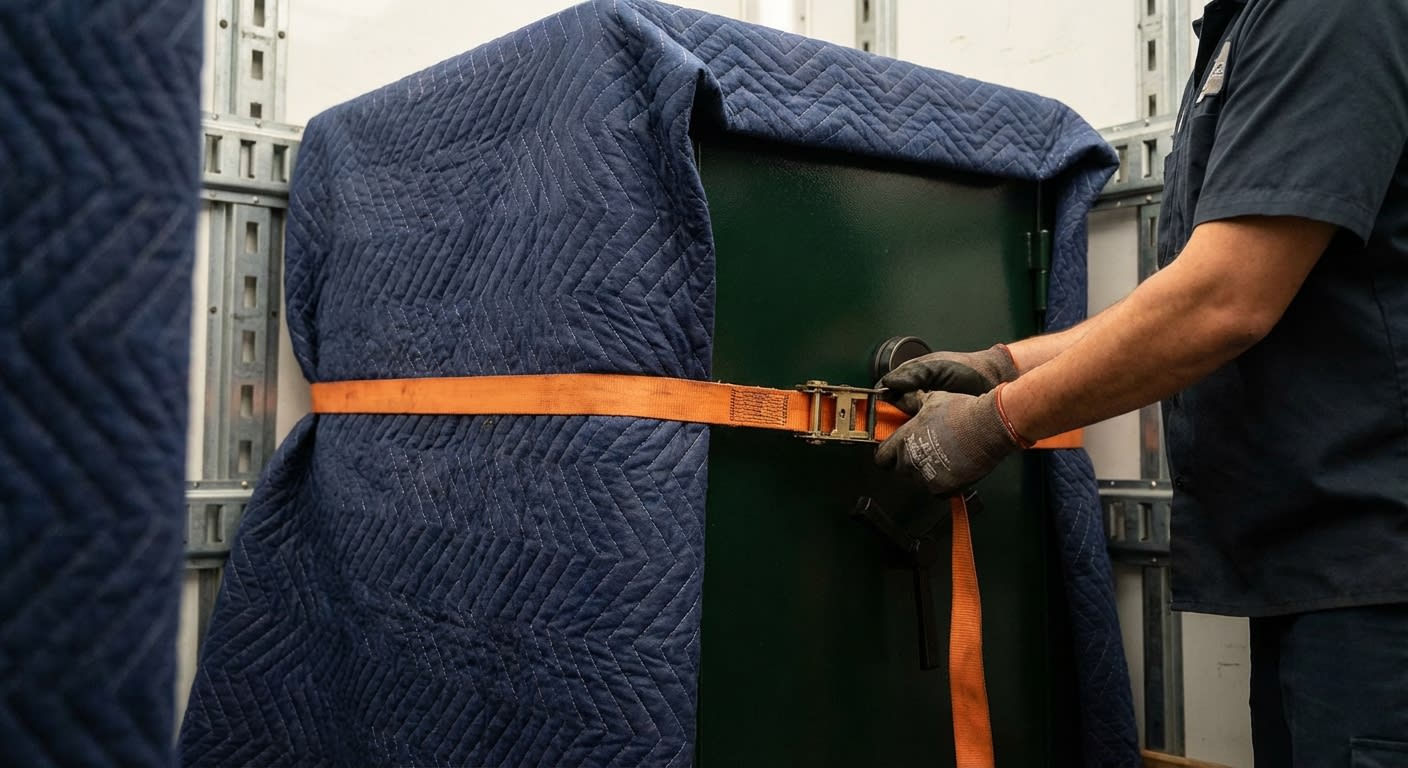
Ratchet straps: We use 2-inch ratchet straps rated for 3,000 pounds working load. The safe gets strapped to the dolly at two points minimum—around the body and around the base. I've seen crews use bungee cords. Don't do that.
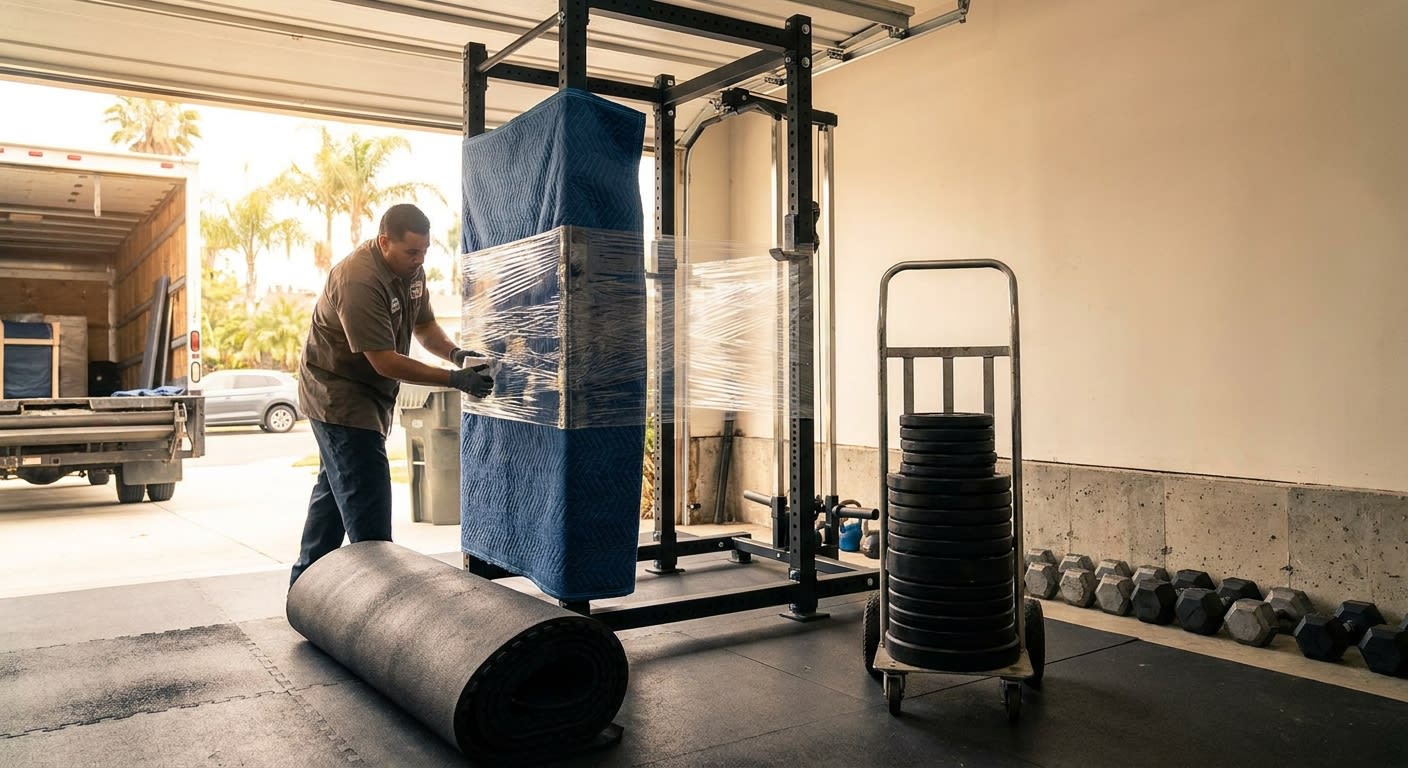
Moving blankets and corner protectors: Gun safes have sharp edges and hard finishes. We wrap every safe in moving blankets secured with shrink wrap. Corner protectors go on door frames and wall corners along the path.
Floor protection: Masonite sheets, carpet film, and furniture sliders. A gun safe on a dolly will crack tile, dent hardwood, and tear carpet. We lay down protection on every surface the dolly crosses.
Door removal tools: Safe doors can weigh 200-400 pounds on their own. On heavy safes, we sometimes remove the door to reduce weight and lower the center of gravity. This requires specific knowledge of the safe's hinge system—some are internal, some are external, and some require the combination to be entered before removal.
The Step-by-Step Process My Crew Uses
Here's exactly how we approach a gun safe move, using a recent job as an example. Last month we moved an 850-pound Liberty Centurion from a home office in Pasadena to a new residence in Arcadia.
Step 1: Pre-move assessment. I visited the Pasadena home three days before the move. I measured doorways (the narrowest was 32 inches—the safe was 28 inches wide), checked floor surfaces, counted stairs (seven steps down to the garage), and identified the path to the truck. I also confirmed the destination layout in Arcadia.
Step 2: Content removal. On moving day, the homeowner had already removed all firearms and ammunition. This is non-negotiable—we don't move loaded safes, and California law has specific requirements about transporting firearms that the owner must handle separately. Removing contents also reduces weight by 50-150 pounds typically.
Step 3: Floor protection installation. My crew laid Masonite sheets from the safe's location through the hallway and down the stairs. We taped carpet film over the Masonite on carpeted areas. Total setup time: 25 minutes.
Step 4: Safe preparation. We wrapped the safe in moving blankets, secured with shrink wrap. We applied corner protectors to all door frames along the path. We removed the safe door (this particular Liberty model has external hinges accessible with the door open), reducing the total weight by approximately 280 pounds.
Step 5: Tilting and loading. With a four-person crew, we tilted the safe body onto the heavy-duty dolly. Two crew members controlled the tilt while two positioned the dolly. Once loaded, we secured the safe with two ratchet straps.
Step 6: Transport to truck. We rolled the safe through the hallway, then transferred to the stair-climbing dolly for the seven steps to the garage. The stair climber took about four minutes to descend. From the garage, we used the standard dolly to roll to the truck ramp.
Step 7: Truck loading and securing. The safe went against the truck's front wall. We used four ratchet straps—two to the truck's E-track system, two to floor anchors. The safe door traveled separately, also strapped and padded.
Step 8: Delivery and placement. At the Arcadia home, we reversed the process. The new location was a ground-floor den with direct garage access—much easier. Total move time: 3.5 hours including both locations.
🔒 Need help moving your gun safe in Los Angeles or Orange County? My crew specializes in white glove services for heavy and high-value items. Call us at (949) 266-9445 or request your free quote to discuss your specific safe and situation.
California-Specific Considerations for Gun Safe Moves in 2026
Moving a gun safe in California involves some state-specific factors that don't apply elsewhere. Here's what I tell every client:
Firearm transport laws: Your firearms cannot travel in the safe during the move. California Penal Code requires that firearms be transported unloaded, in a locked container separate from ammunition. The safe itself qualifies as a locked container, but only if you're transporting it yourself. When movers transport your safe, you need to transport your firearms separately in compliance with state law. I always recommend clients consult current California DOJ guidelines or speak with a firearms attorney if they have questions about their specific situation.
Ammunition considerations: Ammunition should also be removed from the safe before moving. Beyond the legal considerations, ammunition adds significant weight and creates liability issues for moving companies. Most of my clients transport their ammunition in their personal vehicle on moving day.
Building access in LA: Many Los Angeles apartment buildings and HOAs have restrictions on moving heavy items. I've had buildings in Century City require engineering approval before allowing a 1,000+ pound safe into the unit. Always check with your building management before scheduling a gun safe delivery to a multi-unit building.
Parking and access permits: In neighborhoods like Santa Monica, West Hollywood, and parts of Downtown LA, you'll need parking permits for the moving truck. My colleague Daniel covers parking challenges extensively in his Santa Monica parking survival guide—the same principles apply when we're delivering a gun safe.
Common Mistakes I See Homeowners Make
After supervising hundreds of these moves, I've seen every mistake in the book. Here are the ones that cause the most problems:
Underestimating the weight: Clients regularly tell me their safe weighs "about 400 pounds" when it actually weighs 750. The model number is printed inside the door or on a plate on the back. Look it up. Manufacturer websites list exact weights. This matters because showing up with a two-person crew for an 800-pound safe means we're rescheduling.
Not measuring doorways: Gun safes are typically 24-36 inches wide. Standard interior doors are 30-32 inches. That's tight. I've had jobs where the safe physically couldn't exit through any door without removing the safe door first. Measure every doorway along your path, including the final destination.
Ignoring floor load capacity: A 1,200-pound safe on four small feet concentrates enormous pressure on a small area. I've seen safes crack concrete garage floors and punch through subfloor in older homes. If you're placing a heavy safe on an upper floor, confirm the floor can handle the load. As of 2026, most California residential construction uses floor joists rated for 40 pounds per square foot live load—a heavy safe can exceed this in its footprint.
DIY attempts with inadequate equipment: I get calls every month from homeowners who tried to move their safe with a furniture dolly and a friend. The safe is now stuck halfway down the stairs, or there's a gouge across the living room floor, or someone's in the emergency room. Gun safes require specific equipment. This isn't a job for improvisation.
Forgetting about the combination: If your safe has an electronic lock, make sure the batteries are fresh and you know the combination before moving day. If it has a mechanical lock, confirm you can open it. We can't remove the door if you can't open the safe, and we can't reduce weight without removing the door on heavy models.
Cost Factors for Gun Safe Moving in Los Angeles
Gun safe moving costs vary significantly based on the specific situation. Here's how I break down pricing for clients as of 2026:
Base rate: At Green Moving LA, our local moving services start from $129/hour with a minimum. Gun safe moves typically require 2-4 hours depending on complexity. A straightforward ground-floor-to-ground-floor move of a medium safe (500-800 pounds) within Los Angeles usually runs $350-$500 total.
Stair fees: Every flight of stairs adds time and requires additional equipment. Expect to add $75-$150 per flight for safes over 500 pounds. That Brentwood-to-Torrance job I mentioned at the start? The second-floor location with the custom ramp system added significantly to the total.
Distance: Local moves within LA County are straightforward. If you're relocating from LA to Orange County—say, Brentwood to Newport Beach—you're looking at additional mileage charges. My colleague Julia has written extensively about moving costs in Los Angeles that covers our rate structure.
Access challenges: Narrow hallways, tight corners, long driveways without truck access—these all add time. A safe that requires 100 feet of hand-trucking from the house to the street takes longer than one where we can park in the driveway.
Weight class: Safes over 1,000 pounds require additional crew members and specialized equipment. These moves are quoted individually after assessment.
For a detailed estimate, I always recommend an in-person or video assessment. Send me photos of the safe (including the model plate), the path to the truck, and any stairs or obstacles. I can usually provide an accurate quote within 24 hours.
Preparing Your Home for Gun Safe Moving Day
Here's the checklist I send clients before we arrive:
Clear the path completely: Remove rugs, furniture, and any obstacles from the safe's location to the front door. We need a minimum 36-inch clear path, wider if possible. Move vehicles out of the driveway.
Remove safe contents: All firearms, ammunition, documents, and valuables need to come out before we arrive. This is your responsibility, not ours. Plan to transport these items yourself.
Have the combination ready: If we need to remove the safe door, you'll need to open it for us. Test your combination the day before.
Confirm destination access: If you're moving to a new home, confirm that someone will be there to let us in and that the path to the safe's new location is clear.
Protect fragile items: We're careful, but moving an 800-pound object through your house creates vibration. Take down hanging pictures, secure shelf items, and move anything breakable away from the path.
Arrange parking: We need to park our truck as close to the door as possible. If street parking requires a permit, arrange that in advance. If your driveway has a gate, have it open when we arrive.
When to Consider Professional Rigging Services
Sometimes a standard moving crew isn't enough. Here's when I recommend bringing in specialized rigging:
Safes over 2,000 pounds: These are vault-class units that exceed standard moving equipment capacity. Professional riggers have hydraulic equipment rated for 5,000+ pounds.
Crane lifts: If the safe was originally installed through a window or exterior wall opening, it may need to exit the same way. I've coordinated crane lifts for safes in hillside homes in the Hollywood Hills where there was literally no interior path that could handle the weight.
Structural concerns: Older homes, homes with water damage history, or homes with unusual construction may require structural assessment before moving heavy safes. A structural engineer can confirm floor load capacity.
Extremely tight access: Sometimes the math just doesn't work. If your safe is 30 inches wide and every door in your house is 28 inches, we're looking at either removing door frames or finding an alternative exit point.
For most residential gun safe moves in Los Angeles, my crew can handle the job with our standard heavy-item equipment. But I'd rather tell you upfront that you need specialized rigging than discover it mid-move.
After the Move: Proper Safe Installation
Getting the safe to its new location is only half the job. Proper installation matters for security and safety:
Leveling: Gun safes must be level for the door to seal properly and the locking bolts to engage correctly. We use shims as needed and verify with a level before we leave.
Anchoring: Most gun safes have pre-drilled anchor holes in the bottom or back. Anchoring the safe to the floor or wall prevents tip-over and makes theft significantly more difficult. I recommend concrete anchors for garage installations and lag bolts into studs for interior walls. We can handle this installation as part of the move.
Climate considerations: If you're placing the safe in a garage, consider LA's humidity variations. A dehumidifier rod or desiccant packs inside the safe will protect your firearms from moisture. This is especially important for homes near the coast—I've seen rust damage on firearms stored in unprotected safes in beach communities.
Door reinstallation: If we removed the safe door for transport, we'll reinstall it and verify that the locking mechanism functions correctly before we leave.
FAQ
How much does it cost to move a gun safe in Los Angeles?
Costs vary based on safe weight, distance, and access challenges. A straightforward local move of a 500-800 pound safe typically runs $350-$500 as of 2026. Heavier safes, stairs, and long-distance moves increase the price. I provide detailed quotes after assessing your specific situation—photos of the safe and the path help me give accurate estimates.
Can I move a gun safe myself?
For small safes under 300 pounds on a ground floor with direct truck access, it's possible with proper equipment and a strong helper. For anything heavier or involving stairs, I strongly recommend professional movers. The risk of injury and property damage is significant. As covered in our DIY vs. hiring movers analysis, some items justify professional handling regardless of budget.
Do I need to empty my gun safe before moving?
Yes, absolutely. Remove all firearms, ammunition, documents, and valuables before moving day. California law requires firearms to be transported separately in compliance with specific regulations. Removing contents also reduces weight significantly, which can lower your moving cost and reduce risk during transport.
How long does it take to move a gun safe?
A simple ground-floor move takes 1-2 hours including setup and protection. Moves involving stairs typically take 2-3 hours. Complex moves with multiple flights of stairs, tight access, or very heavy safes can take 4+ hours. I provide time estimates during the quote process based on your specific situation.
Will moving damage my gun safe?
Not if done properly. We wrap every safe in moving blankets and use corner protectors on the safe and along the path. Minor scratches on the bottom are possible from dolly contact, but these aren't visible once the safe is placed. I've never had a safe suffer functional damage during a move.
Can you move a gun safe upstairs?
Yes, though it's more challenging than moving downstairs. We use the same stair-climbing equipment in reverse. The key limitation is the stairway itself—we need adequate width, ceiling clearance, and structural integrity to support the weight. I assess stairways during the pre-move evaluation.
Ready to move your gun safe? Green Moving LA serves Los Angeles and Orange County with specialized heavy-item moving services. We're committed to eco-friendly practices—1% of every move goes to California environmental causes. Call me at (949) 266-9445, email sales@greenmovingla.com, or get your free quote online. Licensed and insured—CAL-T 201327.