Moving With Pets in Los Angeles: Complete Guide
- Why Moving Stresses Pets More Than You Expect
- Two to Three Weeks Before: Veterinary Prep and Updates
- Packing Phase: Keeping Pets Calm While Their World Changes
- Moving Day: Dogs
- Moving Day: Cats
- LA-Specific Hazards Every Pet Owner Should Know
- Finding Pet-Friendly Rentals in LA
- The First Week: Setting the Tone for Adjustment
- Frequently Asked Questions
- Get Started
-
A client called me in tears last year — her cat had bolted through the front door while the movers were carrying a dresser out of her Silver Lake apartment. The door was propped open, the crew was focused on the heavy lift, and the cat saw daylight and ran. We paused the entire move for two hours. The cat was eventually found hiding under a neighbor's porch three blocks away, but the experience shook everyone. The crew waited on the clock, the client was distraught, and a move that should have cost $800 ended up closer to $1,200 — plus the emotional toll that no invoice captures.
I share that story because it happens more often than it should, and it's almost always preventable. In my years at Green Moving working directly with families across Los Angeles, I've coordinated hundreds of moves involving pets — anxious dogs, territorial cats, skittish rabbits, even a parrot that screamed every time a mover walked past. The common thread is always the same: the families who plan for their pets have smooth moves, and the ones who assume it'll work out are the ones calling me mid-move with a problem. This guide covers exactly how to keep your pets safe, calm, and accounted for on moving day — with specific advice for the LA hazards that affect animals in ways other cities don't.
Why Moving Stresses Pets More Than You Expect
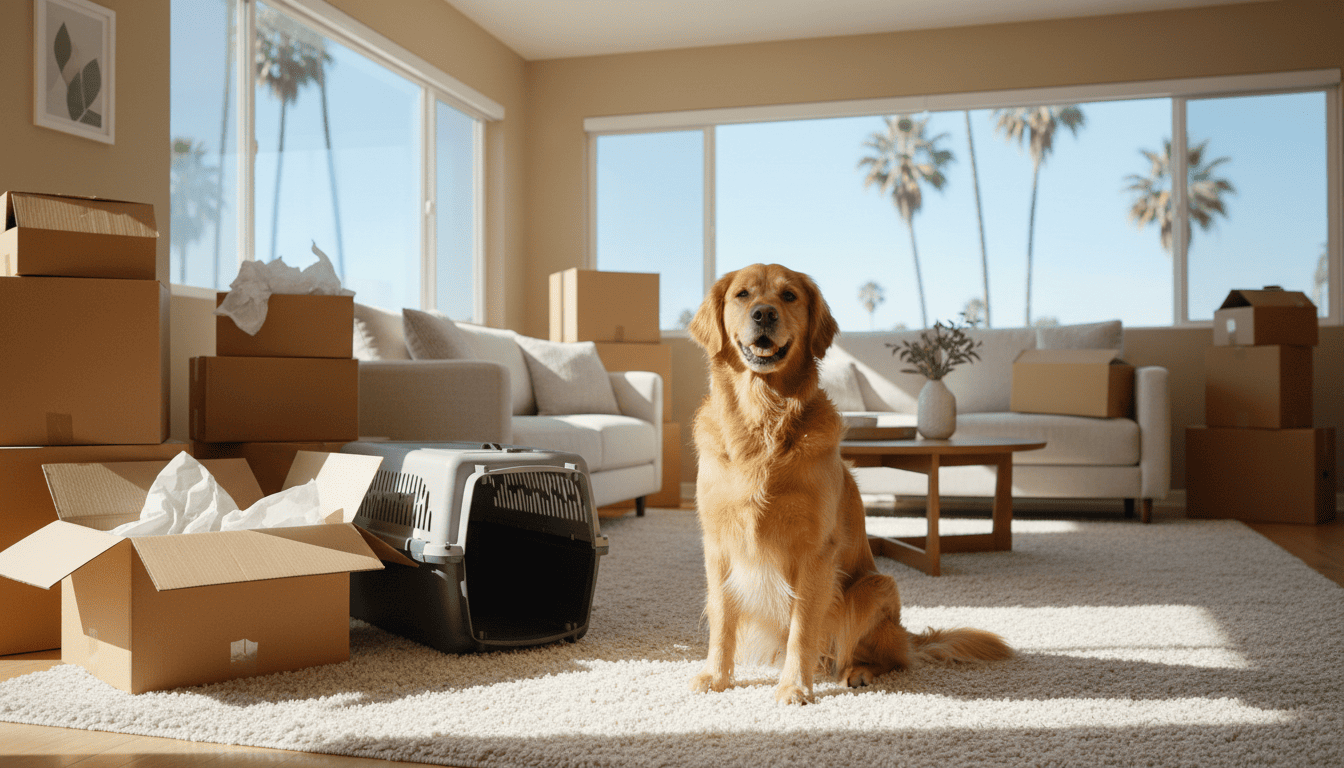
Pets build their sense of security around routine and territory. A move dismantles both at the same time. Their familiar space disappears box by box. Strange people carry furniture through the door. Sounds, smells, and spatial landmarks change without warning. And their humans — the anchors of their world — are visibly stressed.
Dogs typically respond with anxiety: pacing, whining, barking at movers, clinging to their owner, or becoming uncharacteristically hyperactive. Cats default to hiding, refusing food, or attempting escape the moment a door cracks open. Both species may have house-training accidents, display destructive behavior, or show aggression they don't normally exhibit.
Here's what I always tell clients who are worried: with proper planning, most pets adjust to a new home within one to four weeks. Your preparation directly determines how stressful the experience is — for them and for you. The strategies below aren't theoretical; they come from watching what works and what goes wrong across real moves.
Two to Three Weeks Before: Veterinary Prep and Updates
Start here, not on moving day.
Schedule a checkup to confirm your pet is healthy enough for the transition. If vaccinations are due soon, get them done now rather than during the chaos of settling into a new home. Refill any prescriptions so you're not scrambling to find a new pharmacy mid-move.
Talk to your vet about anxiety medication. This isn't sedation — it's a mild anxiety reducer that keeps stressed pets calmer without making them groggy. In my experience, clients who ask about this option wish they'd asked sooner. If your dog paces during thunderstorms or your cat hides when guests visit, moving day will be significantly worse without intervention. Your vet can recommend the right approach for your pet's temperament.
Update microchip registration with your new address and current phone number. Ensure collar tags show a working phone number. Take current photos of your pet in case they escape during the move — you'll need a clear image for lost-pet posts, not a blurry snapshot from last year. Consider a temporary tag that shows both your old and new addresses during the transition period.
Pet-proof the new home before move-in if possible. Walk through checking for toxic plants, open vents, gaps in fencing, and any pest control products left by previous occupants. Locate the nearest emergency vet and save the address and phone number in your phone — you don't want to be searching for this information during an actual emergency.
Packing Phase: Keeping Pets Calm While Their World Changes
Pets notice packing. Boxes appearing in the living room, closets emptying out, furniture being rearranged — these changes register as threat signals for animals who rely on spatial consistency.
Maintain normal routines as long as possible. Same feeding times, same walk routes, same bedtime. Keep your pet's area — bed, food bowls, litter box — undisturbed until the absolute last moment. This small island of normalcy in a changing home makes a measurable difference.
Increase exercise during packing weeks. A tired dog handles stress better than an energetic one. Extra walks, longer play sessions, and new enrichment toys burn off the anxious energy that builds as the environment shifts. For cats, interactive play sessions with feather toys or laser pointers serve the same purpose.
Consider pheromone products. Feliway diffusers for cats and Adaptil diffusers for dogs release species-specific calming pheromones. Plug one in near where your pet sleeps 2–3 weeks before the move. The evidence on these products is mixed, but many of my clients report noticeable improvement — and the cost is minimal ($25–$40) compared to the stress reduction.
Pack a dedicated pet essentials box that rides in your car, never on the truck. Include food for 3–4 days, medications, bowls, a favorite toy, waste bags, a leash, and any comfort items. This box is your pet's lifeline during the transition gap between homes.
Have questions about your move? I'm here to help — call (949) 266-9445 or get in touch.
Moving Day: Dogs
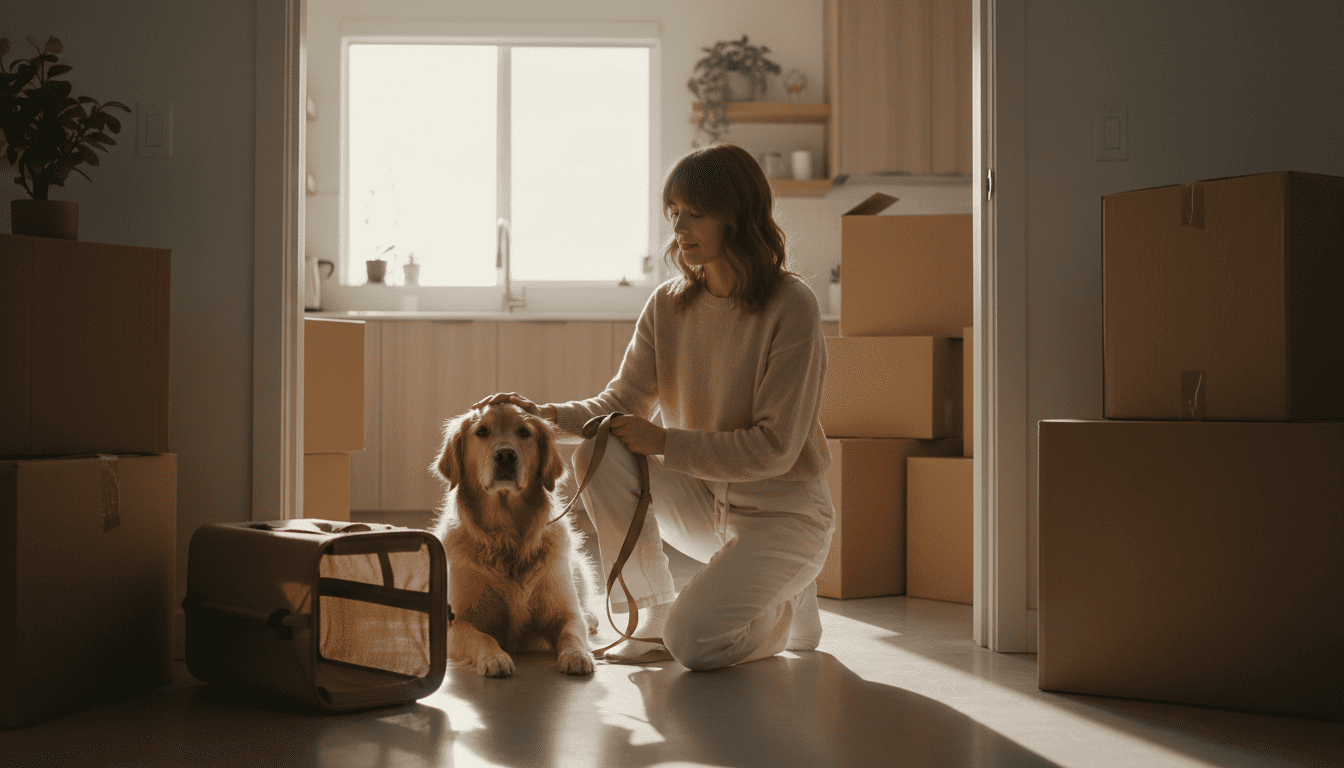
The single best thing you can do for your dog on moving day is remove them from the chaos entirely.
Best option: board your dog or have a trusted friend host them. Your dog spends the day in a familiar, calm environment and arrives at the new home after the truck is unloaded, the furniture is placed, and the doors are closed. No open-door risks, no mover anxiety, no hours of sustained stress. I recommend this approach to every dog-owning client.
If boarding isn't possible, confine your dog to one empty room (or a room being packed last) with the door closed. Provide water, familiar bedding, and calming music or white noise. Check on them regularly but don't let them roam the house while movers work. Doors are propped open constantly. Heavy items block sightlines. One moment of distraction and a dog slips out.
On the drive to the new home, transport your dog in your personal vehicle — never the moving truck. Use their familiar crate or car restraint. Bring water and treats. For moves longer than an hour, stop for a bathroom break.
At the new address, walk your dog around the yard on leash before unloading begins. Let them sniff and establish boundaries. Check fence gates and security. Set up a "home base" room where the dog stays during unloading — with water, bed, and familiar items from the essentials box. Keep the door closed until the movers are done.
First week: Walk the new neighborhood daily to build new scent maps and territory awareness. Supervise all yard time until you're confident in fence security. Maintain exact feeding, walking, and bedtime schedules. Expect some regression in house-training — it's normal and temporary. Extra exercise helps process the stimulation of new surroundings.
Moving Day: Cats
Cats require a fundamentally different strategy. Their territorial nature makes moving more disruptive than it is for dogs, and their escape instincts are sharper.
The night before the move, bring your cat indoors if they have outdoor access. Cats sense change and may run, hide in a neighbor's yard, or simply not come home. Keep them inside from this point forward.
Morning of moving day, place your cat in a carrier before the crew arrives. Cats are dramatically easier to catch in a calm, quiet home than in a house full of strangers carrying furniture. A cat that hides under a bed while movers work creates a problem that can delay the entire job. I've seen crews wait 30+ minutes for a cat to be coaxed out from behind a washer-dryer — that's real money at Green Moving's hourly rates.
During loading, keep the carrier in your car with the AC running (weather permitting) or in the quietest room farthest from the activity. Cover the carrier partially with a light blanket to reduce visual stimulation. Never put cats in the moving truck — temperature extremes, vibration, and shifting boxes create genuinely dangerous conditions.
At the new home, set up a "base camp" room before releasing your cat. This single room becomes their entire world for the first 3–7 days. Include a litter box (placed away from food), food and water bowls, familiar bedding that carries home scents, hiding spots (cardboard boxes work perfectly), a scratching surface, and toys. Close the door. Open the carrier and let the cat emerge on their own timeline.
Gradual introduction after 3–7 days. Once your cat is eating normally, using the litter box, and showing curiosity about the closed door — crack it open. Let them explore one room at a time at their own pace. Don't force it. Some cats venture out within hours; others need weeks. The slow approach actually produces faster total adjustment than overwhelming them with the entire house immediately.
LA-Specific Hazards Every Pet Owner Should Know
Los Angeles presents environmental risks that don't exist in most other cities. Know these before your pet sets foot in the new yard.
Heat. LA's inland valleys regularly hit 95–105°F in summer. A parked car reaches lethal interior temperatures within minutes, even on a 75°F day. During summer moves, I tell every client: your pet rides in your air-conditioned car, not the truck, and never sits in a parked vehicle. Make sure the AC at your new home is operational before bringing animals inside. Watch for overheating signs: excessive panting, drooling, lethargy, and glazed eyes.
Coyotes. They live throughout Los Angeles — urban, suburban, and rural areas alike, and they're most active at dawn and dusk. Small dogs and outdoor cats are at genuine risk. Before letting your pet into a new yard unsupervised, understand the local coyote activity. Install coyote rollers on fences if you're in a high-activity area. Keep cats indoors (this also protects local wildlife). Supervise dogs during dawn and dusk hours until you understand the pattern around your new home.
Rattlesnakes. Present in canyon, hillside, and foothill neighborhoods throughout LA — active in warm months. Before letting your dog explore a new yard in areas near Pasadena, the Hollywood Hills, or any canyon neighborhood, walk the property yourself first. Check corners, under bushes, and around debris piles. Rattlesnake aversion training for dogs is available through local trainers and is worth considering if you're moving to a foothill area. Know where the nearest emergency vet with antivenin is located.
Wildlife in general. Raccoons, possums, skunks, and in some areas mountain lions are part of LA's ecosystem. Pet food left outside attracts wildlife. Supervise pets at night, especially in the first weeks when they don't yet know the local animal population.
Finding Pet-Friendly Rentals in LA
If you're renting, add extra time and effort to your housing search. Pet-friendly inventory is competitive across Los Angeles.
Start searching at least 8 weeks before your move. Expect $200–$500 in pet deposits plus $25–$100 in monthly pet rent on top of your lease. Prepare a pet resume — photos, vet references, vaccination records, and any training certifications — to stand out from other applicants. Offering a larger deposit can sway a hesitant landlord. Renter's insurance with pet liability coverage gives landlords additional confidence and protects you if your pet causes damage.
Many of my clients moving into LA for the first time are surprised by how tight the pet-friendly market is. Our first-time mover's guide to LA covers the broader housing search process, and the pet layer adds another variable to manage early.
The First Week: Setting the Tone for Adjustment
For dogs: maintain the exact schedule from your old home — same feeding time, same walk time, same bedtime. Walk the new neighborhood daily to build familiarity. Introduce the house one room at a time rather than giving free access to everything at once. Keep familiar items accessible: same bed, same toys, same bowls. Expect some sleep disruption — new sounds and smells keep dogs alert at night for the first week.
For cats: keep them in the base camp room for a minimum of 3–7 days. Maintain the same food brand, litter brand, and feeding schedule. Visit frequently but don't force interaction. Once they begin exploring the house, keep one litter box in the base camp room as a safety fallback.
Watch for stress signs. Dogs: loss of appetite beyond 24 hours, excessive panting, sustained pacing, destructive behavior, or aggression changes. Cats: not eating for 24+ hours, complete avoidance of the litter box, excessive hiding, over-grooming, or repeated escape attempts. If symptoms persist beyond 48 hours or include vomiting, diarrhea, or lethargy — call your vet.
Frequently Asked Questions
How long does it take for pets to adjust to a new home?
Dogs typically show significant improvement within 1–2 weeks and reach full comfort within a month. Cats vary more — some settle in days, others need 2–3 months. Older pets and those with anxiety histories take longer. Consistency in routine speeds adjustment for every species.
Should I sedate my pet for moving day?
Full sedation is rarely recommended — it prevents pets from responding to their environment and can cause complications. However, anxiety-reducing medication (different from sedation) helps pets with known anxiety stay calmer without impairment. Talk to your vet at least 2–3 weeks before the move so you have time to test the medication and confirm it works well for your pet.
My cat is hiding and refusing to eat at the new house. Is this normal?
Some hiding is expected and healthy — it's how cats process new environments. Not eating for up to 24 hours after a move is common. Try warming food slightly to increase the aroma and place it near the hiding spot. If your cat hasn't eaten after 48 hours, contact your vet — cats can develop hepatic lipidosis (fatty liver disease) from prolonged fasting, and early intervention matters.
Can movers work around my pets safely?
Professional crews are accustomed to pets in homes, but for everyone's safety, I strongly recommend keeping pets contained or removed during active moving. A dog underfoot while movers carry a 200-pound dresser down stairs creates a dangerous situation. An open door during loading is an escape risk for cats. Containment protects your pet, the crew, and the timeline.
Does Green Moving have experience with pet-owner moves?
Absolutely. A significant portion of our local moves across LA involve pet households. Our crews know to watch for open doors, to communicate before entering rooms where pets are confined, and to work with the specific logistics pet families need. During your free consultation, let us know about your pets so we can plan around them — call (949) 266-9445 or visit our contacts page.
Get Started
Your pets are family, and they deserve the same level of planning that the rest of your move gets. The strategies in this guide — early vet visits, moving-day containment, base camp rooms, and gradual introductions — are the same ones I walk my clients through every week. A little preparation means your four-legged family members arrive at the new home safe, calm, and ready to settle in.
Schedule Your Free Consultation:
- Call: (949) 266-9445
- Email: sales@greenmovingla.com
- Online: greenmovingla.com/contacts
Green Moving — Licensed (CAL-T 201327) & Insured. 1% of every move supports California environmental causes.