The Complete Guide to Eco-Friendly Moving in LA

- The Environmental Cost of a Standard Move
- Sustainable Packing Materials That Actually Work
- Declutter Before You Pack — The Biggest Single Impact
- What Makes a Moving Company Environmentally Responsible
- Carbon Offsets: Neutralizing What You Can't Eliminate
- After the Move: Closing the Loop
- Building a Sustainable Routine in Your New Home
- Frequently Asked Questions
- Get Started
A typical household move in Los Angeles generates over 60 cardboard boxes, 10 or more rolls of plastic wrap, several pounds of packing paper and bubble wrap, and a full day of truck emissions. Almost all of that material gets used once and thrown away. Multiply that by the roughly 200,000 moves that happen across LA County every year, and the waste adds up to something staggering. When I started thinking about building a moving company, this was one of the problems I couldn't ignore.
That frustration became the foundation of Green Moving's environmental commitment — 1% of every move we complete goes directly to California environmental causes. But our donation model is only part of the picture. The choices you make as a customer — what you pack with, what you get rid of, and how you plan the logistics — can cut your move's environmental footprint by half or more. This guide covers exactly how to do that, with practical options that work in the real world, not just on paper.
The Environmental Cost of a Standard Move
Most people don't think about the waste their move creates until they're standing in a living room surrounded by crushed cardboard and tangled shrink wrap. Here's what a typical 2–3 bedroom LA move produces.
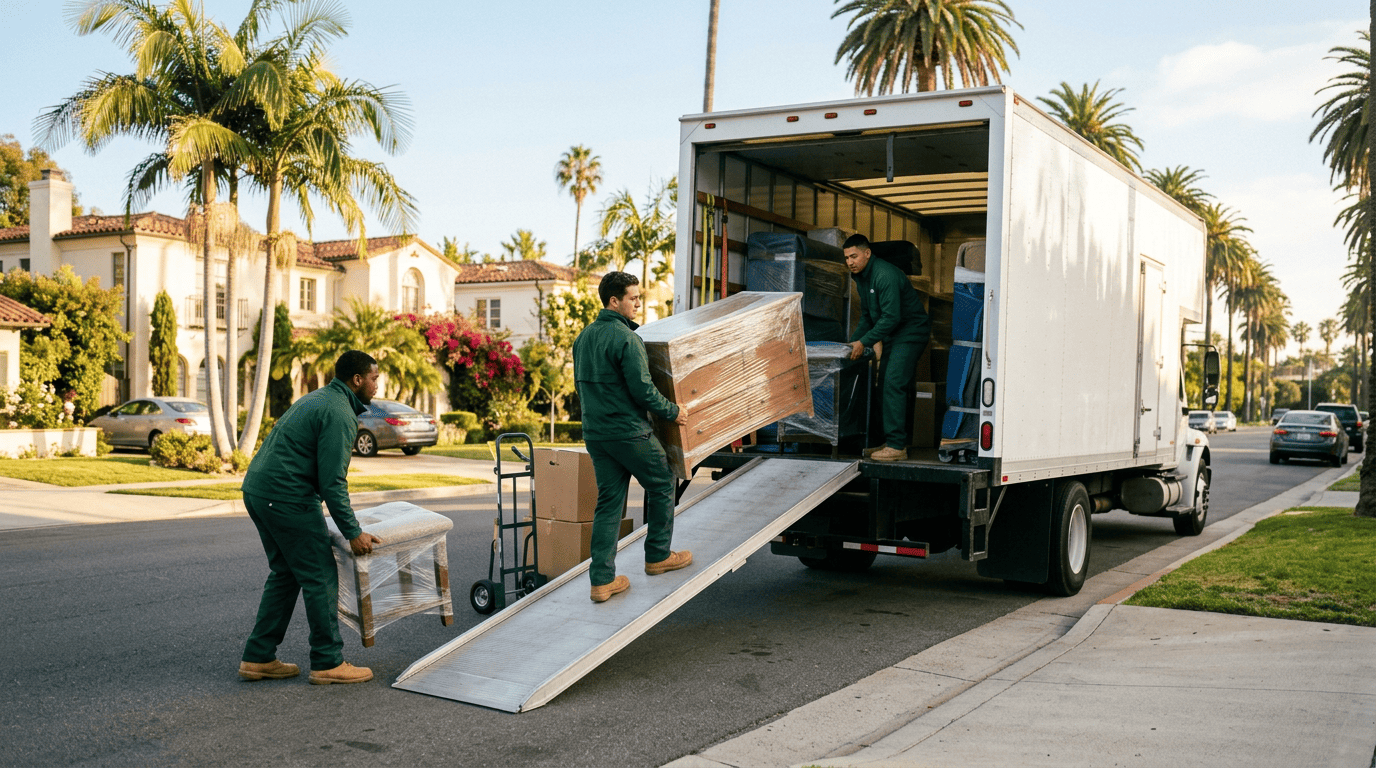
Sixty to eighty single-use cardboard boxes. Most are new, manufactured specifically for the move, and end up in the recycling bin (or worse, the trash) within a week of unpacking. Ten or more rolls of plastic stretch wrap used to protect furniture — none of it recyclable through standard LA curbside programs. Several pounds of packing paper, bubble wrap, and foam inserts. And a 26-foot diesel truck burning fuel for 4–8 hours across city streets.
A family moving from a 3-bedroom in Sherman Oaks to a 3-bedroom in Pasadena told me they filled an entire dumpster with packing materials the week after their move. They felt terrible about it — they recycled at home, composted, drove an electric car — but moving day wiped out months of environmental effort in a single afternoon.
The good news: sustainable alternatives exist for every single element of that waste stream. And many of them save money at the same time.
Sustainable Packing Materials That Actually Work
The biggest waste category in any move is packing materials. Replacing single-use options with reusable or recycled alternatives makes the largest impact.
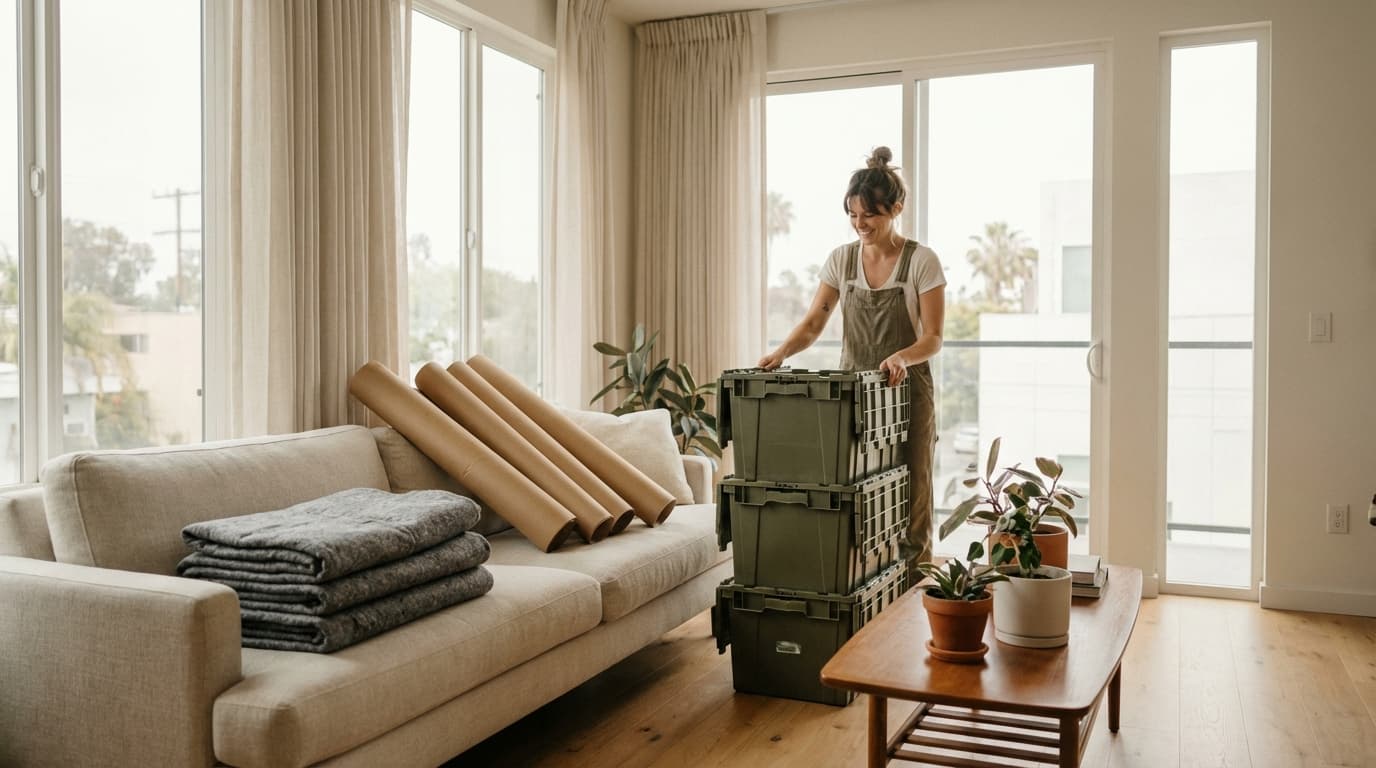
Rent reusable plastic bins. Several LA-based companies rent heavy-duty plastic moving bins that replace cardboard entirely. They're sturdier than boxes, stack more securely in the truck, and get returned after your move for the next customer. Each bin replaces roughly 1,000 cardboard boxes over its lifetime. Rental costs run $3–$5 per bin per week — comparable to buying new boxes.
Source free used boxes. If reusable bins aren't practical for your move, used cardboard is the next best choice. Liquor stores carry sturdy, uniform boxes built to hold heavy bottles. Grocery stores offer produce boxes daily. NextDoor and Buy Nothing groups in neighborhoods like Silver Lake, Echo Park, and Los Feliz post free moving boxes constantly — especially on the first of the month when leases turn over.
Replace bubble wrap and packing paper with what you already own. Your towels, sheets, t-shirts, and blankets are already in your house, already need to be moved, and protect fragile items just as well as single-use paper. Wrap plates in dish towels. Cushion glasses with socks. Pad mirrors with folded comforters. Our packing team uses this approach for clients who request sustainable packing — it works for everything except extremely fragile or irregularly shaped items where custom padding is necessary.
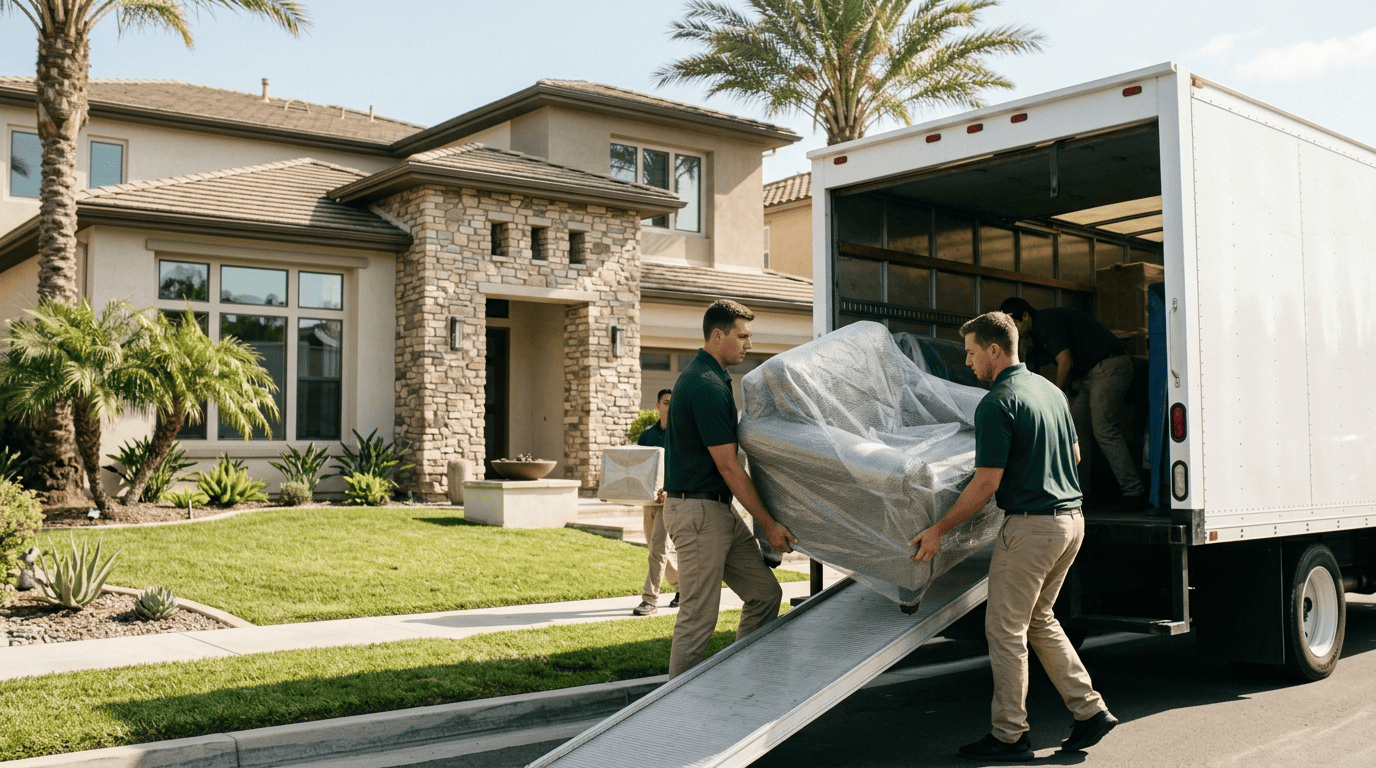
Eliminate plastic stretch wrap. Moving blankets protect furniture surfaces during transit without generating plastic waste. At Green Moving, we include moving blankets free with every move — they wrap sofas, dressers, tables, and headboards, then come back to us for the next job. Reusable stretch bands and fabric furniture covers serve the same purpose for DIY movers. Old bed sheets tied around chair legs prevent scratches as effectively as cling film.
Declutter Before You Pack — The Biggest Single Impact
Every item you remove from your move reduces boxes, truck space, fuel consumption, and packing materials. Decluttering is the single most effective environmental strategy for any relocation, and it happens to save money too.
When I look at our data, clients who declutter aggressively before moving day use 20–30% fewer boxes and finish their moves 15–20% faster. That's less waste, fewer emissions, and a lower invoice — all from the same decision.
Donate usable items locally. Habitat for Humanity ReStore accepts furniture and building materials. Goodwill and Salvation Army take most household goods. Out of the Closet accepts clothing with proceeds funding AIDS healthcare. The LA Food Bank takes non-perishable food. Animal shelters across the county accept towels, blankets, and pet supplies. Most of these organizations offer free pickup for large items, eliminating your transportation burden entirely. For a deeper guide on what to let go, we wrote a full article on what to donate before moving in Los Angeles.
Recycle electronics responsibly. E-waste is one of the most environmentally damaging categories of household disposal. Best Buy accepts most electronics for free recycling. LA County hosts scheduled e-waste collection events throughout the year. Many manufacturers — Apple, Dell, Samsung — run take-back programs for their own products.
Handle textiles separately. Clothing that can't be donated (stained, torn, worn out) shouldn't go in the trash. H&M accepts any-brand clothing for recycling at all locations. Textile recycling bins are scattered throughout LA — the city's 311 service can direct you to the nearest one. Even unusable fabric gets processed into insulation and industrial rags rather than sitting in a landfill.
See exactly what your eco-friendly LA move will cost — get a free quote in 2 minutes. Call (949) 266-9445 or request a quote.

What Makes a Moving Company Environmentally Responsible
Not every company that calls itself "green" actually operates that way. When I built Green Moving, I wanted our environmental commitment to go beyond marketing language. Here's what to evaluate when comparing movers on sustainability.
Route optimization. Efficient routing reduces fuel consumption and emissions. A well-planned move with logical loading order, minimal backtracking, and combined stops burns significantly less fuel than a disorganized one. Ask potential movers whether they plan routes in advance or figure it out on the road.
Reusable materials in daily operations. Companies that include moving blankets, reusable padding, and fabric wraps as standard equipment generate far less per-move waste than those defaulting to plastic and disposable materials. At Green Moving, our included materials — blankets, shrink wrap where necessary, packing tape — are part of the hourly rate, and our blankets cycle through hundreds of moves.
Environmental giving or carbon offset programs. Look for commitments that are specific and verifiable. Our 1% environmental donation goes to California-based causes and is tracked transparently. Generic claims like "we care about the planet" without supporting action are marketing, not practice.
Proper disposal practices. After a move, materials need to go somewhere. Responsible companies sort recyclables from waste, return reusable equipment to inventory, and offer clients guidance on disposing of packing materials sustainably. Companies that leave a pile of cardboard and plastic on your new doorstep haven't thought this through.
Carbon Offsets: Neutralizing What You Can't Eliminate
Even the most sustainable move still generates emissions from the truck. Carbon offsets let you balance that impact by funding verified environmental projects — reforestation, renewable energy, methane capture — that remove or prevent an equivalent amount of carbon dioxide.
A typical local move in LA generates roughly 0.5–1.5 tons of CO2 depending on distance and truck size. A long-distance move can produce 2–5 tons. Offset costs through reputable providers run approximately $15–$30 per ton, so neutralizing a local move costs less than a takeout dinner.
Reputable providers include Carbonfund.org, Gold Standard-certified programs, and TerraPass. Look for third-party verification — Gold Standard and Verified Carbon Standard (VCS) certifications mean the offsets have been independently audited. Avoid providers that can't name the specific projects your money funds.
I'm honest about this: offsets are a last step, not a first one. Reduce waste and emissions first through the strategies above. Then offset whatever remains. That sequence — reduce, then neutralize — delivers genuine environmental results rather than using offsets as permission to be wasteful.
After the Move: Closing the Loop
What you do with packing materials after unpacking determines whether your sustainable efforts actually stick or end up negated by a trip to the dumpster.
Break down and recycle all cardboard. LA city curbside recycling accepts flattened cardboard — just stack it next to your blue bin. If you have more than the bin holds (common after a big move), schedule a bulky item pickup through LA Sanitation's free service or drop it at any city recycling center.
Pass usable materials to the next person. Post free boxes, packing paper, and bubble wrap on NextDoor, Craigslist, or your local Buy Nothing group. Someone in your neighborhood is always about to move. One client in Culver City posted her supplies at 8 AM and they were picked up by noon — zero waste, zero effort.
Return reusable bins on time. If you rented plastic bins, schedule the pickup within your rental window. Late returns cost extra and delay the bins from reaching their next customer, which pushes someone else toward buying new cardboard.
Handle hazardous materials properly. Paint, cleaning chemicals, batteries, and fluorescent bulbs require special disposal. LA County's SAFE Centers accept household hazardous waste for free at multiple locations. Never toss these items in regular trash or recycling.
Building a Sustainable Routine in Your New Home
A move is actually an ideal moment to upgrade your environmental habits. You're setting up systems from scratch — waste disposal, energy use, water consumption — and establishing patterns that will persist for years.
Look into your new neighborhood's specific recycling and composting programs. LA expanded its organic waste collection in recent years, and many neighborhoods now accept food scraps curbside. If you're moving to an area served by local waste haulers, research what they accept and what they don't.
Switch to LED lighting as you set up each room. Upgrade to low-flow showerheads and faucet aerators while fixtures are already getting adjusted. Set up a compost bin in the kitchen before old habits reassert themselves. These small decisions compound — and moving day is when the activation energy for change is lowest.
Frequently Asked Questions
How much waste does a typical LA move actually produce?
A standard 2–3 bedroom local move generates 60–80 cardboard boxes, 10+ rolls of plastic wrap, and several pounds of packing paper and foam. Most of this material is single-use. By switching to reusable bins, fabric padding, and household textiles for cushioning, you can reduce packing waste by 70–80%.
Are reusable plastic bins worth the cost?
For most LA moves, yes. Rental runs $3–$5 per bin per week. A 2-bedroom move needs roughly 30–40 bins, costing $90–$200 for a two-week rental. Buying 40 new cardboard boxes costs $150–$280 — and those boxes go to recycling afterward. The bins are sturdier, stack better in the truck, and generate zero post-move waste.
How do I offset the carbon emissions from my move?
Calculate your move's distance and truck size, then purchase verified offsets through providers like Carbonfund.org or Gold Standard programs. A typical LA local move generates 0.5–1.5 tons of CO2, costing $15–$30 to offset. Long-distance moves generate more but remain affordable to neutralize — usually under $75.
Can I request sustainable packing from a moving company?
Yes. Many full-service movers accommodate requests for reduced plastic use, moving blankets instead of shrink wrap, and recycled or reusable packing materials. At Green Moving, our standard service already includes moving blankets for furniture protection. Our full-service packing team can implement a fully sustainable packing plan using your household textiles as cushioning.
What does Green Moving's 1% environmental commitment actually fund?
One percent of every move's revenue goes to California-based environmental organizations focused on conservation, reforestation, and sustainability initiatives. It's not a marketing slogan — it's built into our operating model. You can learn more on our environmental impact page, which details our approach and the causes we support.
Get Started
Every move creates an environmental footprint, but the size of that footprint is up to you. The strategies in this guide — reusable materials, responsible decluttering, carbon offsets — aren't complicated. They just require a decision to prioritize sustainability alongside everything else you're managing during a relocation. When I founded Green Moving, that decision was non-negotiable for us. I hope it becomes standard for the industry.
Schedule Your Free Consultation:
- Call: (949) 266-9445
- Email: sales@greenmovingla.com
- Online: greenmovingla.com/contacts
Green Moving — Licensed (CAL-T 201327) & Insured. 1% of every move supports California environmental causes.